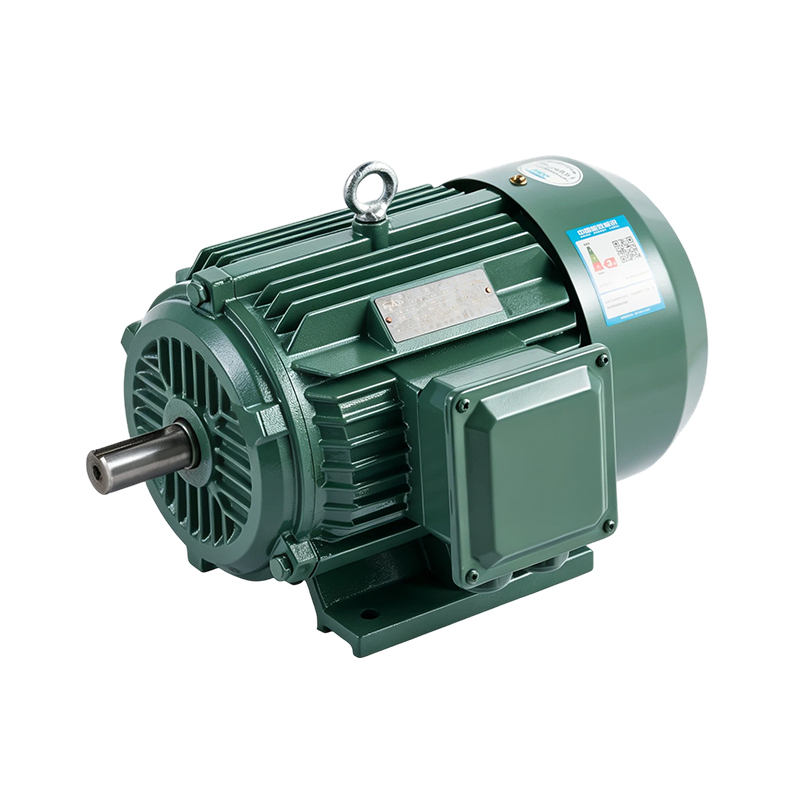
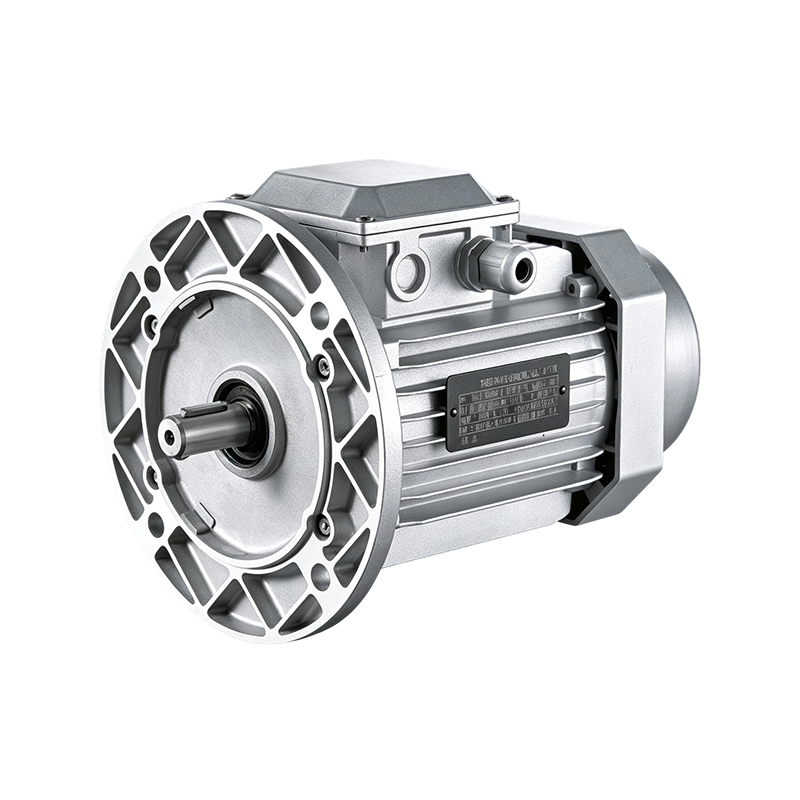
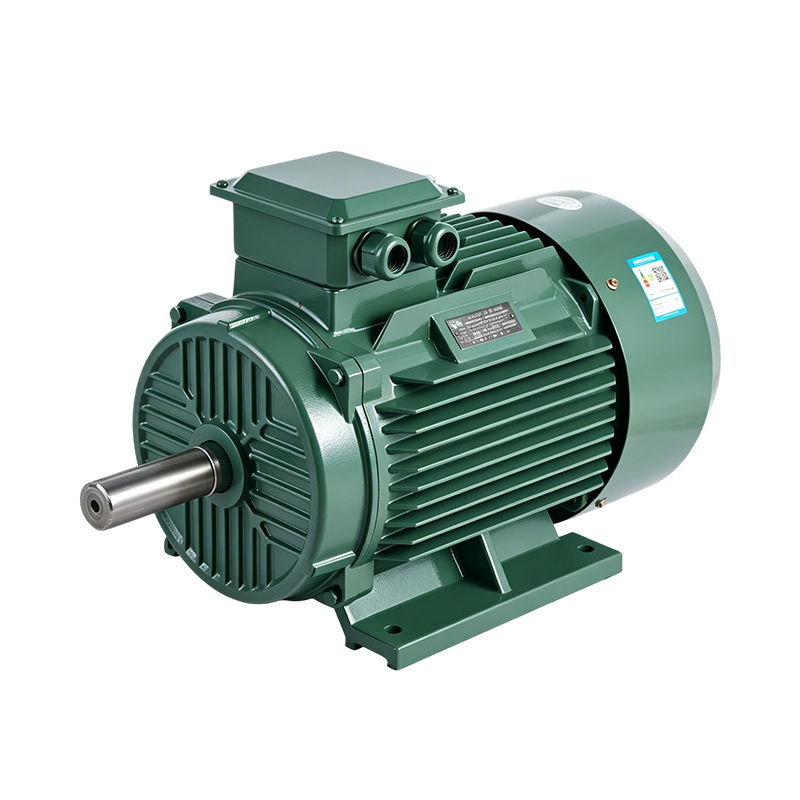
Quickly find the product you need.

Content
For plant engineers and purchasing teams comparing IE3 vs IE4 motors, the direct answer is straightforward. An IE4 motor sits one full efficiency tier above an IE3 motor under the IEC 60034-30-1 classification system, and the efficiency advantage is largest on smaller frame sizes while it narrows gradually as motor power increases. A YE4/IE4 ultra-high-efficiency motor is generally the stronger match whenever equipment runs long daily hours under a steady load, such as continuous-duty fans, blowers, pumps, and compressors. A YE3/IE3 high efficiency motor remains a practical and widely used option for machinery that runs intermittently, under variable load, or on shorter shifts.
The sections below walk through the efficiency data behind that recommendation, show how IE3 vs IE4 energy consumption compares over real operating hours, and explain how to match pole configuration and duty type to a given application.
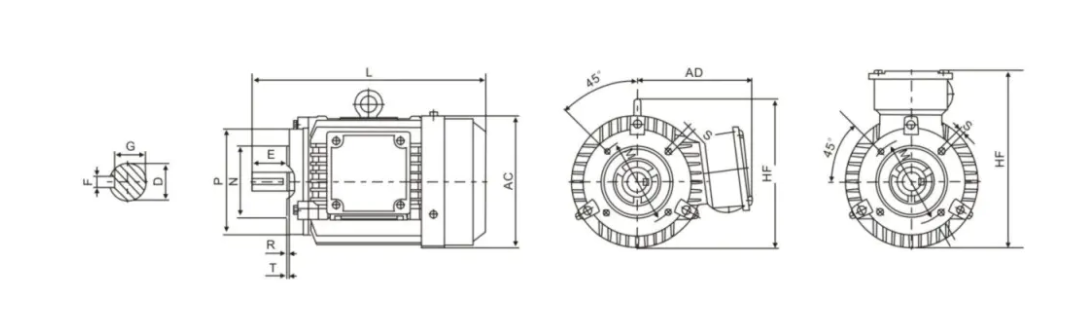
According to the IEC 60034-30-1 international efficiency classification standard, three-phase asynchronous motors are grouped into defined efficiency classes based on how much electrical input energy is lost as heat at rated load. Moving up one class step means a motor converts a larger share of input power into usable shaft output at the same rated power and speed. The framework is technology neutral, so an IE4 electric motor and an IE3 motor of the same frame size can share very similar mounting dimensions while operating at different loss levels.
YE4/IE4 ultra-high-efficiency motors cover a power range of 0.75kW to 375kW, with 2-pole, 4-pole, 6-pole, and 8-pole configurations spanning 750 to 3000 RPM. This places the YE4/IE4 line one step above the YE3/IE3 high efficiency series, which covers 0.75kW to 315kW across the same pole configurations and reflects the GB18613-2020 tier-3 efficiency standard widely referenced by industrial buyers. For a facility already tracking IE3 IE4 efficiency data on an equipment list, pole configuration and frame series usually carry over directly, which simplifies planning an upgrade path.
| Efficiency Class | IEC Designation | Typical Market Position |
|---|---|---|
| IE1 | Standard Efficiency | Largely phased out in new industrial installations |
| IE3 | Premium Efficiency | Common baseline for general industrial motors |
| IE4 | Super Premium Efficiency | Ultra high efficiency motor tier, YE4/IE4 series |
| IE5 | Ultra Premium Efficiency | Emerging tier, limited to select motor technologies |
Reference full-load efficiency values published for four-pole, 50Hz motors under IEC 60034-30-1 give a clear picture of how an IE4 high efficiency motor compares with an IE3 motor at the same power rating. The chart below lines up four common industrial power ratings side by side.
Figure 1. Reference full-load efficiency, four-pole 50Hz, comparing IE3 and IE4 motors across selected power ratings, based on IEC 60034-30-1 published class values.
| Power Rating | IE3 Efficiency | IE4 Efficiency | Efficiency Gain |
|---|---|---|---|
| 7.5 kW | 90.1% | 90.4% | 0.3 pp |
| 22 kW | 92.7% | 93.0% | 0.3 pp |
| 55 kW | 94.3% | 94.6% | 0.3 pp |
| 110 kW | 95.2% | 95.4% | 0.2 pp |
The gap in IE3 vs IE4 efficiency looks small in percentage-point terms, but at continuous full load across thousands of operating hours a year, even a fraction of a percentage point translates into a measurable difference in electrical input required for the same mechanical output.
Motor input power equals output power divided by efficiency, and the difference between input and output power is dissipated as loss. Applying that relationship to a 55kW motor running at full load for 8000 hours a year, a common duty cycle for continuous-duty fans and pumps, shows how IE3 vs IE4 energy consumption diverges over time.
Figure 2. Illustrative cumulative energy loss over five years for a 55kW motor at full load, 8000 operating hours per year, comparing IE3 and IE4.
Over five years of continuous operation in this example, the gap between the two lines in Figure 2 works out to roughly 7.2 MWh of accumulated energy loss avoided by the IE4 motor, illustrating the IE4 motor energy savings potential for high-runtime applications. This example is illustrative and actual results vary with load, ambient conditions, and site electrical characteristics.
Smaller motors carry proportionally higher stray-load and friction losses relative to their rated output, which leaves more room for improvement when moving from IE3 to IE4. Larger frame motors already operate close to their practical efficiency ceiling under IE3, so the additional percentage-point gain available at IE4 becomes smaller as power rating increases. This pattern is visible in the published IEC 60034-30-1 reference values shown below.
Figure 3. Efficiency gain of IE4 over IE3, in percentage points, across selected smaller power ratings.
| Power Rating | Efficiency Gain, IE3 to IE4 |
|---|---|
| 0.75 kW | 1.8 pp |
| 2.2 kW | 0.8 pp |
| 5.5 kW | 0.4 pp |
| 15 kW and above | 0.2 pp |
This does not mean upgrading a small motor delivers more absolute IE4 motor energy savings than upgrading a large one. A small motor with a larger percentage-point gain still consumes far less total energy than a large motor, so the practical energy volume saved usually still favors higher-power, high-runtime installations even though the percentage gap is narrower there.
The rate at which IE4 motor energy savings accumulate into a shorter IE4 motor payback period depends on how the motor is actually used day to day, not on the efficiency class alone. The factors below have the largest influence on how quickly the efficiency gap between an IE3 and IE4 motor becomes meaningful in practice.
As a general pattern, applications with high annual operating hours and a stable load factor close to rated output are where an IE4 electric motor accumulates its energy savings fastest, while applications with short run times or highly variable load see a longer runway before the difference becomes significant.
Efficiency is only one dimension of how an IE3 vs IE4 motor comparison plays out in daily operation. The radar chart below places six commonly discussed performance dimensions side by side as a relative illustration, drawing on general design characteristics associated with premium and super premium efficiency class motors under IEC 60034-30-1, rather than certified figures for one specific unit.
Figure 4. Illustrative relative comparison of IE3 and IE4 motor performance dimensions.
YE4/IE4 ultra-high-efficiency motors are built around a high-strength cast iron housing paired with a cooling and insulation system designed for stable long-term operation, illustrated in simplified form below.
Figure 5. Simplified structural illustration of a YE4/IE4 ultra-high-efficiency motor housing and cooling path.
Choosing between an IE3 motor and an IE4 motor also involves matching pole configuration to the actual load. The table below outlines general guidance across the 2-pole to 8-pole range available in the YE4/IE4 series.
| Pole Configuration | Synchronous Speed | Best Suited For |
|---|---|---|
| 2-pole | 3000 RPM | High-speed, light-load equipment such as fans and ventilation blowers |
| 4-pole | 1500 RPM | General-purpose industrial machinery with moderate speed and torque needs |
| 6-pole | 1000 RPM | Applications needing steadier torque at reduced speed |
| 8-pole | 750 RPM | High-torque, heavy-load equipment such as mixing equipment, mining, and metallurgy machinery |
High-speed 2-pole configurations are well suited to fans and other high-speed, light-load duty, while low-speed 8-pole configurations deliver greater torque output for mixing equipment, mining, and metallurgy applications. Facilities that are sensitive to electricity consumption, run equipment continuously, and are planning an energy-efficient equipment upgrade are typically the clearest fit for the YE4/IE4 ultra-high-efficiency motor line.
Both YE4/IE4 and YE3/IE3 lines remain active in modern facilities, often side by side on the same production floor. The lists below outline where each option is typically specified.
Zhejiang Kuayue Motor Co., Ltd. is an export-oriented manufacturer based in Luqiao District, Taizhou City, Zhejiang Province, integrating research and development, production, sales, and export. The company has been active in the motor industry for 34 years, with a production base covering 29 mu and a team of more than 30 staff members. As a manufacturer of YE4/IE4 ultra-high-efficiency motors and YE3/IE3 high efficiency motors, Zhejiang Kuayue supplies three-phase asynchronous motors and industrial pump solutions to customers across more than 20 Chinese provinces as well as export markets across Europe, the Americas, Southeast Asia, and the Middle East, serving industries that include mining, chemical processing, pump and HVAC systems, textiles, lifting equipment, machine tools, and port construction machinery. Alongside standard product lines, the company also supports ODM and OEM customization for buyers with specific frame, terminal box, or mounting requirements.
An IE4 motor is a three-phase asynchronous motor built to reach the Super Premium Efficiency class defined by IEC 60034-30-1, one tier above the IE3 Premium Efficiency class at the same power rating and speed.
The IE4 marking indicates the motor is designed to reach the efficiency levels associated with the Super Premium Efficiency class under the IEC 60034-30-1 classification framework, rather than referring to a brand or model name.
The main difference is full-load efficiency at the same frame size and power rating, with IE4 motors typically operating at lower energy loss than IE3 motors, especially on smaller frame sizes. Structural details such as insulation class and protection rating can be similar across both lines, with efficiency class as the primary distinguishing factor.
An ultra high efficiency motor generally refers to a motor built to the IE4 Super Premium Efficiency class or higher, designed to reduce electrical losses during continuous operation compared with standard or premium efficiency class motors.
Under the current IEC 60034-30-1 framework, IE5 Ultra Premium Efficiency sits above IE4, though IE5 availability is currently more limited across power ratings and motor technologies compared with the widely available IE3 and IE4 lines.
Based on published IEC 60034-30-1 reference values, the efficiency gain from IE3 to IE4 typically ranges from roughly 0.2 to 0.3 percentage points at mid to large power ratings, with a larger gain of around 1 to 2 percentage points at smaller power ratings below a few kilowatts.
IE5 sits one classification tier above IE4 under IEC 60034-30-1, representing a further reduction in energy loss, though IE5 motors are less broadly available across the full power and pole range that IE3 and IE4 motors currently cover.
The right choice depends on how the motor will be used and what is available for the required power rating and pole configuration. For applications with high annual operating hours and standard frame requirements, an IE4 motor is currently the more broadly available ultra high efficiency option, while IE5 remains a narrower, more specialized category at this time.



 English
 Español
 عربى
عربى