For factories, mining operations, pump stations, HVAC systems, machine tools, textile equipment, and other industrial applications, motor efficiency directly affects long-term operating costs. YE3/IE3 High-Efficiency Motors are designed to reduce electrical losses while maintaining the mechanical characteristics required for continuous industrial operation.
In China, GB 18613-2020 remains the current national standard for motor energy-efficiency limits and efficiency grades as of 2026. The standard took effect on June 1, 2021. At the international level, IEC 60034-30-1:2025 is the latest edition covering efficiency classes for line-operated AC motors and expands the framework to include IE5. This makes it increasingly important for B2B buyers to verify the exact efficiency class, rated power, poles, frequency, voltage, and applicable standard before purchasing.
(1)Understanding IE3 Efficiency
An IE3 Motor is an electric motor that meets the IE3 international efficiency class requirements applicable to its rated power, pole configuration, frequency, and operating conditions. IE3 is commonly described as a high-efficiency or premium-efficiency class for industrial motors.
The important point for procurement teams is that IE3 does not represent one fixed efficiency percentage for every motor. The minimum efficiency value varies according to motor output and number of poles. Therefore, buyers should compare the actual nameplate efficiency rather than relying only on the term “IE3.”
(2)Typical Applications
- Industrial pumps and water-treatment systems
- Fans, blowers, and HVAC equipment
- Mining and material-handling machinery
- Textile and machine-tool equipment
- Compressors, lifting equipment, and port machinery
3. IE2 to IE3 Motor Replacement: When Does It Make Business Sense?
(1)Energy Savings Can Accumulate Quickly
For motors operating thousands of hours each year, even a modest efficiency improvement can produce measurable savings. For example, consider a hypothetical 75 kW motor running 6,000 hours annually. If the old motor operates at 90% efficiency and the replacement operates at 92%, the estimated input power falls from approximately 83.33 kW to 81.52 kW. The theoretical difference is about 1.81 kW, or approximately 10,860 kWh per year.
This is an illustrative calculation rather than a guaranteed saving because actual results depend on load profile, operating hours, voltage quality, motor condition, rewinding history, and measured efficiency. Nevertheless, it demonstrates why an IE2 to IE3 motor replacement can be attractive for continuously operated equipment.
(2)When to Replace an Old Motor
- The existing motor operates more than 4,000–6,000 hours per year.
- The motor is old, frequently overheats, or requires repeated maintenance.
- The motor has already been rewound multiple times.
- The existing IE2 motor operates at a high and relatively stable load.
- The plant is targeting lower energy consumption or improved equipment efficiency.
4. Replace Old Motor with IE3: What Should Buyers Check?
(1)Mechanical Compatibility
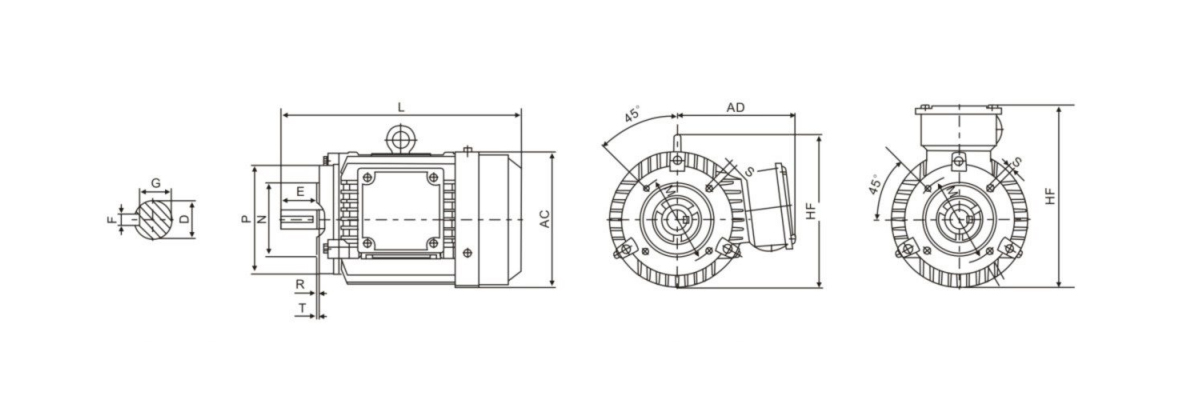
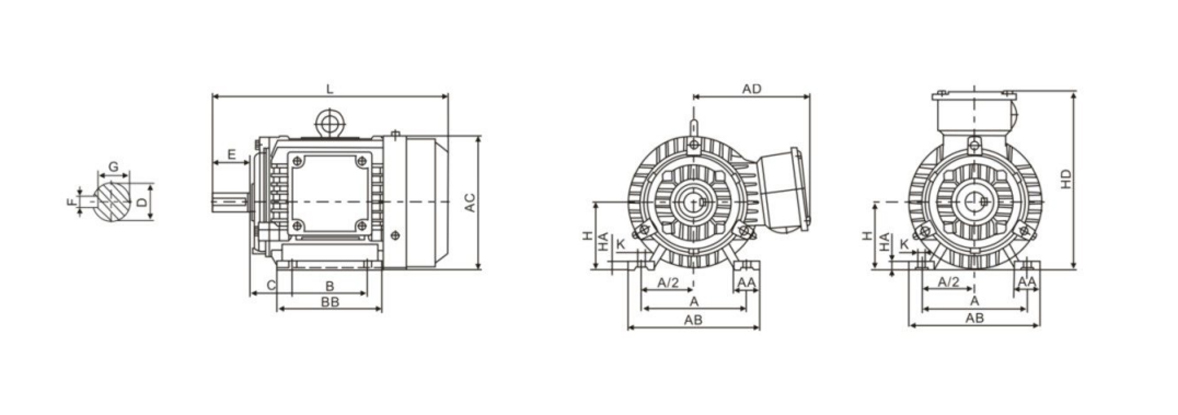
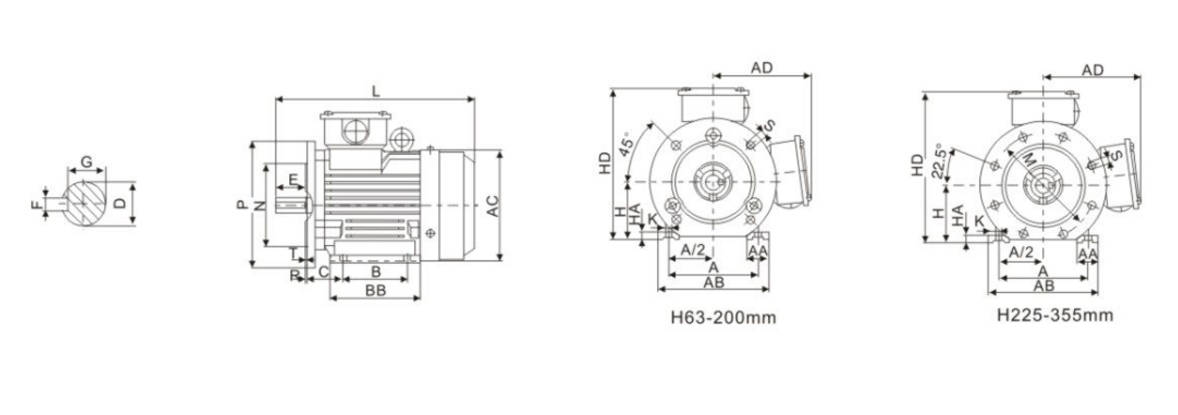
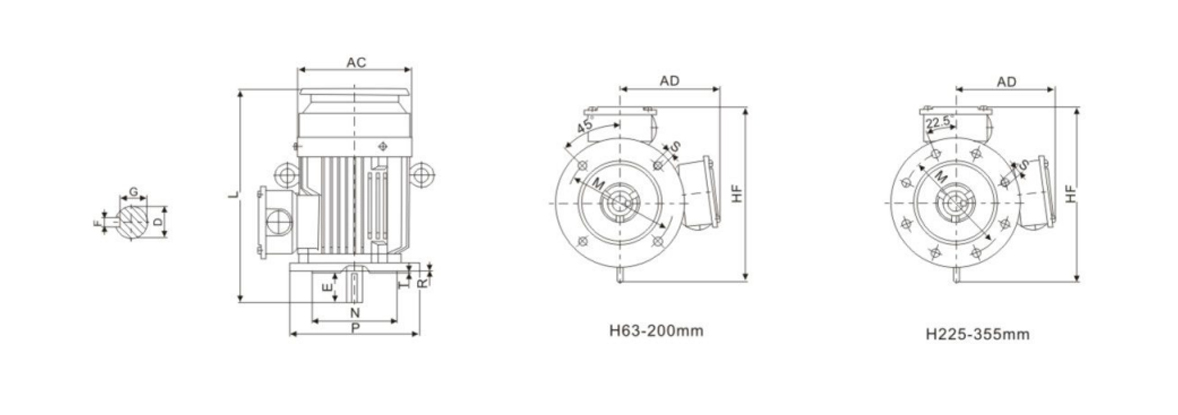
When you replace old motor with IE3, efficiency is only one part of the selection process. Check frame size, mounting arrangement, shaft diameter, shaft extension, foot-hole dimensions, center height, rotation direction, and coupling requirements. A motor with the same rated power may not always be a direct mechanical replacement.
(2)Electrical Compatibility
Confirm voltage, frequency, rated current, power factor, number of poles, duty cycle, insulation class, and starting characteristics. If the motor will operate with a variable frequency drive, confirm that the selected motor is suitable for inverter-driven operation and that the complete drive system is properly engineered.
Key specifications to verify before an IE2-to-IE3 motor replacement
| Item |
Why It Matters |
Typical Buyer Check |
| Power |
Determines output capability |
kW and load profile |
| Poles |
Determines operating speed |
2, 4, 6, or 8 poles |
| Mounting |
Ensures physical compatibility |
Frame and installation dimensions |
| Protection |
Protects against site conditions |
IP rating and environment |
5. IE3 Motor Upgrade: Product Structure and Industrial Reliability
(1)YE3/IE3 High-Efficiency Motor Construction
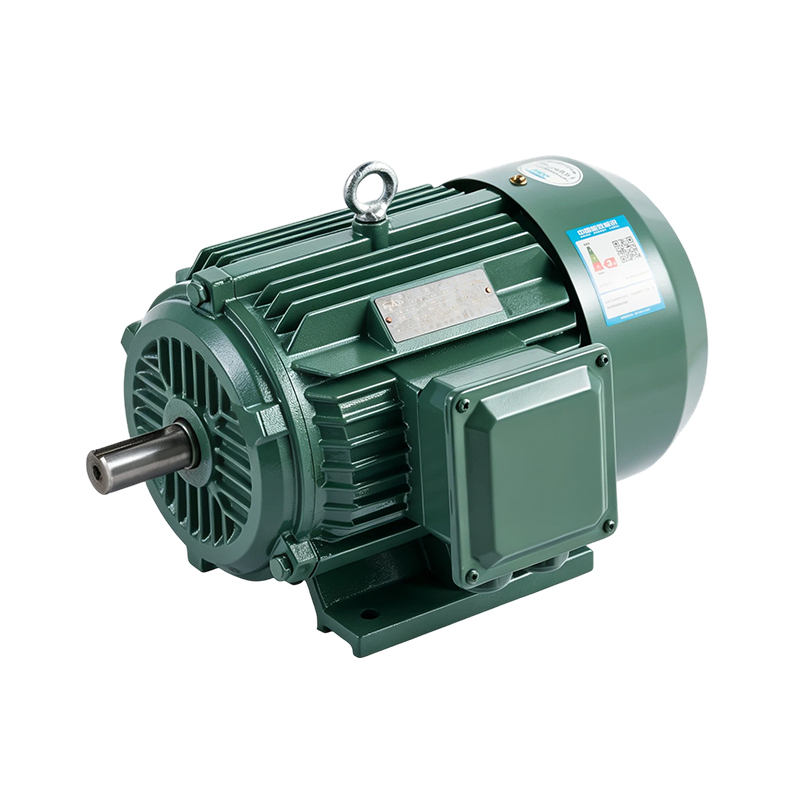
YE3/IE3 High-Efficiency Motors use a fully enclosed design with densely arranged cooling fins on the housing and reinforced internal airflow channels. This construction helps control temperature rise during full-load operation. Class F insulation and IP55 protection provide a practical configuration for industrial workshops where dust and humidity may be present.
The available power range covers 0.75 kW to 315 kW, with 2-pole, 4-pole, 6-pole, and 8-pole configurations. This makes the series suitable for a broad range of general-purpose industrial applications.
(2)Why Industrial Buyers Consider IE3
A motor purchase should be evaluated over its entire service life rather than only by initial price. For equipment operating continuously, electricity consumption can represent a much larger portion of total ownership cost than the original motor purchase price. Therefore, an IE3 motor upgrade can provide a stronger business case when annual operating hours are high.
6. IE3 Motor Selection Guide for B2B Procurement
(1)Select According to Application
A proper IE3 motor selection guide should begin with the driven equipment. Pumps and fans may have variable-load characteristics, while conveyors, compressors, lifting systems, and machine tools can have different starting and overload requirements. Selecting only by kW can result in an unsuitable motor.
(2)Compare Total Cost of Ownership
When comparing suppliers, evaluate purchase price, efficiency, annual operating hours, expected service life, maintenance requirements, spare-parts availability, warranty, delivery time, and certification. An IE3 motor price that is slightly higher at purchase may be economically preferable if the motor operates for long hours every year.
(3)Choose an Experienced Supplier
A reliable IE3 motor supplier should be able to provide technical datasheets, efficiency data, dimensional drawings, certificates, production information, packaging details, and export documentation. For OEM and distributor projects, buyers should also confirm minimum order quantity, customization capability, lead time, and after-sales support.
7. Why Choose Zhejiang Kuayue Motor Co., Ltd.?
(1)Manufacturer Experience and Product Coverage
Zhejiang Kuayue Motor Co., Ltd. is an export-oriented motor manufacturer integrating R&D, production, sales, and export. Located in Luqiao District, Taizhou City, Zhejiang Province, the company has accumulated 34 years of experience in the motor industry. Its production base covers 29 mu and has more than 30 staff members.
The company's YE3/IE3 High-Efficiency Motors comply with the three-tier energy-efficiency requirements of GB 18613-2020 and are positioned for general-purpose industrial applications. The product range covers 0.75 kW to 315 kW with 2-pole, 4-pole, 6-pole, and 8-pole configurations.
(2)Quality and Export Capability
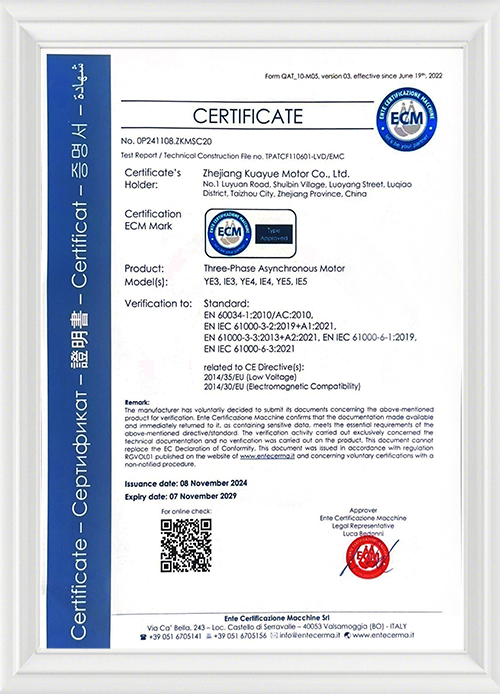
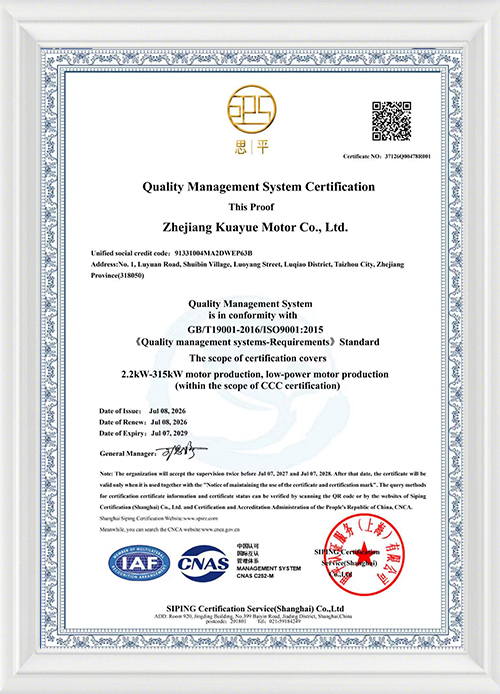
Products are manufactured under an ISO9001 quality-management system and hold China CCC compulsory certification and EU CE certification. Motors are supplied to more than 20 Chinese provinces and exported to Europe, America, Southeast Asia, the Middle East, and other international markets.
Applications include mining, chemical processing, pump and HVAC systems, textile machinery, lifting equipment, machine tools, and port-construction machinery. For buyers searching for an IE3 motor manufacturer, these capabilities are relevant when evaluating long-term supply consistency and international project requirements.
8. IE3 Motor Replacement Cost and Purchasing Strategy
(1)What Determines IE3 Motor Price?
The final IE3 motor price depends on rated power, frame size, pole number, voltage, frequency, quantity, mounting configuration, protection requirements, certifications, packaging, and delivery destination. Customized shafts, special bearings, inverter-duty requirements, or non-standard mounting dimensions can also affect the quotation.
(2)How to Request an Accurate Quotation
For an accurate B2B quotation, provide the supplier with motor power, voltage, frequency, poles, mounting type, quantity, application, required certification, destination country, and any existing motor nameplate information. If you plan to replace IE2 motor with IE3, supplying the old motor's nameplate and dimensions can significantly reduce the risk of selecting an incompatible replacement.
9. Common Questions About IE3 Motors
Q1. What is an IE3 motor?
An IE3 motor is an AC motor classified within the IE3 energy-efficiency class. Its required efficiency depends on rated output, number of poles, frequency, and the applicable efficiency standard. For industrial buyers, IE3 generally represents a high-efficiency option for general-purpose motor applications.
Q2. What does IE3 mean on an electric motor?
IE3 indicates the motor's international efficiency class. It means the motor meets the applicable minimum efficiency requirements for IE3 under the relevant standard. The designation should be considered together with the motor's rated power, poles, frequency, and actual nameplate efficiency.
Q3. How efficient is an IE3 motor?
There is no single efficiency percentage for all IE3 motors. Efficiency limits vary by motor size and pole count. For this reason, procurement teams should request the manufacturer's rated efficiency for the exact model rather than assuming that every IE3 motor has the same efficiency.
Q4. Is IE3 a high-efficiency motor?
Yes. IE3 is widely recognized as a high-efficiency class for applicable industrial AC motors. However, IE4 and IE5 represent higher efficiency classes under the applicable international framework. The latest IEC 60034-30-1:2025 edition includes IE5, so buyers should select the efficiency level according to operating hours, energy costs, application requirements, and total cost of ownership.
Q5. What is the difference between IE2 and IE3 motors?
IE3 requires higher efficiency than IE2 for the same applicable motor category, meaning lower electrical losses at the rated operating point. The actual difference varies by power and pole configuration. For a motor operating several thousand hours annually, the accumulated electricity savings can justify an IE2 to IE3 motor replacement, especially where the existing motor is old or heavily loaded.
Q6. What is the difference between IE3 and IE4 motors?
IE4 is a higher efficiency class than IE3. An IE4 motor can reduce losses further, but purchase price, motor technology, drive compatibility, replacement dimensions, and application requirements must be considered. For many general-purpose industrial replacement projects, IE3 provides a practical balance between efficiency, availability, compatibility, and initial investment.
Q7. Is IE3 better than IE2?
For applications where energy consumption is important, IE3 is generally preferable because its higher efficiency can reduce electrical losses. The strongest business case occurs when the motor runs for long periods and at a substantial load. Before replacing an IE2 motor, however, buyers should calculate energy savings and verify mechanical and electrical compatibility.
Q8. Is IE4 better than IE3?
From an efficiency-class perspective, IE4 is higher than IE3. However, “better” depends on the application. If an IE4 motor costs significantly more or requires changes to the existing installation, the additional investment may need a longer payback period. For many B2B replacement projects, IE3 remains an attractive option when balancing efficiency, procurement cost, availability, and retrofit compatibility.
Q9. How do I replace an old motor with IE3?
To replace old motor with IE3, first record the old motor's power, voltage, frequency, poles, frame size, mounting dimensions, shaft dimensions, protection rating, and application. Then compare the replacement motor's rated performance and efficiency. For critical machinery, verify starting torque, load characteristics, inverter compatibility, and installation dimensions before ordering.
Q10. What should I ask an IE3 motor supplier before placing an order?
Ask for the technical datasheet, efficiency value, dimensional drawing, certification documents, insulation and protection ratings, delivery schedule, warranty terms, packaging specifications, minimum order quantity, and customization options. For international procurement, also confirm export documentation and destination-country requirements. A qualified IE3 motor supplier should be able to provide clear technical and commercial information before the purchase order is issued.


 English
 Español
 عربى
عربى