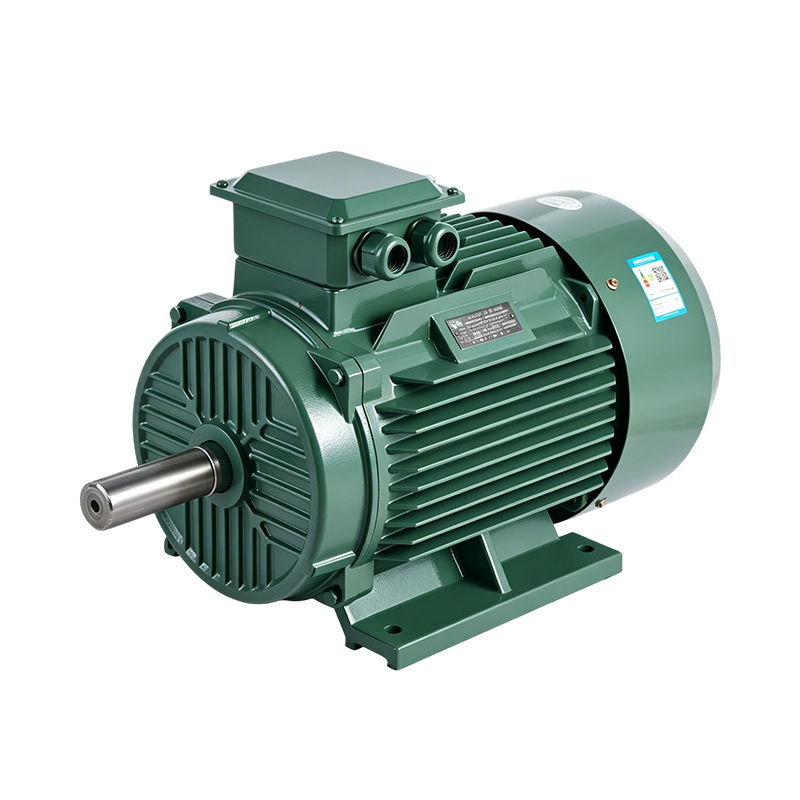
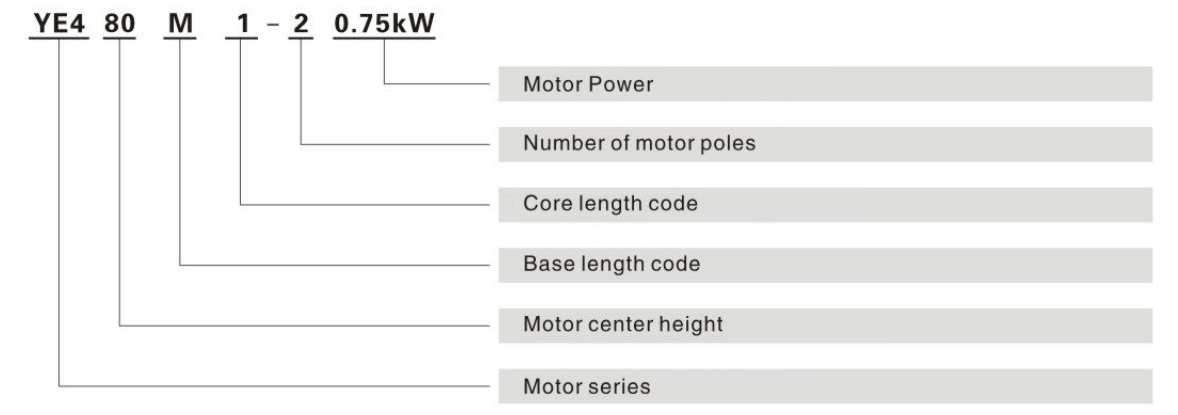
For factories, OEMs, distributors, and industrial equipment manufacturers, motor efficiency directly affects operating cost, heat generation, maintenance requirements, and equipment lifecycle value. YE4/IE4 Ultra-High-Efficiency Motors are designed to reduce electrical losses compared with lower-efficiency motor classes while maintaining the familiar operating principle of three-phase asynchronous motors.
The latest international reference is IEC 60034-30-1:2025, which defines IE efficiency classes for line-operated AC motors from 0.12 kW to 1,000 kW, covering 2-, 4-, 6-, and 8-pole motors for 50 Hz and 60 Hz applications. For B2B buyers, however, an IE4 label should never be evaluated alone: rated power, speed, load profile, voltage, frequency, duty cycle, installation conditions, and annual operating hours all influence the actual return on investment.
2. What Is an IE4 Motor?
(1) IE4 Motor Meaning
An IE4 Motor is an electric motor classified as Super Premium Efficiency under the IEC efficiency-class system. The classification is based on defined efficiency limits that vary according to motor output, pole count, and supply frequency. Therefore, IE4 does not mean that every motor has one universal efficiency percentage.
(2) Why IE4 Matters for Industrial Applications
A motor operating thousands of hours per year can consume far more energy over its lifetime than its original purchase price. For example, a 110 kW, 4-pole IE4 motor can achieve approximately 96.3% full-load efficiency in a representative industrial specification. If operated at full load for 8,000 hours annually, reducing electrical losses by even one percentage point can represent a significant long-term energy saving.
3. IE3 vs IE4 Motor: Efficiency, Energy Consumption and Cost
(1) IE3 vs IE4 Motor Efficiency
The most important difference in an IE3 vs IE4 motor comparison is lower electrical loss at the same mechanical output. As an example, representative 4-pole data for a 110 kW motor can show around 95.4% efficiency for IE3 versus approximately 96.3% for IE4. That difference appears small as a percentage, but the absolute energy loss becomes substantial when the motor operates continuously.
Illustrative comparison of representative 110 kW, 4-pole motor efficiency and input power.
| Motor Class |
Efficiency |
Approx. Input Power at 110 kW Output |
| IE3 |
95.4% |
115.30 kW |
| IE4 |
96.3% |
114.23 kW |
(2) IE3 vs IE4 Energy Consumption
Using the example above, the difference is approximately 1.07 kW at full load. At 8,000 operating hours per year, this represents roughly 8,560 kWh of annual electricity savings per motor. Actual savings depend on load, operating hours, voltage, frequency, and the efficiency of the specific motors being compared.
(3) IE3 vs IE4 Motor Cost
The IE3 vs IE4 motor cost should therefore be evaluated using total cost of ownership rather than purchase price alone. A higher initial motor price can be economically attractive when annual operating hours are high and electricity prices are significant.
4. IE3 to IE4 Motor Replacement: When Should You Upgrade?
(1) IE3 to IE4 Motor Replacement
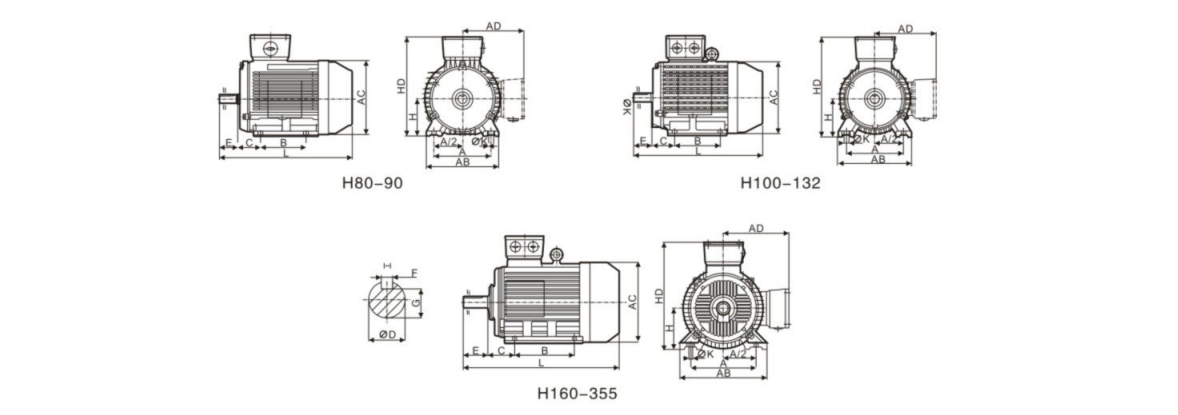
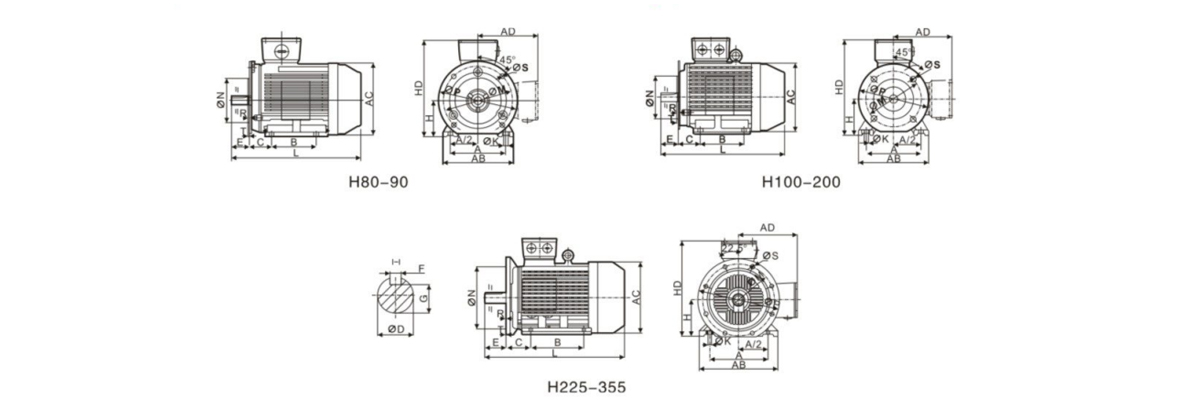
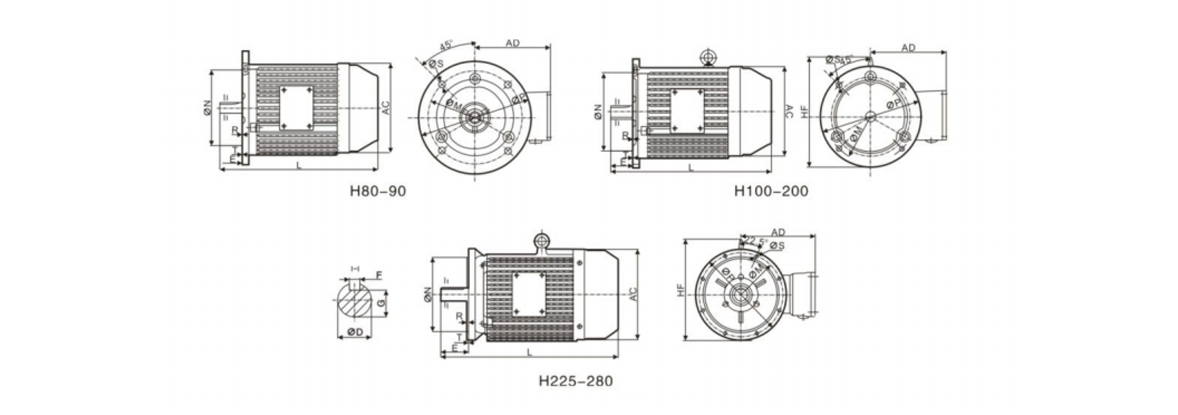
An IE3 to IE4 motor replacement is especially attractive when an existing motor operates for long periods, carries a high average load, or is approaching the end of its service life. Buyers should verify frame size, shaft dimensions, mounting arrangement, rated voltage, frequency, current, speed, torque, enclosure, protection class, and starting characteristics before ordering.
(2) IE2 to IE4 Motor Replacement
An IE2 to IE4 motor replacement can offer an even stronger energy-saving opportunity because the efficiency gap is generally greater. For facilities with hundreds of motors, a phased replacement strategy can prioritize the largest motors and those with the highest annual operating hours.
(3) Replace IE3 Motor with IE4 or Replace Old Motor with IE4?
When deciding whether to replace IE3 motor with IE4 or simply replace old motor with IE4, compare annual energy consumption, maintenance history, remaining service life, downtime risk, and procurement cost. For an old motor with repeated bearing, winding, or insulation problems, replacing it during planned maintenance may be more economical than another major repair.
5. IE4 Motor Maintenance and Troubleshooting
(1) IE4 Motor Maintenance
- Inspect bearings, lubrication condition, vibration, and abnormal noise according to the manufacturer's maintenance schedule.
- Keep cooling passages and fan covers clean to prevent excessive temperature rise.
- Check terminal connections and supply voltage for overheating or imbalance.
- Monitor operating current and compare it with the motor nameplate rating.
(2) IE4 Motor Troubleshooting
Common IE4 motor troubleshooting issues include overheating, excessive vibration, unusual noise, difficult starting, overcurrent, and unexpected temperature rise. These symptoms do not necessarily indicate an efficiency problem. Incorrect alignment, overload, poor ventilation, voltage imbalance, bearing damage, or inappropriate variable-frequency-drive settings can all contribute to abnormal operation.
6. How to Select an IE4 Motor for B2B Applications
(1) Key Selection Parameters
- Motor output and actual load profile.
- Number of poles and required operating speed.
- Rated voltage and 50 Hz or 60 Hz frequency.
- Mounting dimensions, shaft size, and installation space.
- IP protection, insulation class, ambient temperature, altitude, and duty cycle.
- Compatibility with direct-on-line starters, soft starters, or variable frequency drives.
Typical B2B evaluation priorities for IE4 motor procurement.
| Priority |
What to Check |
Business Benefit |
| Efficiency |
Full, 75%, and 50% load data |
Lower energy cost |
| Compatibility |
Voltage, frequency, frame and shaft |
Simpler replacement |
| Reliability |
Bearings, cooling and insulation |
Lower downtime risk |
7. Zhejiang Kuayue Motor Co., Ltd. and YE4/IE4 Motor Supply
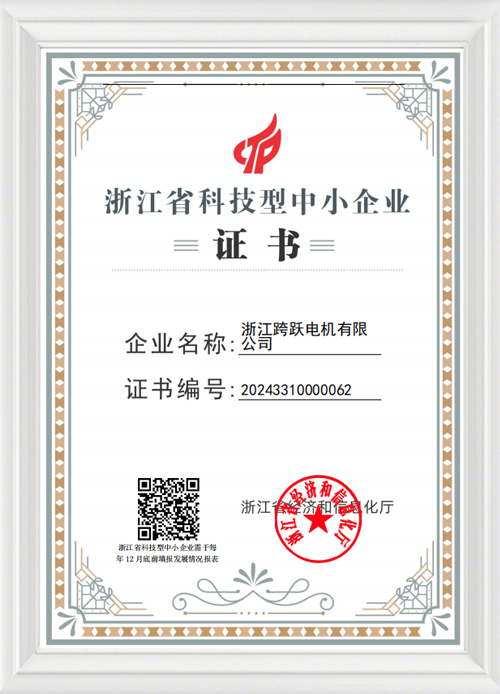
Zhejiang Kuayue Motor Co., Ltd. is an export-oriented manufacturer integrating R&D, production, sales, and export. Located in Luqiao District, Taizhou City, Zhejiang Province, the company has accumulated 34 years of experience in the motor industry. Its production base covers 29 mu and has more than 30 staff members.
YE4/IE4 Ultra-High-Efficiency Motors meet the international IE4 energy efficiency standard. The product range covers 0.75 kW to 375 kW, with 2-pole to 8-pole speed configurations, corresponding to approximately 750 to 3000 RPM depending on pole count and supply frequency.
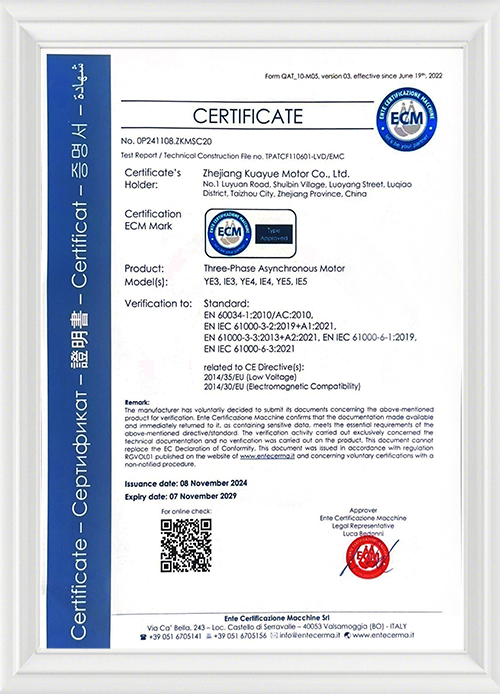
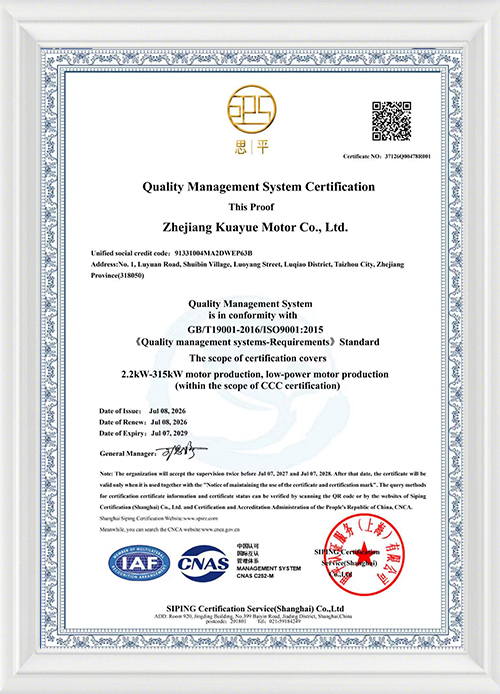
Manufacturing is carried out under an ISO9001 quality-management system, while the company's products hold China CCC compulsory certification and EU CE certification. Motors are sold across more than 20 Chinese provinces and exported to Europe, America, Southeast Asia, the Middle East, and other global markets. Typical applications include mining, chemical processing, pumps and HVAC, textile machinery, lifting equipment, machine tools, and port-construction machinery.
8. Frequently Asked Questions About IE4 Motors
Q1. What is an IE4 motor?
An IE4 motor is a Super Premium Efficiency electric motor classified under the IEC international efficiency system. Its required efficiency depends on rated output, pole count, and operating frequency. The current IEC 60034-30-1:2025 standard covers applicable line-operated AC motors from 0.12 kW to 1,000 kW.
Q2. What does IE4 mean on an electric motor?
IE4 indicates that the motor meets the defined Super Premium Efficiency limits for its particular power, pole, and frequency combination. It does not mean that every IE4 motor has the same efficiency percentage.
Q3. What is the difference between IE3 and IE4 motors?
The main difference is efficiency. An IE4 motor is designed to have lower losses than an IE3 motor at the applicable rated operating point. For high-hour industrial applications, this difference can produce measurable annual electricity savings.
Q4. Is IE4 better than IE3?
For applications where energy consumption is a major operating cost, IE4 is generally the stronger choice. However, the best commercial decision depends on purchase price, annual running hours, average load, electricity tariff, installation requirements, and expected service life.
Q5. How efficient is an IE4 motor?
Efficiency varies by motor size and pole count. For example, representative 4-pole IE4 motors can reach around 96% or higher in the medium and large industrial power range. Buyers should always request the manufacturer's declared efficiency at 100%, 75%, and 50% load rather than relying on a generic IE4 percentage.
Q6. What makes an IE4 motor more efficient?
Higher-efficiency designs reduce electrical and magnetic losses through optimized electromagnetic design, improved materials, conductor configuration, rotor and stator design, and better control of mechanical losses. The exact construction varies by manufacturer and motor technology.
Q7. Is an IE4 motor worth the extra cost?
For motors running several thousand hours per year, an IE4 motor can justify a higher purchase price through lower electricity consumption. A proper payback calculation should compare the purchase-price premium with expected annual kWh savings over the motor's operating life.
Q8. What voltage does an IE4 motor use?
IE4 is an efficiency class, not a specific voltage specification. Industrial IE4 motors may be offered for different voltage systems, such as 380–400 V or other regional standards. The correct voltage must be selected according to the electrical supply and motor nameplate requirements.
Q9. Can IE4 motors run at 50Hz and 60Hz?
Yes, suitable IE4 motors can be designed for 50 Hz, 60 Hz, or both. However, speed, rated output, current, efficiency, and voltage can differ between frequencies. For international B2B projects, buyers should confirm the complete 50/60 Hz nameplate data before placing an order.
Q10. Is replacing an IE3 motor with an IE4 motor worth it?
It can be worthwhile when the motor has high annual operating hours, significant load, or is already due for replacement. For large industrial facilities, prioritizing high-power motors and continuously operating equipment usually provides a clearer energy-saving opportunity than replacing lightly used small motors.


 English
 Español
 عربى
عربى