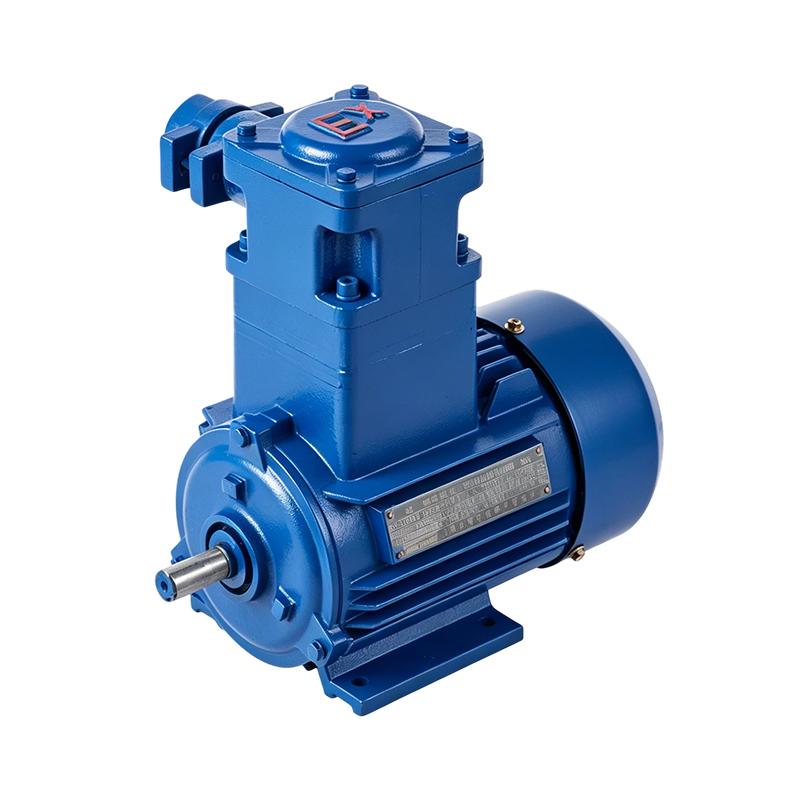
In chemical processing, petrochemical production, pharmaceuticals, paint manufacturing, grain handling, and other industrial facilities, motor selection must balance electrical safety, efficiency, reliability, and lifecycle cost. YBX3 Explosion-Proof Motors are designed for applications where flammable gases, vapors, or other hazardous atmospheres may be present. For B2B buyers, the right motor is not simply a matter of rated power; enclosure protection, hazardous-area classification, temperature class, efficiency, voltage, installation method, and certification all need to match the project requirements.
Modern procurement is also increasingly focused on explosion proof motor energy efficiency. A motor operating thousands of hours per year can consume far more money in electricity than its original purchase price. Therefore, selecting a high-efficiency design can reduce operating costs while maintaining the protection required for hazardous locations.
2. What Is an Explosion-Proof Motor?
(1) Flameproof Protection and Industrial Safety
An Explosion-Proof Motor is designed to operate safely in an environment where an explosive gas atmosphere may exist. A flameproof enclosure is constructed so that an internal ignition does not propagate outside the enclosure under the specified conditions. IEC 60079-1 specifically addresses electrical equipment protected by flameproof enclosures “d” for explosive gas atmospheres.
(2) What Does Ex d or Ex db Mean?
The marking Ex d identifies flameproof enclosure protection. In newer IEC/EN marking systems, Ex db is commonly used for flameproof equipment with the relevant equipment protection level. Buyers should always verify the complete marking against the hazardous-area classification rather than treating “explosion-proof” as a universal specification.
In 2026, IEC 60079-0:2026 is the latest edition of the general requirements standard for Ex equipment. It defines general construction, testing, and marking requirements for equipment intended for explosive atmospheres. IEC 60079-1 remains the key standard for flameproof enclosure protection.
(1) Higher Efficiency Reduces Operating Costs
An IE3 explosion proof motor combines hazardous-area protection with improved electrical efficiency. For example, consider a 30 kW motor operating 6,000 hours per year. If an efficiency improvement reduces losses by only 1.5 percentage points, the annual energy saving can reach several thousand kWh depending on loading and electricity prices. Over a multi-year operating period, this saving can exceed the initial motor price difference.
(2) Efficiency Standards Matter in International Procurement
EU Ecodesign Regulation 2019/1781 requires covered three-phase motors from 0.75 kW to 1,000 kW to meet at least IE3 from July 2021, with specific exclusions and separate requirements for certain explosion-protected motor categories. Therefore, exporters should check the exact motor type, application, voltage, pole number, and destination-market requirements before confirming compliance.
4. High Efficiency Explosion-Proof Motor Selection Guide
Key technical factors B2B buyers should verify before purchasing an explosion-proof motor.
| Parameter |
Typical Requirement |
Why It Matters |
| Power |
0.12–315 kW for YBX3 range |
Must match the driven load |
| Protection |
Ex d / Ex db |
Provides flameproof protection |
| Temperature Class |
T4 where specified |
Controls maximum surface temperature |
| Efficiency |
IE3 or project-specified class |
Reduces electricity consumption |
| Installation |
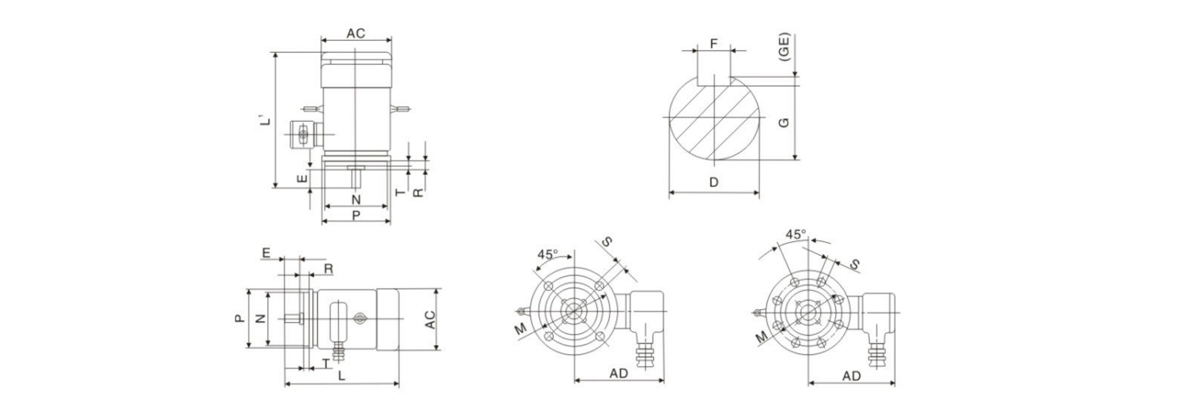
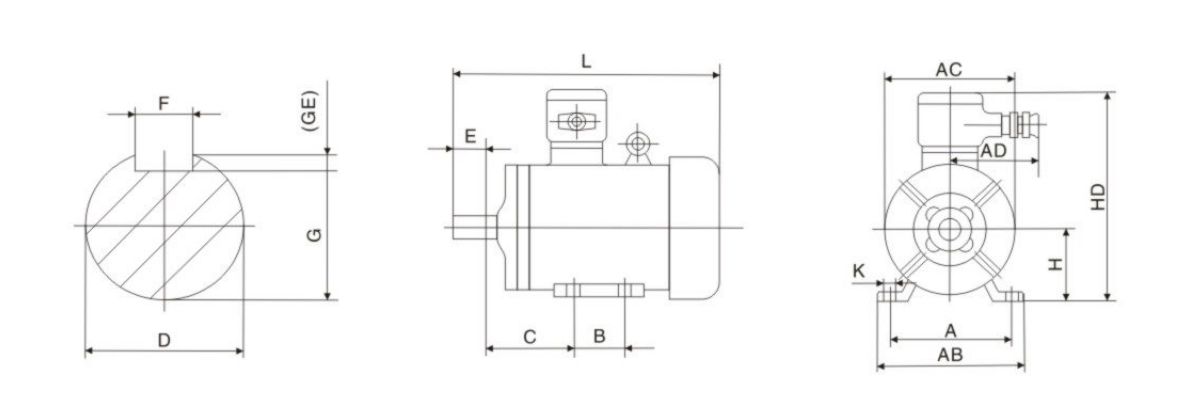
B3, B5, B35 and other configurations |
Ensures mechanical compatibility |
5. Applications of High Efficiency Hazardous Area Motors
(1) Gas Explosion-Proof Applications
Gas-rated flameproof motors are commonly specified for petrochemical workshops, chemical plants, paint spraying facilities, oil and gas equipment, and production lines where combustible gases may occur. For example, a BT4-rated motor is intended for the applicable Class IIB, T4 hazardous gas environment according to its complete certification and marking.
(2) Pumps, Fans, Compressors, and Conveyors
The motor should be selected according to the actual load profile. Pumps and fans may operate continuously, making efficiency particularly important. Conveyors and processing machinery may have frequent starts, requiring attention to starting current, starting torque, thermal capacity, and duty cycle.
- Chemical and petrochemical production
- Pharmaceutical manufacturing
- Grain and oil processing
- Mining and material handling
- Paint, coating, and solvent-processing facilities
6. YBX3 Explosion-Proof Motors from Zhejiang Kuayue Motor Co., Ltd.
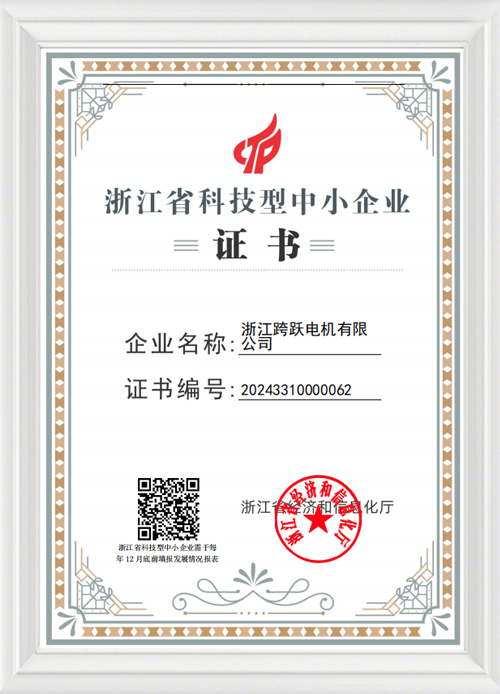
Zhejiang Kuayue Motor Co., Ltd. is an export-oriented manufacturer integrating R&D, production, sales, and export. Located in Luqiao District, Taizhou City, Zhejiang Province, the company has accumulated 34 years of experience in the motor industry. Its production base covers approximately 29 mu and has more than 30 staff members.
YBX3 Explosion-Proof Motors are specifically designed for high-risk work environments where flammable gases, combustible vapors, or explosive dust may be present. The specified product range carries explosion-proof markings including Exd II BT4 Gb and Exd II CT4 Gb, with power output from 0.12 kW to 315 kW. This makes the series suitable for specialized industrial applications such as pharmaceutical, chemical, and grain and oil processing facilities, subject to the exact hazardous-area classification and certification requirements.
For gas explosion-proof applications, the BT4 configuration is suitable for applicable Class IIB, T4 explosive gas mixture environments. Typical industrial scenarios include petrochemical workshops, paint spraying facilities, and production lines where combustible gases such as propane or ethylene may be present.
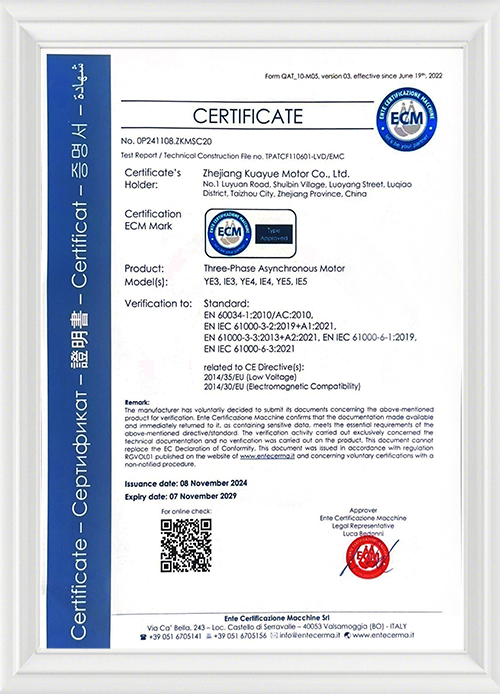
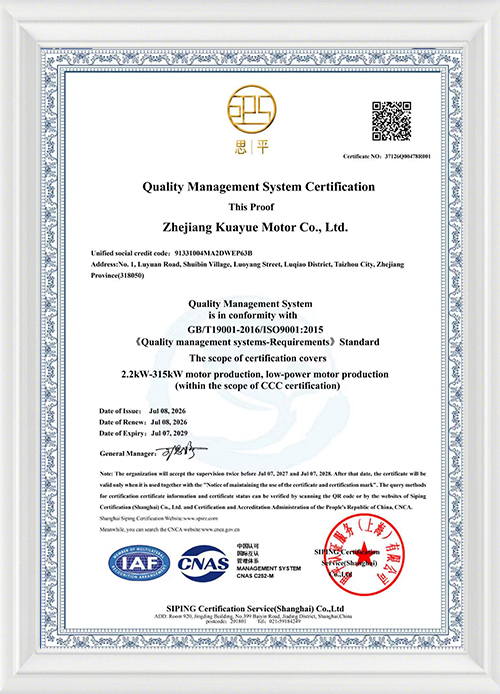
Manufactured under an ISO9001 quality-management system, the company's products hold China CCC compulsory certification and EU CE certification. Motors are supplied to customers in more than 20 Chinese provinces and exported to Europe, America, Southeast Asia, the Middle East, and other international markets. Applications include mining, chemical processing, pumps and HVAC, textile machinery, lifting equipment, machine tools, and port-construction machinery.
7. How to Calculate Explosion Proof Motor Energy Efficiency
(1) Annual Energy Consumption
For B2B purchasing decisions, annual energy consumption can be estimated using the formula: Input Power = Output Power ÷ Motor Efficiency. If a 30 kW motor operates at 90% efficiency, its electrical input at rated output is approximately 33.33 kW. At 6,000 operating hours, this corresponds to about 200,000 kWh annually before considering actual load variation.
(2) Why Load Profile Matters
A motor rarely operates at full load for every hour. Procurement teams should therefore evaluate measured or estimated load profiles instead of comparing efficiency numbers alone. A properly sized energy efficient explosion proof motor can provide a better total cost of ownership when high annual operating hours justify the investment.
8. Explosion-Proof Motor Purchasing Checklist
- Confirm the hazardous-area classification and gas or dust group.
- Confirm the required Ex protection type and complete certification marking.
- Select the correct temperature class, such as T4 where applicable.
- Verify rated power, voltage, frequency, poles, speed, and installation arrangement.
- Compare IE efficiency performance and calculate expected lifecycle energy costs.
- Check ambient temperature, altitude, enclosure protection, cooling method, and duty cycle.
- Request certificates, technical drawings, datasheets, and applicable test documentation before purchase.
Q1. What is an explosion-proof motor?
An explosion-proof motor is an electric motor designed and certified for specified hazardous environments where explosive gases, vapors, or dust may be present. Its protection system prevents an internal ignition from creating an unacceptable external ignition hazard. Buyers must match the motor certification to the actual hazardous-area classification.
Q2. How does an explosion-proof motor work?
A flameproof motor uses a specially engineered enclosure, joints, flame paths, and certified components to contain and control an internal ignition. The enclosure is designed and tested according to the applicable Ex standard. This is why machining accuracy, enclosure construction, cable entry, terminal design, and maintenance of flameproof joints are critical.
Q3. Where are explosion-proof motors used?
They are used in industries such as oil and gas, petrochemicals, chemicals, pharmaceuticals, paints and coatings, mining, grain processing, and other facilities where hazardous atmospheres may occur. Common driven equipment includes pumps, fans, compressors, conveyors, mixers, and process machinery.
Q4. Why do I need an explosion-proof motor?
If a motor operates in a classified hazardous location, ordinary industrial motors may not provide the required protection. An appropriately certified explosion-proof motor helps reduce the risk of ignition associated with electrical equipment. The correct specification depends on the hazardous substance, zone or division, gas or dust group, temperature class, and local regulations.
Q5. What is a flameproof motor?
A flameproof motor is a motor using the flameproof enclosure type of protection, commonly designated Ex d or Ex db in IEC-based systems. The enclosure is designed to withstand an internal explosion and prevent flame transmission to the surrounding explosive atmosphere under the certified conditions.
Q6. Is a flameproof motor the same as an explosion-proof motor?
The terms are often used interchangeably in industrial purchasing, but technically “explosion-proof” is a broader market term while “flameproof” describes a specific protection concept. IEC terminology commonly uses “flameproof enclosure” for Type “d” protection. Always use the complete certification marking rather than relying on terminology alone.
Q7. What is an Ex d motor?
An Ex d motor uses flameproof enclosure protection. The enclosure and flame paths are designed according to the applicable standards and tested for the relevant equipment group and conditions. The complete marking must be reviewed to determine whether the motor is appropriate for a particular hazardous location.
Q8. What is an Ex db motor?
Ex db is an IEC/EN-style designation associated with flameproof protection and the applicable Equipment Protection Level. It is important for international buyers because certification terminology has evolved across different editions of standards. Procurement teams should verify the current certificate and marking rather than assuming that an older Ex d designation automatically satisfies every project requirement.
Q9. What does explosion-proof mean?
Explosion-proof means that equipment incorporates a recognized protection method intended to prevent the equipment from becoming an ignition source in its specified hazardous environment. It does not mean that a motor can be installed anywhere without restrictions. The certification, temperature class, equipment group, environmental conditions, and installation requirements must all match the application.
Q10. How can I choose a high efficiency hazardous area motor?
Start with the hazardous-area classification, then confirm Ex protection type, gas or dust group, temperature class, rated power, voltage, frequency, poles, installation arrangement, ambient conditions, and duty cycle. After safety requirements are established, compare efficiency and lifecycle cost. For continuously operated industrial equipment, an IE3 flameproof motor or other appropriately specified high-efficiency design can substantially reduce electricity losses over its service life.


 English
 Español
 عربى
عربى