1. Self-Priming Clean Water Pump: A Complete B2B Buying and Application Guide
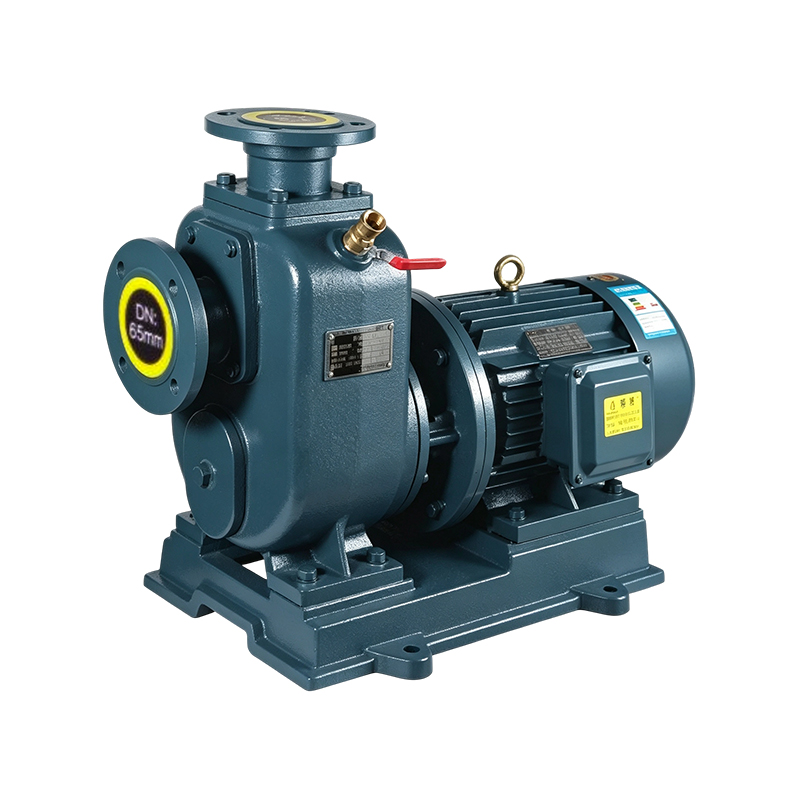
A Self-Priming Clean Water Pump is designed for applications where the pump is installed above the water source and must remove air from the suction line before normal pumping begins. Unlike a conventional centrifugal pump that generally requires the casing and suction line to be flooded before startup, a self-priming design uses retained liquid and an internal priming chamber to evacuate air and establish suction automatically.
For industrial buyers, distributors, engineering contractors, and OEM customers, the key value is not simply “automatic priming.” The real benefits include faster deployment, reduced manual intervention, easier system integration, and reliable operation in applications where the water level changes frequently. Current engineering references commonly place the practical suction-lift range of self-priming centrifugal pumps around 6–8 meters for cold water under favorable sea-level conditions, although the actual value depends on altitude, water temperature, pipe friction, NPSH, pump design, and installation geometry.
(1)How Self-Priming Technology Works
A self-priming pump normally retains a certain amount of water inside its casing after shutdown. During startup, the impeller circulates this retained water while the pump separates air from the liquid. The air is discharged through the outlet, while the liquid returns to the priming chamber. As air is progressively removed from the suction pipe, atmospheric pressure pushes water toward the pump. Once the suction line is filled, the pump transitions to normal centrifugal pumping.
Self-priming does not normally mean “start completely dry.” Most self-priming centrifugal pumps still require an initial fill of liquid in the pump casing. Manufacturers should clearly specify the required initial priming volume, maximum priming lift, priming time, and allowable operating conditions in the technical documentation.
(2)Why Businesses Choose Self-Priming Pumps
- Reduced manual priming work for intermittent pumping operations.
- Suitable for water sources located below the pump installation level.
- Convenient for temporary pumping stations and mobile equipment.
- Simpler operation for distributors, contractors, and maintenance teams.
- Good compatibility with clean-water transfer, irrigation, construction, drainage, and general industrial water handling.
The biggest advantage of self-priming clean water pumps is that they require no manual priming during normal restart conditions — the pump automatically completes the suction process as soon as it's switched on. With a simple structure, stable operation, and low noise, these pumps are ideal for field operations, temporary water intake, and other applications where the pump body cannot remain constantly filled with water.
3. Portable Self-Priming Water Pump for Industrial Applications
(1)Why Portability Matters in B2B Projects
A Portable Self-Priming Water Pump is particularly valuable when pumping points change frequently. Construction contractors, agricultural operators, equipment rental companies, emergency-response teams, and industrial service providers may need to move pumps between reservoirs, tanks, drainage points, and temporary water systems.
For example, a contractor handling several temporary dewatering locations may save substantial labor by using a portable self-priming system instead of repeatedly installing a fixed pump and manual priming arrangement. Portability also allows one pump model to support multiple projects, improving equipment utilization and reducing the need to maintain separate pumping assets.
(2)Portable Self-Priming Clean Water Pump Selection
When purchasing a Portable Self-Priming Clean Water Pump, buyers should evaluate the complete duty point rather than selecting a pump only by its maximum flow rate. Flow and head must be considered together, along with suction lift, pipe diameter, total pipe length, water temperature, operating frequency, motor power, and required electrical supply.
Key technical parameters B2B buyers should confirm before selecting a portable self-priming pump.
| Parameter |
Why It Matters |
Typical B2B Consideration |
| Flow Rate |
Determines water transfer capacity |
m³/h, L/min or GPM at the actual duty point |
| Total Head |
Determines pressure and elevation capability |
Include static head and pipe losses |
| Suction Lift |
Directly affects priming reliability |
Confirm manufacturer priming curve |
| Motor Power |
Must match hydraulic duty and operating conditions |
kW, voltage, frequency and phase |
| Priming Time |
Indicates startup performance |
Verify at specified suction lift and pipe configuration |
4. How to Select a Self-Priming Clean Water Pump Manufacturer
(1)Evaluate Manufacturing Capability
For distributors and OEM buyers, choosing a Self-Priming Clean Water Pump Manufacturer requires more than comparing unit prices. Buyers should evaluate engineering capability, production consistency, quality control, motor manufacturing experience, testing procedures, certification, spare-parts availability, packaging, lead time, and export experience.
A reliable supplier should be able to provide performance curves, motor specifications, dimensional drawings, material information, wiring details, installation instructions, inspection documentation, and applicable certificates. For large-volume projects, buyers should also confirm whether the manufacturer can support private labeling, customized voltage and frequency, packaging requirements, and application-specific engineering.
(2)Self-Priming Clean Water Pump OEM Factory Requirements
A qualified Self-Priming Clean Water Pump OEM Factory should have the ability to adjust motors, pump configurations, nameplates, colors, packaging, electrical specifications, and documentation according to customer requirements. For international distribution, consistent product specifications are especially important because distributors need stable performance across repeated purchase orders.
OEM buyers should request a sample approval process before mass production. The approved sample can establish the reference for dimensions, performance, materials, labeling, packaging, and electrical configuration, reducing the risk of discrepancies in subsequent production batches.
5. Portable Self-Priming Water Pump Factory and OEM Supply
(1)Why Work Directly With a Factory?
Purchasing directly from a Portable Self-Priming Water Pump Factory can provide advantages for importers, wholesalers, project contractors, and regional distributors. Direct factory sourcing can improve communication between engineering and purchasing teams, simplify customization, and make it easier to establish long-term spare-parts and after-sales support programs.
For recurring orders, buyers should compare the total cost of ownership rather than only the initial purchase price. A pump with better component quality, stable motor performance, readily available replacement seals and bearings, and predictable maintenance requirements can offer a lower lifecycle cost even if its initial price is not the lowest.
(2)Portable Self-Priming Water Pump Manufacturer in China
Kuayue Motor Co., Ltd is custom portable self-priming clean water pump manufacturer and factory in China, offering portable self-priming water pump for industrial applications.
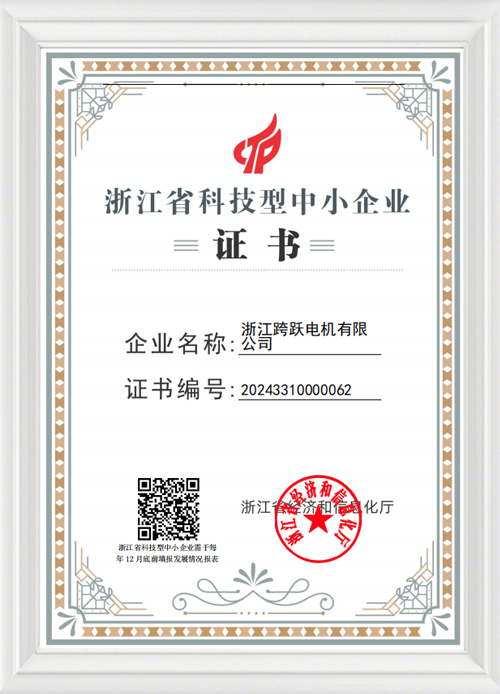
Zhejiang Kuayue Motor Co., Ltd. is an export-oriented manufacturer integrated with R&D, production, sales, and export, located in Luqiao District, Taizhou City, Zhejiang Province. The company states that it has accumulated 34 years of experience in the motor industry. Its production base covers approximately 29 mu and has more than 30 staff members.
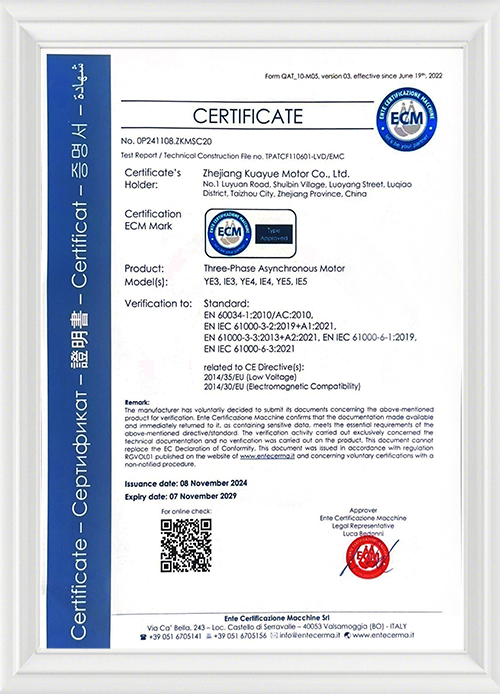
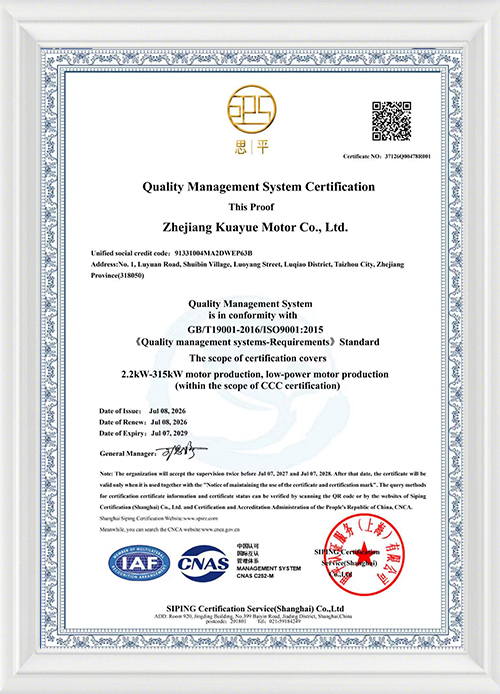
Manufactured under an ISO9001 quality-management system, its products hold China CCC compulsory certification and EU CE certification. Its motors are sold across more than 20 Chinese provinces and exported to Europe, America, Southeast Asia, the Middle East, and other global markets. The company's products serve industries including mining, chemical processing, pump and HVAC, textile, lifting, machine tools, and port-construction machinery.
(3)Portable Self-Priming Water Pump OEM Factory Services
For distributors and industrial customers, a Portable Self-Priming Water Pump OEM Factory can provide customized configurations based on market requirements. Typical OEM requirements include voltage and frequency changes, motor power selection, cable specifications, product labeling, carton design, user manuals, nameplates, colors, and packaging.
6. Installation, Maintenance and Troubleshooting
(1)Installation Best Practices
- Place the pump as close to the water source as practical to reduce suction lift and friction losses.
- Fill the pump casing with the specified amount of clean water before the first startup.
- Use a properly sized suction hose or pipe and minimize unnecessary bends and fittings.
- Check all suction-side connections for air leakage because even a small air leak can prevent reliable priming.
- Confirm that the motor voltage, frequency, rotation direction, and overload protection match the manufacturer's requirements.
(2)Can a Self-Priming Pump Run Dry?
Generally, no. Self-priming centrifugal pumps are designed to remove air during the priming process, but this does not mean they can operate indefinitely without liquid. Mechanical seals and other internal components can overheat when liquid is absent. Dry-running protection, liquid-level monitoring, proper initial filling, and short priming cycles can significantly reduce the risk of damage.
If a pump repeatedly loses prime, engineers should inspect suction-pipe leaks, excessive suction lift, incorrect pipe sizing, damaged seals, worn impellers, blocked strainers, unsuitable check valves, and water temperature. A practical suction lift of approximately 6–8 meters is common for many clean-water self-priming centrifugal pump applications, but buyers should always use the actual manufacturer's performance data instead of treating this range as a universal specification.
Common self-priming pump problems and recommended B2B troubleshooting checks.
| Problem |
Likely Cause |
Recommended Check |
| Pump will not prime |
Air leakage or excessive suction lift |
Inspect suction joints, pipe layout and actual lift |
| Low water flow |
Blocked inlet, undersized pipe or excessive head |
Check strainer, pipe diameter and system curve |
| Pump loses prime |
Suction leak or insufficient retained liquid |
Inspect seals, joints and priming chamber |
| Long priming time |
High lift, air leakage or restricted suction |
Reduce lift where possible and inspect suction piping |
7. Frequently Asked Questions About Self-Priming Water Pumps
Q1. What is a self-priming water pump?
A self-priming water pump is a centrifugal pump designed to remove air from its suction line and establish liquid flow automatically after the pump has been initially filled with liquid. It is especially useful when the pump is installed above the water source or when the suction line cannot remain continuously flooded. For B2B applications, the most important specifications are flow, head, suction lift, priming time, motor power, and operating conditions.
Q2. How does a self-priming pump work?
During startup, retained liquid inside the pump is circulated by the impeller. The pump creates a pressure difference that draws air from the suction pipe. Air is separated from the liquid and discharged, while liquid returns to the pump chamber. Once the suction pipe becomes filled with water, the pump operates as a conventional centrifugal pump. The exact priming mechanism varies by pump design.
Q3. What does self-priming mean on a water pump?
Self-priming means the pump can automatically evacuate air from the suction system and establish suction without requiring the operator to manually refill the suction line during every normal restart. It does not necessarily mean the pump can start completely dry. Most centrifugal self-priming pumps need an initial liquid charge, and the manufacturer should define the required procedure.
Q4. Does a self-priming pump need water to start?
In most centrifugal self-priming designs, yes. The pump casing needs a specified amount of liquid to initiate the priming process and protect internal components. The term “self-priming” describes the automatic removal of air from the suction system; it should not be interpreted as permission to operate the pump completely dry. Always follow the manufacturer's filling and startup instructions.
Q5. Can a self-priming pump run dry?
A standard centrifugal self-priming pump should not be treated as a dry-running pump. During priming, partial air handling occurs, but the pump normally depends on retained liquid for cooling and lubrication. Prolonged dry operation can damage mechanical seals and other components. For demanding industrial installations, buyers should consider dry-run protection, level sensors, thermal protection, and an automatic shutdown system.
Q6. How long does a self-priming pump take to prime?
Priming time depends on suction lift, suction-pipe diameter and length, internal pump design, rotational speed, air volume, water temperature, and system configuration. A pump positioned close to the water source with a short, properly sealed suction line can prime much faster than the same pump operating near its maximum suction lift. For procurement, buyers should request a manufacturer's priming-time test condition instead of comparing an isolated time figure.
Q7. Why is my self-priming pump not priming?
The most common causes include insufficient liquid in the pump casing, air leakage in the suction line, excessive suction lift, an incorrectly sized suction pipe, a blocked inlet, damaged seals, incorrect rotation, or operating conditions outside the pump's rated range. Start by confirming the casing is filled correctly, then inspect every suction connection for air leakage. If the problem remains, compare the actual installation against the manufacturer's priming curve.
Q8. Why does my water pump lose prime?
A pump may lose prime because water drains from the suction line after shutdown, a suction-side connection allows air to enter, the check or foot valve does not hold correctly, the priming chamber contains insufficient liquid, or the pump has worn internal components. In a commercial installation, repeated loss of prime should be investigated systematically because frequent repriming can increase downtime and maintenance labor.
Q9. Why is my self-priming pump not pumping water?
First verify that the pump has been filled according to the manufacturer's instructions and that the motor is rotating in the correct direction. Then inspect the suction hose for leaks, blockage, kinks, or excessive length. Check whether the actual suction lift exceeds the rated value. If the pump reaches operating speed but still cannot deliver water, the issue may involve air ingress, insufficient priming liquid, an unsuitable system configuration, or internal wear.
Q10. Why does my pump have low water flow?
Low flow can result from excessive total head, undersized piping, clogged strainers, partially closed valves, suction restrictions, air entering the suction line, worn impeller components, or incorrect motor speed. For B2B troubleshooting, measure the actual flow and pressure and compare them with the pump curve. For example, a pump advertised with a high maximum flow rate may deliver substantially less flow when operating against significant head, so procurement decisions should always be based on the required flow-at-head duty point rather than the maximum headline capacity.
Q11. How high can a self-priming water pump lift water?
There is no single universal value. Practical suction lift for many clean-water self-priming centrifugal pumps is commonly around 6–8 meters under favorable conditions, while theoretical atmospheric-pressure limits are higher. Water temperature, altitude, vapor pressure, pipe friction, NPSH requirements, and pump design can significantly reduce the achievable lift. Commercial buyers should therefore use the manufacturer's tested suction-lift curve for the exact model.
Q12. How do I choose a reliable self-priming clean water pump manufacturer?
Compare manufacturers based on engineering documentation, factory production capability, quality-management systems, certifications applicable to your market, motor and pump testing, customization capability, spare-parts support, lead time, export experience, and after-sales service. For OEM projects, request a complete technical data sheet, performance curve, dimensional drawing, electrical specification, certification documents, sample-testing process, and production quality-control plan before placing a large order. A factory capable of providing consistent documentation and repeatable performance is generally more valuable to a long-term distributor than a supplier competing only on the lowest unit price.


 English
 Español
 عربى
عربى