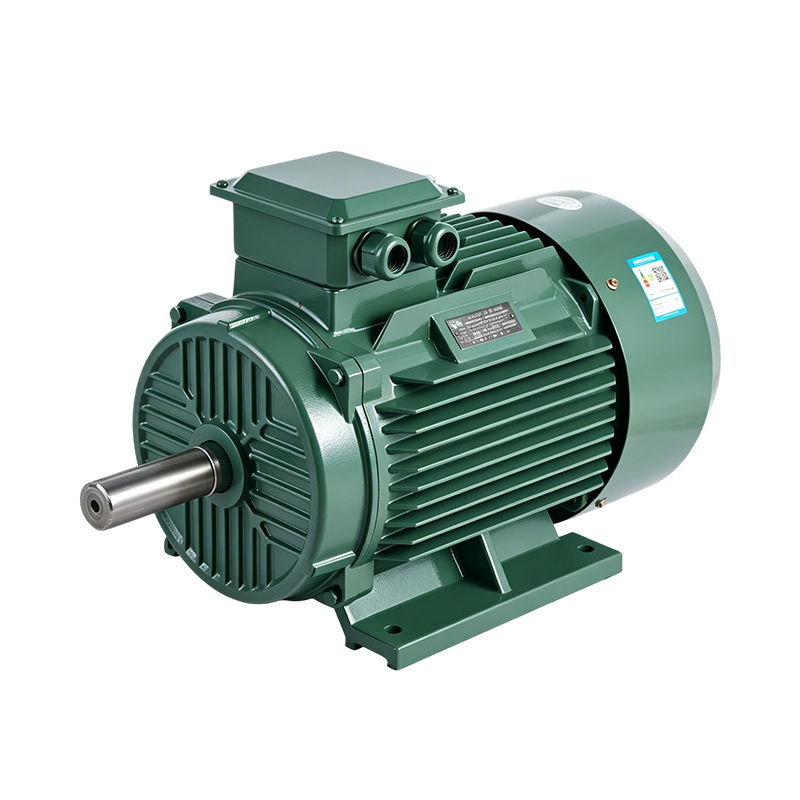
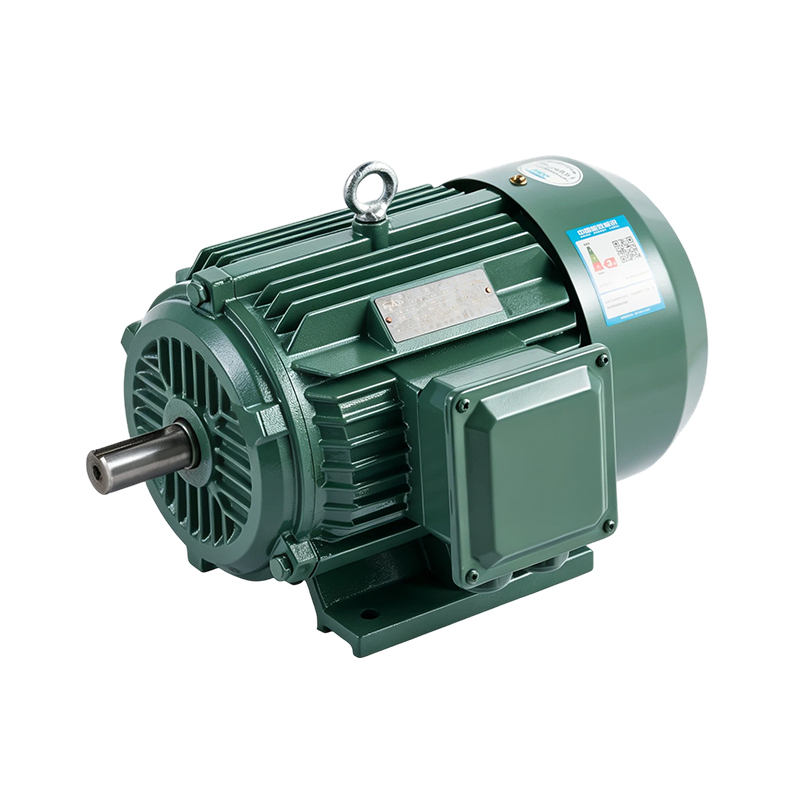
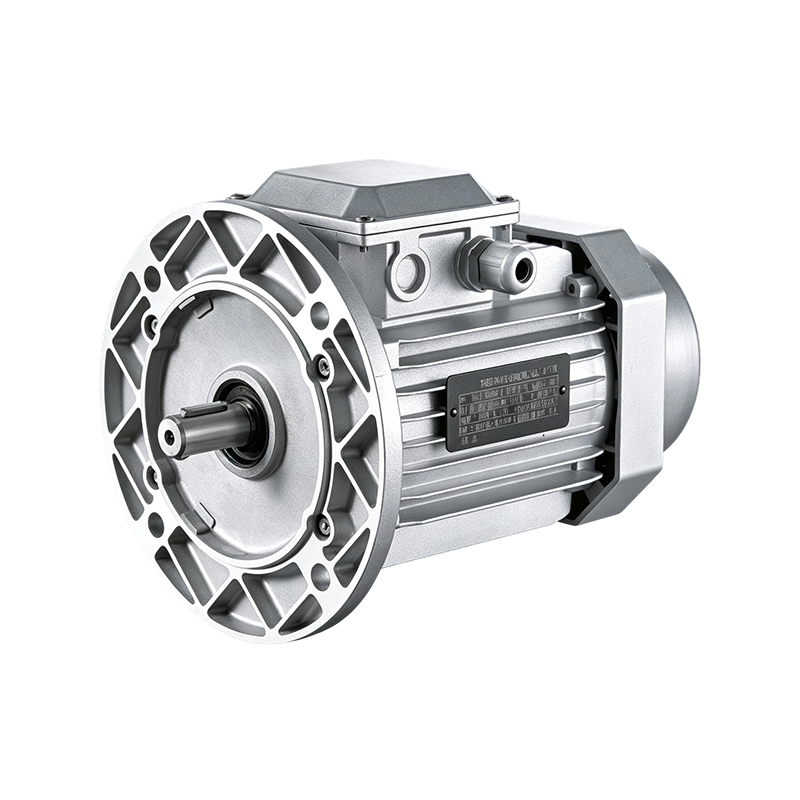
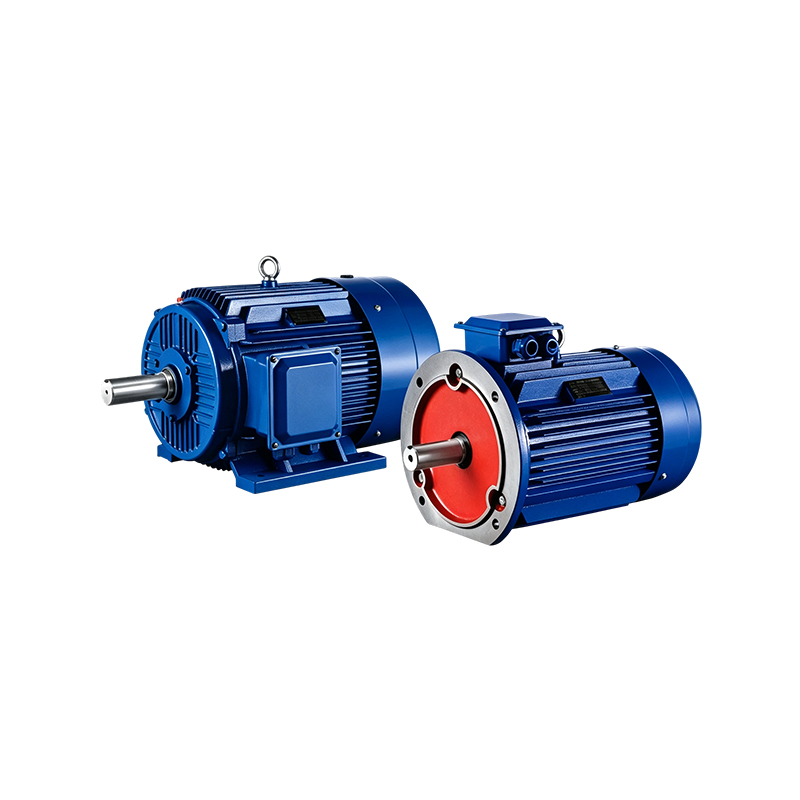
1. Three-Phase Asynchronous Induction Motor for Industrial Pump Applications
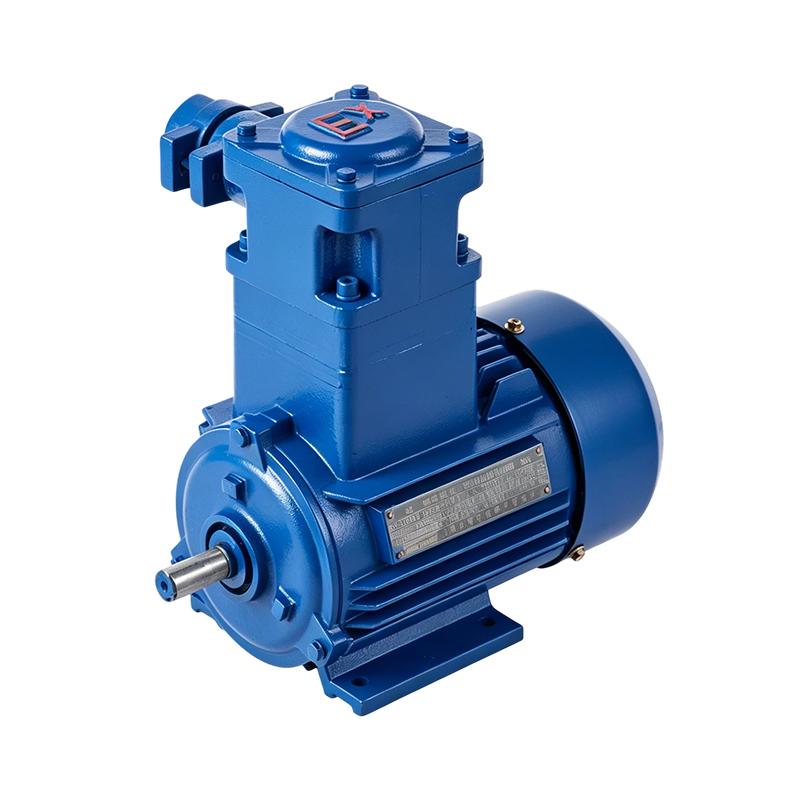
A three-phase asynchronous induction motor is one of the most widely used power solutions for industrial pumps, pipeline systems, HVAC equipment, water treatment plants, chemical processing equipment, mining machinery, and general industrial drives. For B2B buyers, the motor is not simply a power component; its efficiency, starting performance, insulation system, protection class, mechanical dimensions, and long-term reliability directly influence the operating cost of the complete pump system.
Modern procurement teams increasingly evaluate motors according to efficiency class, operating conditions, duty cycle, compatibility with variable frequency drives (VFDs), delivery capability, certifications, and OEM customization. In the European market, current Ecodesign requirements cover many three-phase induction motors from 0.12 kW to 1,000 kW, with minimum efficiency requirements including IE3 for many motors from 0.75 kW upward and IE4 requirements for certain 75–200 kW three-phase motors. Buyers should therefore verify the exact regulatory scope of their application before selecting a motor.
2. Why Three-Phase Motors Are Preferred for Pumps
(1) Stable torque and efficient continuous operation
Three-phase motors produce a rotating magnetic field without requiring a starting capacitor, making them well suited to continuous industrial operation. Compared with many single-phase solutions, they can provide smoother torque, higher power capability, and better suitability for large centrifugal, booster, circulation, and pipeline pumps.
(2) Better suitability for demanding pump systems
Industrial pumps may operate thousands of hours annually. Even a small efficiency difference can therefore create a significant lifetime energy-cost difference. For example, a 75 kW motor operating 6,000 hours per year represents 450,000 kWh of rated mechanical output before considering system efficiency. This is why B2B purchasers should compare motor efficiency, load profile, electricity cost, and expected operating hours rather than focusing only on purchase price.
Typical motor selection factors for industrial pump projects.
| Parameter |
Typical B2B Consideration |
Why It Matters |
| Power |
kW according to pump load |
Prevents undersizing and unnecessary oversizing |
| Efficiency |
IE2, IE3, IE4 where applicable |
Reduces lifecycle energy consumption |
| Speed |
Commonly 2-pole or 4-pole |
Influences pump flow, head and system efficiency |
| Protection |
IP rating and site environment |
Protects against dust, moisture and environmental exposure |
3. How to Select a Three-Phase Induction Motor for a Pipeline Pump
(1) Match motor power to the pump duty point
Motor selection should begin with the pump's required flow rate, total dynamic head, efficiency, fluid properties, and operating conditions. A simplified hydraulic power calculation is P = ρgQH, while the motor input requirement must also account for pump and motor losses. For example, water at approximately 1,000 kg/m³ with a flow of 0.05 m³/s and a head of 40 m requires approximately 19.6 kW of hydraulic power before pump and motor losses. The final motor rating must therefore be selected from the complete duty calculation rather than from hydraulic power alone.
(2) Consider voltage, frequency and starting method
International projects may require different voltage and frequency combinations, such as 380–415 V at 50 Hz or approximately 460 V at 60 Hz. Starting methods may include direct-on-line starting, star-delta starting, soft starters, or VFD control. The motor should be specified together with the actual electrical system rather than treated as a standalone commodity.
(3) Evaluate the installation environment
Temperature, altitude, humidity, dust, corrosive gases, outdoor exposure, and hazardous-area requirements can change the appropriate motor configuration. For a pipeline pump installed outdoors or in a demanding industrial environment, buyers should check enclosure protection, insulation class, cooling method, bearings, terminal-box configuration, and paint or corrosion-protection requirements.
(1) Engineering and OEM customization
A reliable Pipeline Pump OEM Factory should be able to coordinate motor specifications with pump requirements. Depending on the project, customization may include rated voltage, frequency, mounting arrangement, shaft dimensions, terminal-box orientation, cable entry, bearings, thermal protection, brake options, paint system, nameplate information, and packaging.
(2) Manufacturing consistency and quality documentation
For an international buyer, supplier qualification should include more than a product catalogue. Important documents may include datasheets, test reports, certificates, drawings, inspection records, packing specifications, and traceability information. A qualified three phase induction motor manufacturer should also be able to clearly identify the applicable standards and testing procedures for the target market.
(3) Stable supply capability
For pump OEMs, distributors, engineering contractors, and system integrators, delivery consistency is often as important as the motor price. A capable three phase induction motor supplier should support repeat orders, technical communication, packaging requirements, spare parts, and production planning. This becomes especially important when motors are integrated into complete pump skids or exported as part of large infrastructure projects.
5. Why Choose a Professional Three-Phase Motor Manufacturer
When comparing a three phase motor manufacturer, three phase pump motor manufacturer, industrial pump motor supplier, or pipeline pump motor manufacturer, procurement teams should assess the supplier against the complete project lifecycle.
- Confirm the motor's rated power, voltage, frequency, speed and mounting dimensions.
- Verify the applicable efficiency class and market-specific compliance requirements.
- Check whether the manufacturer supports OEM drawings, nameplates and customized configurations.
- Evaluate production capacity, quality control, testing capability and export experience.
- Compare total lifecycle cost rather than comparing purchase prices alone.
For OEM buyers, a custom three phase motor manufacturer can provide greater flexibility than an off-the-shelf distributor. An OEM three phase motor or three phase motor OEM program can be particularly useful when a pump manufacturer needs consistent dimensions, branding, performance parameters, and repeat production across multiple models.
6. Zhejiang Kuayue Motor Co., Ltd. for OEM and Industrial Motor Projects
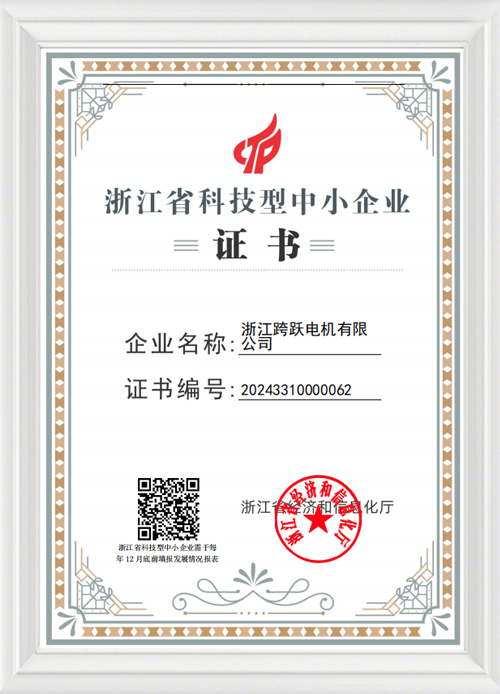
Zhejiang Kuayue Motor Co., Ltd. is an export-oriented manufacturer integrating R&D, production, sales and export. Located in Luqiao District, Taizhou City, Zhejiang Province, the company has accumulated 34 years of experience in the motor industry. Its production base covers 29 mu and has more than 30 staff members.
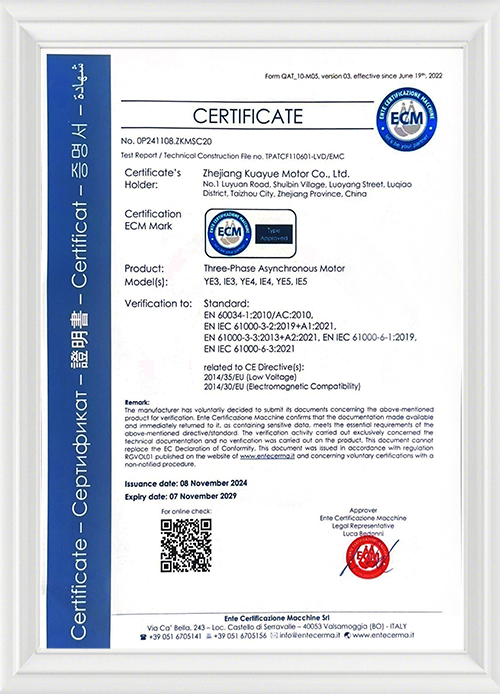
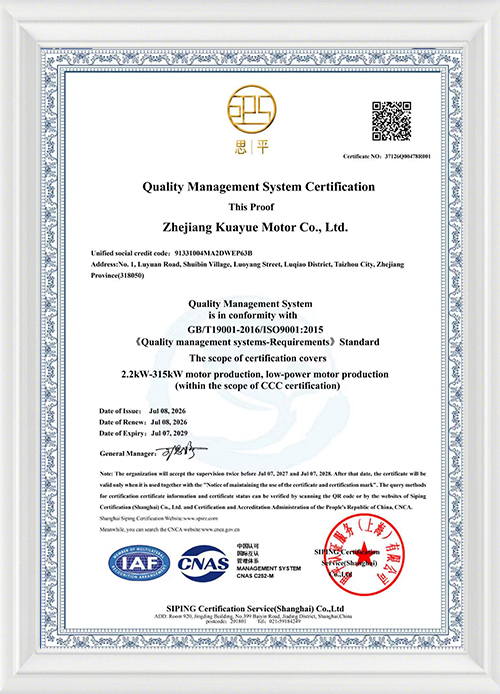
Manufactured under an ISO9001 quality-management system, the company's products hold China CCC compulsory certification and EU CE certification. Motors are sold across more than 20 Chinese provinces and exported to Europe, America, Southeast Asia, the Middle East and other global regions.
The company's motors serve applications including mining, chemical processing, pump and HVAC systems, textile machinery, lifting equipment, machine tools and port-construction machinery. For buyers seeking a industrial motor supplier, pump motor factory, or three phase motor factory, this combination of manufacturing experience and export capability can support OEM-oriented procurement and international project requirements.
7. Maintenance and Lifecycle Management of Pump Motors
Correct installation and maintenance are essential for maintaining motor efficiency and service life. Buyers should establish inspection procedures covering terminal connections, vibration, bearing condition, cooling passages, insulation condition, operating current, temperature, and alignment between the motor and pump.
Examples of practical maintenance checkpoints for industrial pump motors.
| Checkpoint |
Recommended Focus |
| Electrical |
Current balance, connections, insulation and protection settings |
| Mechanical |
Alignment, vibration, bearings and shaft condition |
| Cooling |
Fan, ventilation passages and ambient temperature |
| Pump system |
Flow, head, cavitation, seal condition and operating point |
8. Frequently Asked Questions About Three-Phase Induction Motors and Pump Motors
Q1. What is a three-phase asynchronous motor?
A three-phase asynchronous motor, commonly called a three-phase induction motor, converts three-phase electrical energy into mechanical rotation through electromagnetic induction. The rotor normally runs slightly slower than the rotating magnetic field, creating the slip required to produce torque. Its robust construction makes it widely used in pumps, fans, compressors, conveyors and industrial machinery.
Q2. What is the difference between an induction motor and an asynchronous motor?
In common industrial terminology, the terms are usually interchangeable. An induction motor is called asynchronous because its rotor speed is not exactly equal to the synchronous speed of the rotating magnetic field. The difference in speed is known as slip and is necessary for torque production in a conventional squirrel-cage induction motor.
Q3. Why are three-phase motors used for pumps?
Three-phase motors are widely used because they provide smooth rotating torque, strong starting capability, efficient continuous operation, and a practical solution for medium- and high-power industrial equipment. For a pump running 6,000 hours annually, even a modest efficiency improvement can produce meaningful energy savings over the motor's service life.
Q4. How does a three-phase induction motor work?
Three-phase current supplied to the stator creates a rotating magnetic field. This field induces current in the rotor, and the interaction between the magnetic fields produces torque. The rotor accelerates toward synchronous speed but remains slightly slower during normal operation. The resulting slip enables continuous torque production.
Q5. What size motor is needed for a water pump?
The required motor size depends on flow rate, total head, fluid density, pump efficiency, motor efficiency, operating point and service conditions. A simplified hydraulic calculation is P = ρgQH. For example, 0.05 m³/s of water at 40 m head requires about 19.6 kW of hydraulic power. The actual motor rating must be higher after accounting for pump and motor losses and appropriate engineering margin.
Q6. How do I calculate pump motor power?
First calculate hydraulic power using fluid density, gravitational acceleration, flow and head. Then divide by the pump efficiency and motor efficiency to estimate required electrical input. The selected motor should also account for the actual duty cycle, starting conditions, ambient environment and applicable service factor. For commercial projects, the pump manufacturer's performance curve should be used together with the motor datasheet.
Q7. What is the difference between a 2-pole and 4-pole motor?
At 50 Hz, a 2-pole motor has a synchronous speed of 3,000 rpm, while a 4-pole motor has a synchronous speed of 1,500 rpm. Actual operating speeds are lower because of slip. For pump applications, the choice affects flow, head, efficiency, noise, vibration and system design. The correct selection should be based on the pump curve rather than speed alone.
Q8. Can an induction motor run with a VFD?
Yes. Many three-phase induction motors can operate with a VFD when the motor, drive and application are correctly matched. VFD operation can regulate pump speed and help control flow while potentially reducing energy consumption in variable-flow applications. However, buyers should confirm insulation requirements, bearing considerations, cooling performance, minimum speed, maximum speed and VFD compatibility with the motor manufacturer.
Q9. What causes a three-phase motor to overheat?
Common causes include overload, low or unbalanced voltage, phase loss, insufficient ventilation, high ambient temperature, excessive starting frequency, bearing problems, misalignment, incorrect VFD settings, or operation outside the motor's intended speed range. Continuous temperature monitoring and current measurement can help identify problems before severe winding damage occurs.
Q10. How long does a three-phase induction motor last?
There is no universal service-life number because lifetime depends on load, temperature, bearings, insulation, operating hours, maintenance, installation quality and environment. A properly selected and maintained industrial motor can provide many years of service. For procurement planning, buyers should focus on insulation life, bearing design, quality control, operating conditions and maintenance requirements rather than relying on a fixed lifespan claim.
Q11. How do you maintain a pump motor?
Maintenance should include periodic inspection of electrical connections, current balance, insulation condition, bearings, vibration, alignment, cooling passages and pump operating conditions. For critical pipeline systems, condition-based maintenance using vibration and temperature trends can provide earlier warning than waiting for a complete motor failure.
Q12. What causes a three-phase motor to trip?
A motor may trip because of overload, short circuit, phase loss, voltage imbalance, ground fault, excessive starting current, overheating, incorrect protection settings, mechanical blockage, or a pump operating outside its intended range. The correct troubleshooting process should first identify the protection device that tripped, then measure voltage and current and inspect the motor, cable, drive, coupling and pump before restarting the equipment.


 English
 Español
 عربى
عربى