1、YE3/IE3 Aluminum Shell Motor: A B2B Guide to Lightweight, High-Efficiency Industrial Motors
For equipment manufacturers, distributors, system integrators, and industrial buyers, selecting the right motor is not only about rated power. Weight, thermal performance, energy efficiency, installation cost, supply stability, certifications, and long-term operating reliability all affect the total cost of ownership. The YE3/IE3 Aluminum Shell Motor has become an attractive option for small and medium-power industrial equipment because it combines an aluminum housing with high-efficiency three-phase induction motor technology.
The latest IEC efficiency framework is also evolving. IEC 60034-30-1:2025 is the current international standard for efficiency classes of line-operated AC motors and expands the framework to include IE5. Meanwhile, IEC 60034-1:2026 is the latest edition covering rating and performance of rotating electrical machines. Buyers should therefore verify the applicable market regulations, efficiency test method, rated conditions, and certification requirements when sourcing an IE3 motor.
(1)Construction and operating principle
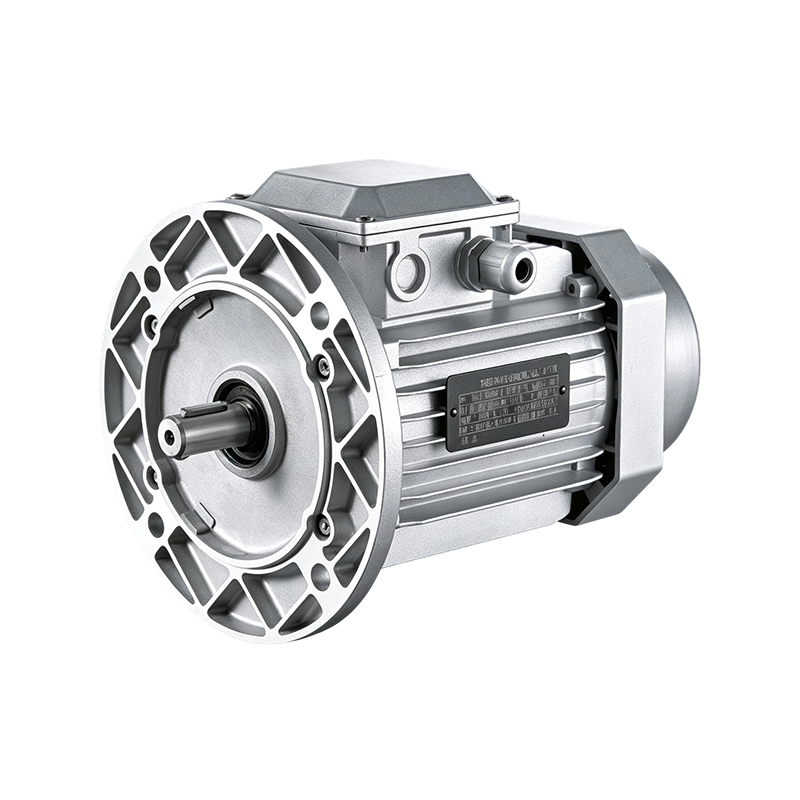
An aluminum frame IE3 motor is generally a three-phase squirrel-cage induction motor using an aluminum alloy housing instead of a traditional cast iron frame. The housing supports the stator assembly, end shields, bearings, terminal box, and cooling structure while the electromagnetic system generates mechanical output through the rotating shaft.
For B2B applications, the major advantage is the combination of a lightweight mechanical structure and an efficiency class designed to reduce electrical losses. Aluminum is also widely used because its thermal conductivity is substantially higher than cast iron, helping transfer heat from the motor housing to the surrounding air when the cooling design is properly engineered.
(2)Typical technical configuration
Typical specifications to evaluate when sourcing an aluminum-shell IE3 motor.
| Parameter |
Typical Requirement |
B2B Purchasing Consideration |
| Efficiency |
IE3 |
Confirm efficiency at the specified voltage, frequency, power, and pole count. |
| Power Range |
0.09–18.5 kW |
Suitable for many small and medium-power machines. |
| Poles |
2, 4, 6 poles |
Select according to required speed and load characteristics. |
| Protection |
IP55 |
Common choice for general industrial environments. |
| Insulation |
Class F |
Verify temperature rise and duty requirements for the application. |
3、Why Choose an Aluminum Shell Motor for Industrial Equipment?
(1)Lower weight and easier installation
Compared with many cast iron designs, an aluminum housing can significantly reduce motor weight. This matters when motors are installed on conveyors, pumps, fans, textile machinery, machine tools, and compact OEM equipment. A lighter motor can simplify manual handling and reduce the mechanical load placed on mounting structures.
(2)Efficient heat transfer
Aluminum has much higher thermal conductivity than cast iron. In a properly designed TEFC motor, this characteristic can support faster heat transfer through the frame. However, buyers should evaluate the complete cooling system rather than judging thermal performance from housing material alone. Fan design, stator construction, winding losses, ambient temperature, installation position, and load level all influence actual operating temperature.
(3)Corrosion resistance and appearance
Aluminum naturally forms a protective oxide layer, providing useful resistance to atmospheric corrosion. A refined aluminum finish can also provide a cleaner appearance for OEM machinery. For chemical, marine, outdoor, or highly corrosive environments, however, buyers should request application-specific coating and material recommendations rather than assuming standard aluminum construction is sufficient.
4、Key Applications of YE3/IE3 Aluminum Shell Motors
The Aluminum Shell Motor is particularly suitable where compact dimensions, low weight, and reliable continuous operation are important. Common B2B applications include:
- Water pumps and circulation systems
- HVAC fans, blowers, and ventilation equipment
- Conveyors and material-handling systems
- Textile and packaging machinery
- Machine tools and general industrial equipment
- OEM equipment requiring compact three-phase motors
For procurement teams, the correct motor should be selected based on rated power, torque, speed, duty cycle, voltage, frequency, mounting arrangement, shaft dimensions, ambient conditions, and starting requirements. A 4-pole motor, for example, typically provides a lower operating speed than a 2-pole motor and may be preferable for pump or fan applications where speed and torque characteristics are critical.
5、How to Select an IE3 Motor Manufacturer or Supplier
Choosing an IE3 motor manufacturer should involve more than comparing unit prices. International buyers should assess production capability, quality systems, certification, export experience, technical support, customization capability, and spare-parts availability.
- Check efficiency documentation: Request rated efficiency data and confirm the applicable IEC testing conditions.
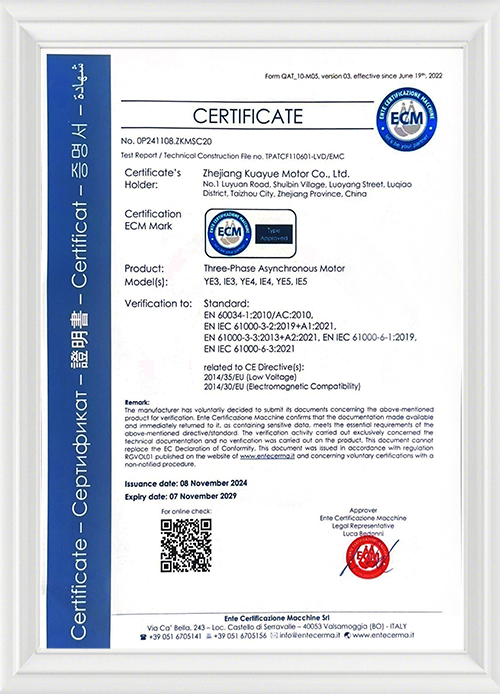
- Verify certifications: Confirm whether CE, CCC, ISO 9001, or other market-specific requirements apply to your destination.
- Evaluate production capacity: A qualified IE3 motor factory should provide stable lead times and consistent batch quality.
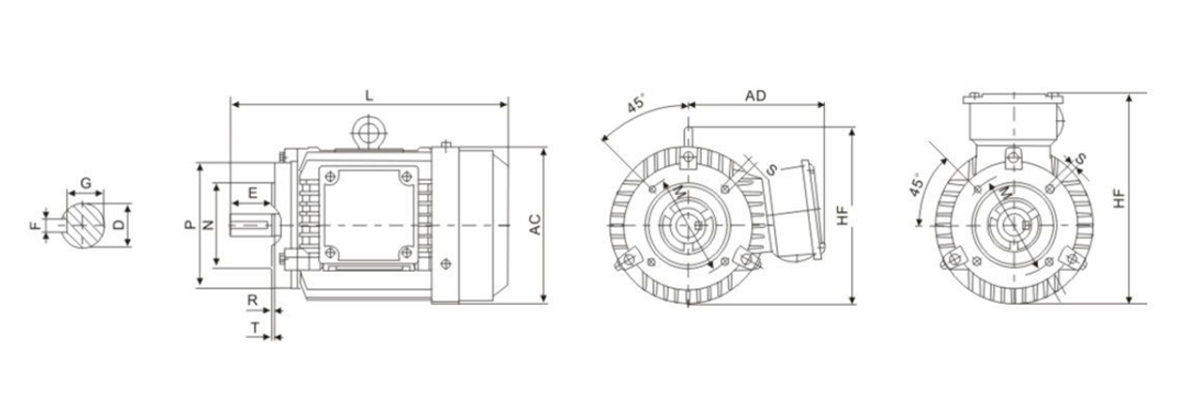
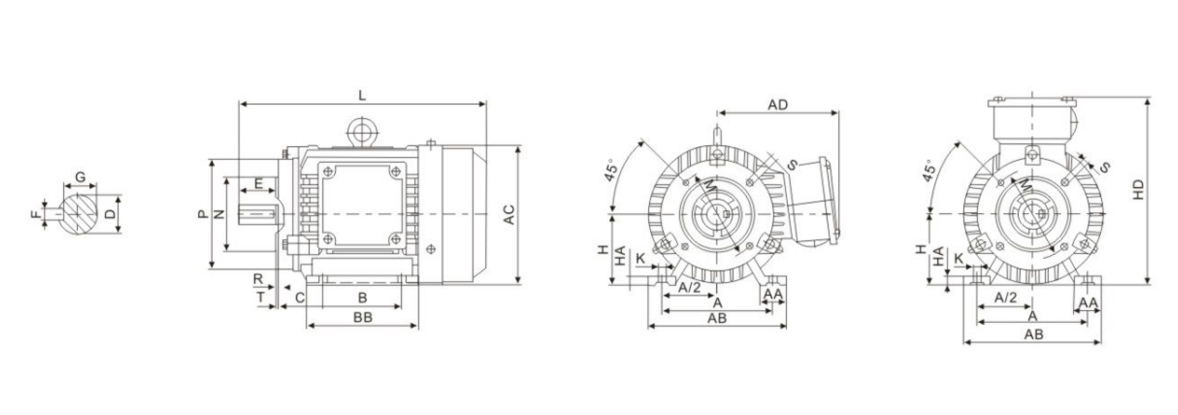
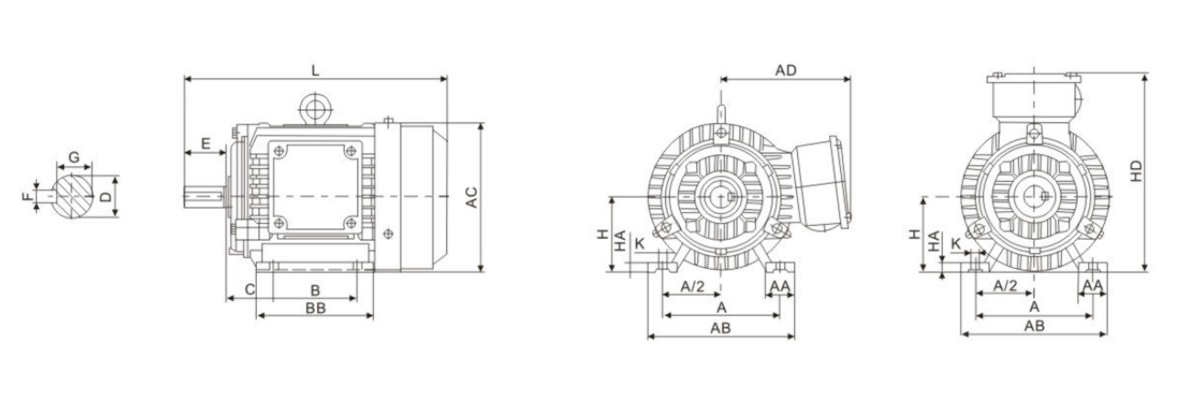
- Review customization: Shaft extensions, mounting dimensions, voltage, frequency, terminal-box position, and special winding requirements may differ between projects.
- Compare total cost: Purchase price, energy consumption, maintenance, transportation, installation, and expected service life should be considered together.
6、Zhejiang Kuayue Motor: Aluminum Frame Motor Manufacturer for Global B2B Buyers
Zhejiang Kuayue Motor Co., Ltd. is an export-oriented manufacturer integrating R&D, production, sales, and export services in Luqiao District, Taizhou City, Zhejiang Province, China. The company states that it has accumulated 34 years of experience in the motor industry, with a production base covering 29 mu and more than 30 staff members.
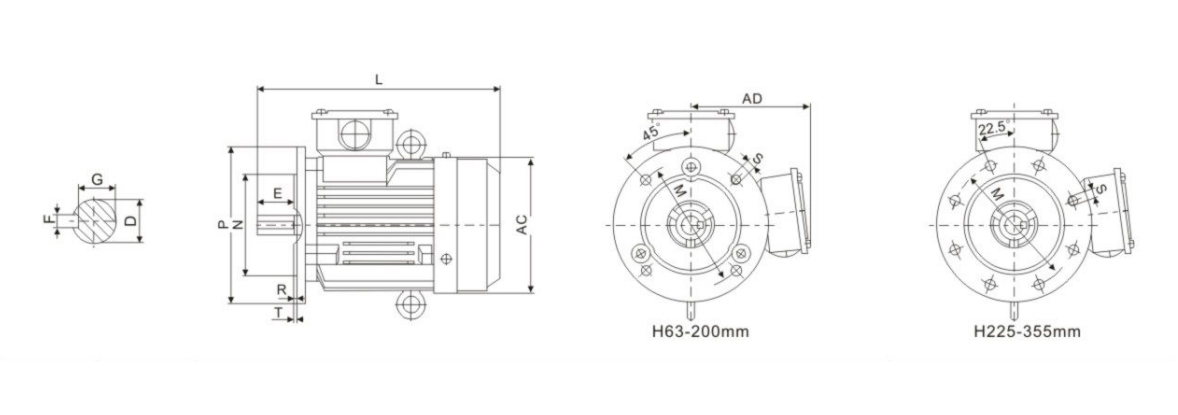
Its YE3/IE3 Aluminum Shell Motors feature a die-cast one-piece aluminum alloy housing, significantly reducing overall weight compared with traditional cast iron bodies. With a power range of 0.09 kW to 18.5 kW, they are positioned for lightweight applications requiring small to medium power output.
(1)Why Choose Aluminum Shell?
- Higher heat dissipation efficiency: Aluminum's high thermal conductivity supports rapid heat transfer from the motor frame.
- Easier handling and installation: Lower weight can make mounting, replacement, and maintenance easier.
- Refined appearance: A consistent aluminum surface finish suits many OEM equipment designs.
- Corrosion resistance: The natural oxide layer of aluminum alloy provides useful protection in humid environments.
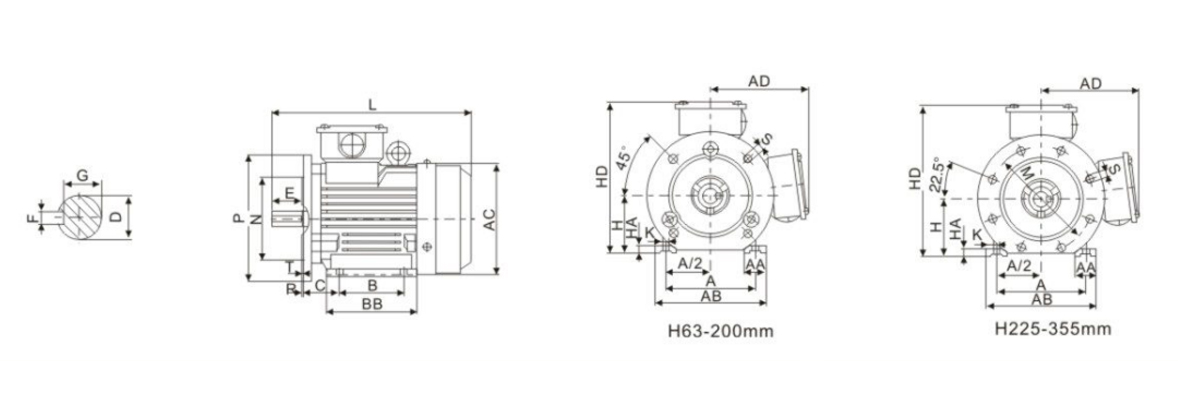
The product configuration includes IE3 efficiency, 2-pole, 4-pole, and 6-pole options, Class F insulation, IP55 protection, and S1 continuous-duty capability. For export projects, buyers should confirm the exact nameplate data, efficiency values, certification documents, mounting standard, and destination-market requirements before placing a purchase order.
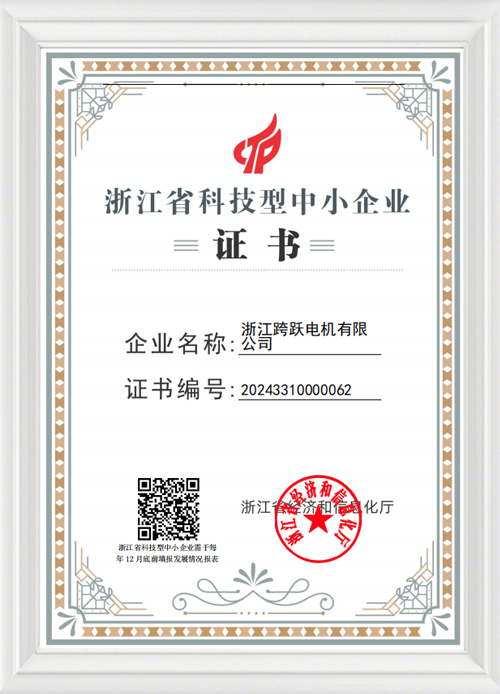
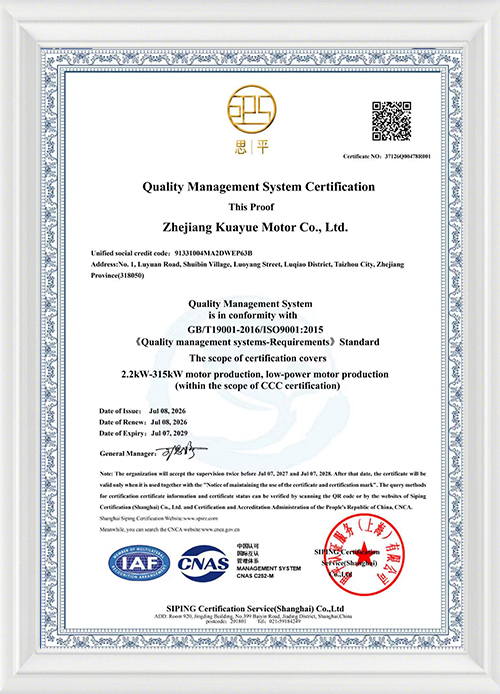
Manufactured under an ISO 9001 quality-management system, the company's stated certifications include China CCC compulsory certification and EU CE certification. Its motors are sold in more than 20 Chinese provinces and exported to Europe, America, Southeast Asia, the Middle East, and other international markets, serving mining, chemical, pump and HVAC, textile, lifting, machine-tool, and port-construction machinery sectors.
7、Aluminum Frame Motor Manufacturer vs. Cast Iron Motor: What Should Buyers Choose?
A practical comparison for industrial motor procurement.
| Factor |
Aluminum Frame Motor |
Cast Iron Motor |
| Weight |
Generally lighter |
Generally heavier |
| Heat Transfer |
High housing thermal conductivity |
Lower housing thermal conductivity |
| Handling |
Convenient for compact equipment |
May require more handling support at larger sizes |
| Typical Positioning |
Lightweight and general industrial equipment |
Heavy-duty applications requiring robust construction |
There is no universal winner. For compact OEM machinery, frequent motor replacement, elevated mounting positions, or applications where weight is a major design constraint, aluminum can be advantageous. For extremely harsh mechanical environments or applications demanding very high structural rigidity, cast iron may remain the better choice.
8、Frequently Asked Questions About Aluminum Frame IE3 Motors
Q1: What is an aluminum frame motor?
An aluminum frame motor is an electric motor that uses an aluminum alloy housing instead of a conventional cast iron frame. The design is commonly used where lower weight, easier installation, good heat transfer, and corrosion resistance are important. An aluminum frame does not automatically determine the motor's efficiency class; buyers should separately verify whether the motor meets IE3 requirements under the applicable testing standard.
Q2: Why are electric motors made of aluminum?
Aluminum is used because it combines relatively low density with high thermal conductivity and good corrosion resistance. For OEM manufacturers, reduced motor weight can simplify equipment design, transportation, installation, and maintenance. It is particularly useful for small and medium-power motors where compactness is a major commercial requirement.
Q3: Is an aluminum motor better than a cast iron motor?
It depends on the application. Aluminum motors are often preferable when low weight and heat transfer are priorities, while cast iron motors can be preferred for heavy-duty environments requiring greater structural robustness. B2B buyers should compare the complete motor specification, including efficiency, torque, protection, insulation, bearings, mounting dimensions, and environmental conditions.
Q4: Are aluminum motors lighter than cast iron motors?
Generally, yes. Aluminum alloy has a much lower density than cast iron, so an aluminum housing can substantially reduce the mechanical weight of a motor with comparable dimensions and output. The actual percentage varies by frame size, electromagnetic design, housing geometry, cooling system, and component configuration, so buyers should request the exact net weight from the manufacturer.
Q5: Are aluminum frame motors durable?
A properly engineered aluminum frame motor can provide reliable long-term service. Durability depends on winding quality, bearing selection, insulation system, rotor balance, housing design, cooling, sealing, operating temperature, load profile, and maintenance. For industrial procurement, IP55 protection and Class F insulation are common specifications, but the final selection should be based on the actual working environment.
Q6: Does aluminum improve motor cooling?
Aluminum's high thermal conductivity can help transfer heat through the motor housing. However, cooling performance is determined by the complete thermal system, including fan airflow, frame geometry, winding losses, rotor design, ambient temperature, and operating load. Therefore, an aluminum housing is a thermal advantage, but it should not be treated as the only indicator of motor temperature performance.
Q7: What are the advantages of an aluminum frame motor?
The major advantages include lower weight, convenient installation, good heat transfer, attractive surface finishing, and useful corrosion resistance. When combined with IE3 efficiency, an aluminum motor can be a practical solution for OEMs seeking a balance between energy performance, mechanical design flexibility, and procurement cost.
Q8: When should I use an aluminum motor instead of cast iron?
Choose an aluminum motor when low weight, compact equipment design, convenient handling, and efficient heat transfer are important. Cast iron may be more appropriate for applications exposed to severe mechanical impact, extreme industrial conditions, or situations where maximum structural rigidity is a priority. The best decision should be based on application data rather than housing material alone.
Q9: How do I choose a reliable IE3 motor supplier?
Look for an experienced IE3 motor supplier with documented quality control, stable production capacity, international certifications, technical support, and export experience. Ask for datasheets, nameplate information, efficiency test documentation, drawings, packing specifications, lead times, warranty terms, and references for similar applications. A capable three phase aluminum motor manufacturer should also be able to provide consistent specifications across repeat orders.
Q10: What should I ask an aluminum frame motor manufacturer before placing an order?
Confirm rated power, voltage, frequency, phase, poles, efficiency class, rated efficiency, mounting arrangement, shaft dimensions, protection rating, insulation class, duty type, ambient temperature, terminal-box configuration, certifications, packaging, MOQ, lead time, warranty, and spare-parts support. For OEM projects, also provide the load curve and installation requirements so the manufacturer can confirm whether the proposed motor is technically suitable.


 English
 Español
 عربى
عربى