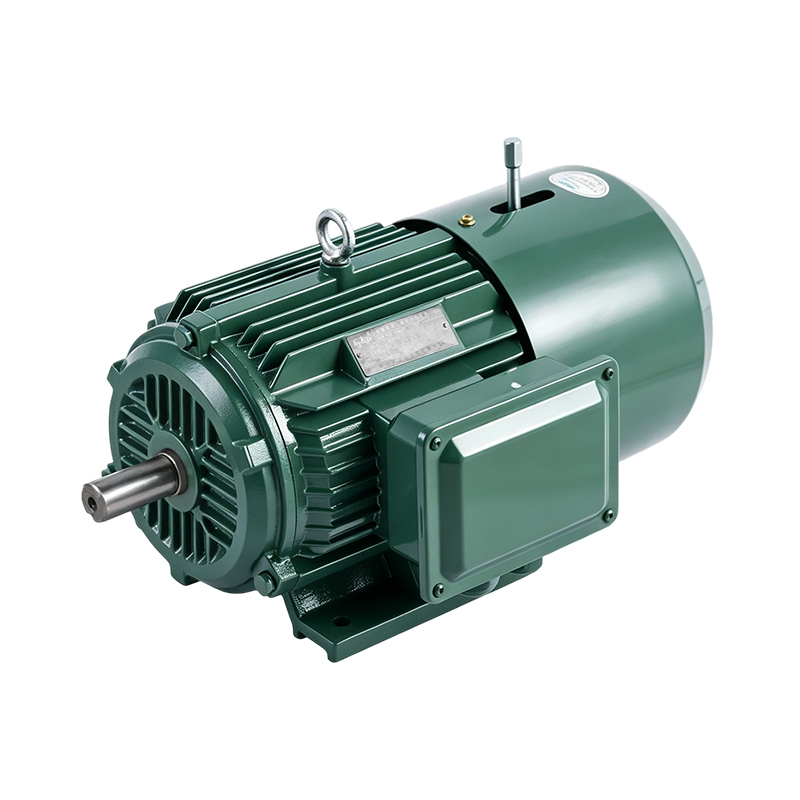
YEJ2 Electromagnetic Brake Motors are three-phase asynchronous motors equipped with an integrated electromagnetic disc brake. They are designed for industrial equipment that requires not only continuous rotary power but also rapid stopping and reliable position holding. Typical applications include conveyors, machine tools, packaging equipment, textile machinery, lifting systems, woodworking machines, and automated production lines.
For B2B buyers, the main advantage is system integration. Instead of purchasing a standard motor and adding a separate braking mechanism, a YEJ2 brake motor combines the motor and power-off brake in one compact assembly. Common specifications cover approximately 0.55kW to 45kW, although available ranges depend on the manufacturer, frame size, efficiency class, voltage, and customization requirements.
The brake is normally spring-applied and electrically released. When motor power is removed, the electromagnetic force disappears and the spring presses the brake disc against the friction surface. This fail-safe principle allows the motor to stop and, under suitable load conditions, help prevent unwanted movement after power loss.
(1)Motor Operation and Brake Release
During normal operation, the three-phase motor converts electrical energy into mechanical rotation while the electromagnetic brake is energized and released. The motor can then drive a gearbox, conveyor pulley, spindle, pump, or other mechanical load. The brake does not normally transmit the operating torque while it is released.
(2)Power-Off Braking
When electrical power to the brake is interrupted, the electromagnetic holding force disappears. Springs move the armature toward the friction disc, producing braking torque. Depending on the motor size, inertia, load, brake adjustment, and operating conditions, no-load braking time can be around 0.15 to 0.45 seconds on commonly supplied YEJ2 configurations. Actual stopping time under load must be calculated and verified rather than assumed from a catalog value.
(3)Why Braking Torque Matters
Brake selection should consider both the motor's rated torque and the external load. For example, a 2.2kW motor operating at approximately 1,400rpm has a rated motor torque of roughly 15N·m. The brake must provide adequate static holding torque for the application, while dynamic stopping performance depends on rotating inertia and load characteristics. Therefore, B2B purchasers should request the complete motor and brake data sheet rather than selecting a brake solely by motor kW.
3、YEJ2 Brake Motor Specifications Buyers Should Check
A reliable procurement process should evaluate electrical, mechanical, braking, environmental, and certification requirements together. The following parameters are especially important when sourcing a YEJ2 electromagnetic brake motor.
Typical procurement parameters for a YEJ2 electromagnetic brake motor; exact specifications should be confirmed with the manufacturer.
| Parameter |
Typical Requirement |
B2B Purchasing Consideration |
| Power |
About 0.55–45kW |
Select according to load torque and duty cycle. |
| Voltage |
Commonly 380V, 50Hz |
400V, 415V, 60Hz and other options may be available. |
| Protection |
IP54/IP55 depending on model |
Confirm dust, moisture, and outdoor exposure requirements. |
| Insulation |
Commonly Class F |
Important for temperature and service-life assessment. |
| Brake Type |
Electromagnetic disc brake |
Check torque, release voltage, response time, and wear parts. |
4、China Electromagnetic Brake Motor Factory for OEM and Export Projects
(1)Why Choose a Specialized Manufacturer?
For distributors, machinery manufacturers, system integrators, and industrial equipment companies, buying directly from a China Electromagnetic Brake Motor Manufacturer can simplify specification confirmation, OEM communication, quality control, packaging, and export logistics. A factory with in-house engineering capability can also support customized voltage, mounting, brake configuration, cable arrangements, nameplates, and packaging.
(2)Zhejiang Kuayue Motor Co., Ltd.
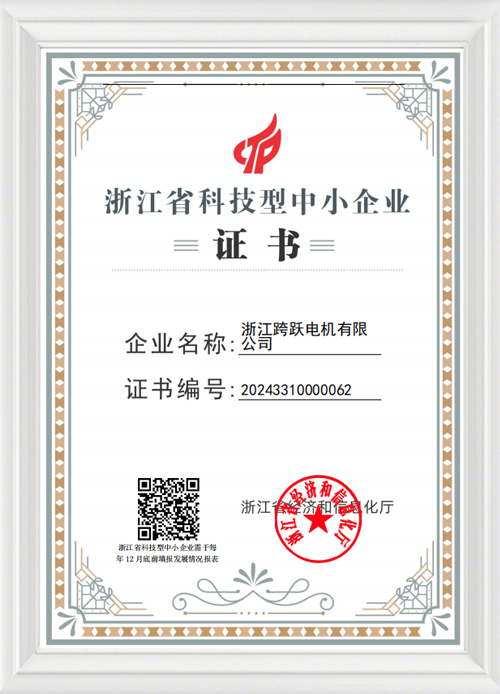
Zhejiang Kuayue Motor Co., Ltd. is an export-oriented manufacturer integrating R&D, production, sales, and export. Located in Luqiao District, Taizhou City, Zhejiang Province, the company has accumulated 34 years of motor-industry experience. Its production base covers approximately 29 mu and employs more than 30 staff members.
YEJ2 Electromagnetic Brake Motors integrate a power-off automatic braking device at the non-driving shaft end of the motor. Once power is lost, the brake disc immediately engages with the rear end cover to generate frictional braking torque, bringing the equipment to a stop and holding its position within an extremely short time. Power output covers 0.55kW to 45kW, making this configuration suitable for transmission applications requiring both reliable stopping and precise positioning.
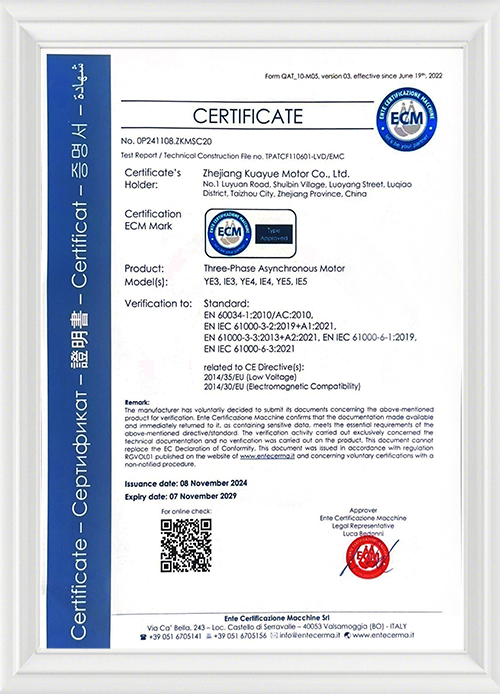
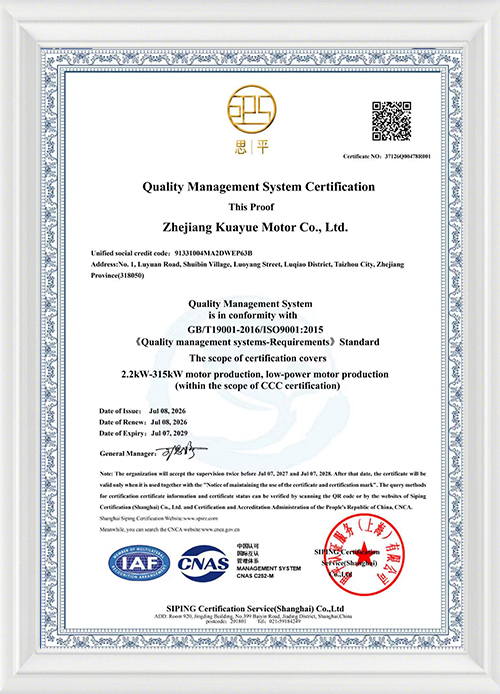
Manufactured under an ISO9001 quality-management system, the company's products hold China CCC compulsory certification and EU CE certification. Its motors are sold across more than 20 Chinese provinces and exported to Europe, America, Southeast Asia, the Middle East, and other international markets. Typical applications include mining, chemical equipment, pumps and HVAC, textile machinery, lifting equipment, machine tools, and port-construction machinery.
5、How to Select a 3 Phase Brake Motor for Industrial Applications
(1)Match Motor Power to the Actual Load
Do not select a 3 phase brake motor simply by copying the power of an existing motor. Check starting torque, continuous torque, acceleration requirements, operating frequency, load inertia, and duty cycle. A conveyor that starts and stops dozens of times per hour may require a different brake specification from a machine that runs continuously and stops only occasionally.
(2)Confirm Brake Torque and Stopping Requirements
For vertical lifting equipment or loads that can move under gravity, brake holding capacity is particularly important. The engineering team should calculate the required braking torque and consider safety factors. For horizontal machinery, stopping distance and cycle frequency may be more important than static holding torque.
(3)Consider VFD Compatibility
A YEJ2 electromagnetic brake motor can be used with variable-frequency drives in suitable configurations, but the brake circuit must be engineered correctly. The VFD controls motor speed, while the brake requires an independent release and control strategy. For frequent braking, controlled deceleration through the VFD combined with mechanical brake engagement can reduce mechanical shock and improve service life.
(4)Evaluate Total Cost, Not Only Unit Price
For OEM projects, the lowest purchase price is not always the lowest total cost. Buyers should compare brake-disc life, spare-part availability, testing procedures, warranty terms, lead time, packaging, certification, and technical support. A consistent supplier can reduce the engineering and maintenance costs associated with repeated motor replacement.
6. Frequently Asked Questions
Q1: What is an electromagnetic brake motor?
An electromagnetic brake motor is an electric motor equipped with a built-in electromagnetic brake. When electrical power is removed, the brake engages and generates friction torque to stop or hold the rotating shaft. It is widely used where rapid stopping, positioning, or load holding is required.
Q2: How does an electromagnetic brake motor work?
During normal operation, electromagnetic force releases the brake. When power is cut, springs apply the brake disc to the friction surface. The resulting friction torque slows the shaft and can hold it after the motor stops. The exact braking time depends on inertia, load, brake torque, motor size, and adjustment.
Q3: What is a brake motor used for?
Brake motors are used in conveyors, machine tools, packaging machines, textile equipment, lifting systems, woodworking machines, rolling doors, and automated production equipment. They are especially valuable when uncontrolled coasting could damage equipment, reduce productivity, or create a positioning problem.
Q4: What is the difference between a brake motor and a normal motor?
A normal motor normally stops through inertia, load resistance, or an external braking system. A brake motor has an integrated mechanical brake, allowing faster stopping and position holding. This integrated design can simplify machine construction and reduce the need for separate braking components.
Q5: Why do electric motors need brakes?
Electric motors need brakes when stopping speed, positioning accuracy, or load holding is important. In a lifting application, for example, simply switching off the motor may allow the load to move. A properly selected electromagnetic brake provides an additional mechanical holding function.
Q6: What is a YEJ2 brake motor?
A YEJ2 brake motor is a three-phase squirrel-cage induction motor with an electromagnetic disc brake mounted at the non-drive end. It is commonly supplied for industrial machinery requiring rapid power-off braking and accurate stopping. Depending on the manufacturer, typical power ranges can extend from around 0.55kW to 45kW.
Q7: What is the difference between YEJ and YEJ2 motors?
YEJ2 is generally regarded as an updated development of the YEJ brake-motor family. However, exact electrical performance, dimensions, brake design, efficiency class, and certification depend on the specific manufacturer and production standard. Buyers should compare the official technical datasheets rather than assuming all YEJ and YEJ2 motors are interchangeable.
Q8: What is the braking torque of a YEJ2 motor?
Braking torque varies by frame size and brake configuration. Published examples range from several N·m on smaller motors to substantially higher values on larger frames. The correct value should always be confirmed from the selected motor's technical datasheet because static braking torque is not the same as the actual dynamic stopping torque of a complete machine.
Q9: What is the braking time of a YEJ2 motor?
Typical no-load braking time for many YEJ2 configurations is approximately 0.15–0.45 seconds, but the actual machine stopping time can be longer. Load inertia, rotational speed, brake torque, friction conditions, and control sequence all influence the result. For safety-critical equipment, stopping-time testing should be performed on the completed machine.
Q10: What voltage does a YEJ2 brake use?
Common YEJ2 designs use a rectified DC brake supply. Typical configurations use approximately DC 99V for smaller frame sizes and DC 170V for larger frame sizes, supplied through an AC-to-DC rectifier. Exact brake voltage varies by manufacturer and model, so the nameplate and wiring diagram should always be checked before installation.
Q11: Can YEJ2 motors work with a VFD?
Yes, a YEJ2 motor can be integrated with a VFD when the motor, brake, rectifier, and control circuit are properly matched. The VFD should control motor speed and deceleration, while the electromagnetic brake should be controlled according to the required release and engagement sequence. For OEM machinery, it is recommended to confirm VFD compatibility with the manufacturer before mass production.


 English
 Español
 عربى
عربى