1. Industrial Pipeline Pumps: A Practical Guide for Industrial Fluid Transport
Industrial Pipeline Pumps are essential equipment for moving water, chemicals, process liquids, cooling fluids, and other media through industrial piping networks. For B2B buyers, choosing a pump is not simply a matter of comparing flow rate and motor power. The correct Pipeline Pump must match the system head, operating temperature, fluid properties, pressure requirements, installation conditions, efficiency targets, and expected operating hours.
A well-selected pump can provide stable pressure and reliable circulation while reducing energy consumption and maintenance costs. The U.S. Department of Energy continues to emphasize matching centrifugal pumps to actual system requirements, optimizing variable-flow operation, and evaluating total pumping-system efficiency rather than purchasing equipment based only on initial price.
2. What Is a Pipeline Pump?
(1) Basic Definition
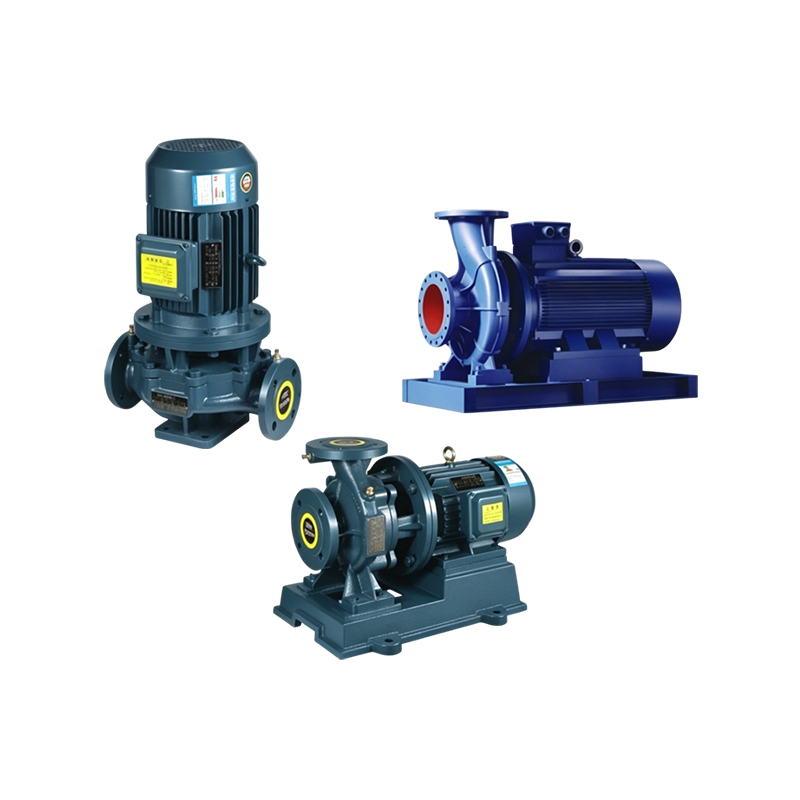
A pipeline pump is a pump designed to transport liquid through a piping system while providing the pressure and flow required by downstream equipment. In many industrial applications, the term refers to an in-line or vertical centrifugal pump configuration that can be installed directly within a pipeline system.
(2) How It Works
A typical pipeline centrifugal pump uses a rotating impeller to transfer mechanical energy from the motor into hydraulic energy. The impeller increases liquid velocity, while the pump casing converts part of that velocity into pressure. The resulting differential pressure allows liquid to overcome static elevation, pipe friction, valves, fittings, and equipment resistance.
For example, a water circulation system requiring 80 m³/h at 35 m total dynamic head should be evaluated at its actual duty point rather than selecting a pump solely because its maximum flow exceeds 80 m³/h.
3. Main Types of Pipeline Pumps
(1) Industrial Pipeline Pump
An industrial pipeline pump is generally selected for continuous or demanding applications such as water transfer, HVAC circulation, industrial cooling, process water, manufacturing systems, and general fluid distribution.
(2) Pipeline Booster Pump
A pipeline booster pump increases pressure when the existing network cannot deliver sufficient pressure to a remote process, elevated building, long pipeline, or high-resistance equipment. Booster systems may use one or multiple pumps depending on demand variation and redundancy requirements.
(3) Pipeline Centrifugal Pump
A pipeline centrifugal pump is widely used because of its relatively simple construction, broad operating range, and suitability for clean or moderately conditioned liquids. The final configuration should still be determined by fluid temperature, viscosity, corrosion characteristics, solids content, and required pressure.
4. Pipeline Pump Selection Guide for B2B Buyers
(1) Confirm the Required Flow and Head
The first step in pipeline pump selection is determining the required flow rate and total dynamic head. Total head should include static lift, pipe friction, valves, fittings, heat exchangers, filters, and other system losses. A pump that is significantly oversized may operate away from its best efficiency point, increasing energy use and mechanical stress.
(2) Evaluate the Liquid
Fluid properties directly influence material and seal selection. Buyers should provide the manufacturer with liquid type, temperature, density, viscosity, corrosiveness, concentration, and suspended solids information. Hot water and corrosive chemical liquids may require different pump materials and sealing arrangements.
(3) Check NPSH and Cavitation Risk
Net Positive Suction Head is a critical consideration. If available NPSH is insufficient, the pump can experience cavitation, producing noise, vibration, performance loss, and potential impeller damage. A professional selection should compare the system's available NPSH with the pump's required NPSH under actual operating conditions.
5. Key Parameters for Industrial Pipeline Pump Selection
Key technical parameters buyers should provide when requesting an industrial pipeline pump quotation.
| Parameter |
Typical Requirement |
Why It Matters |
| Flow Rate |
m³/h or L/min |
Determines required pumping capacity |
| Total Head |
m or bar |
Determines pressure capability |
| Liquid Temperature |
°C |
Affects seals, materials and operating limits |
| Motor Power |
kW |
Must match hydraulic demand and operating conditions |
| Material |
Cast iron, stainless steel, etc. |
Controls corrosion resistance and service life |
6. Energy Efficiency and Lifecycle Cost
For industrial buyers, purchase price is only one part of pump economics. Electricity, maintenance, seals, bearings, downtime, spare parts, and replacement costs can exceed the original equipment cost over the pump's operating life. Correct hydraulic sizing is therefore one of the most important cost-control measures.
Where flow requirements vary substantially, variable-speed operation can help reduce throttling losses and better match pump output to actual demand. For example, a system that operates at full load only during peak production should not automatically be designed around maximum flow for every operating hour.
- Select the pump near its intended duty point.
- Compare hydraulic efficiency and motor efficiency.
- Evaluate annual operating hours and electricity costs.
- Consider maintenance access, spare parts and expected service life.
7. Pipeline Pump Manufacturer and OEM Supply
Pipeline pumps are a category of pipeline centrifugal pumps designed by intelligently combining the performance parameters of IS centrifugal pumps on the basis of a standard vertical pump structure. Depending on operating temperature and media characteristics, they are available in multiple sub-models suited for hot water, high-temperature, and corrosive chemical liquids, making them a common solution for pressurized liquid transport within pipeline systems.
Kuayue Motor Co., Ltd is a pipeline pump manufacturer and OEM factory in China, supplying reliable industrial pipeline pumps for water supply, circulation and industrial applications.
Zhejiang Kuayue Motor Co., Ltd.
We are an export-oriented manufacturer integrated with R&D, production, sales and export, located in Luqiao District, Taizhou City, Zhejiang Province. We have accumulated 34-years of experience in motor industry. Our production base covers 29 mu with more than 30 staff members.
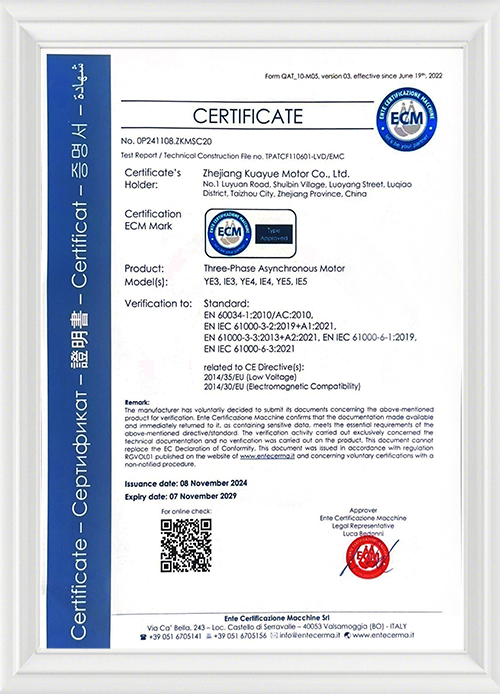
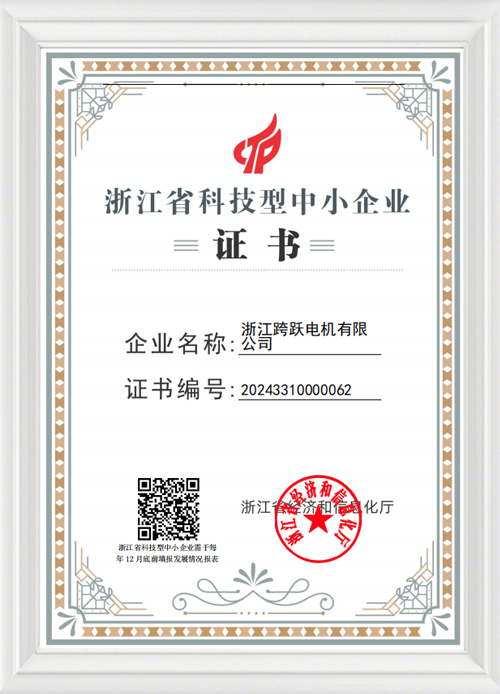
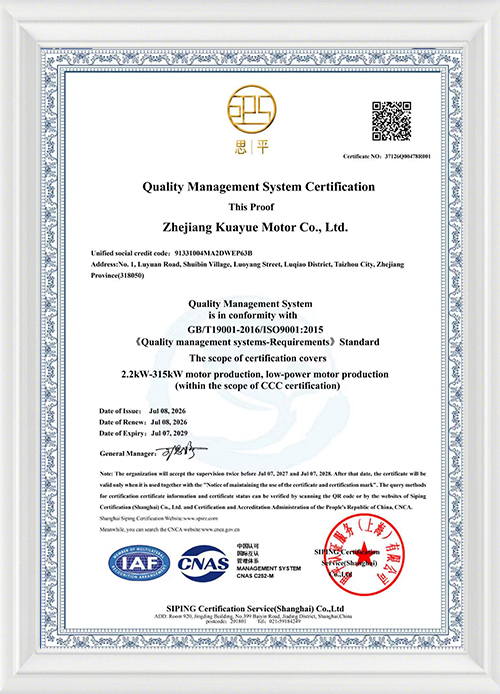
Manufactured under ISO9001 quality-management system, our products hold China CCC compulsory certification and EU CE certification. Our motors are widely sold across more than 20 Chinese provinces and exported to Europe, America, Southeast Asia, Middle East and other global regions. They serve various industries including mining, chemical, pump & HVAC, textile, lifting, machine-tool and port-construction machinery.
8. How to Select a Reliable Pipeline Pump Supplier
(1) Request a Complete Technical Data Sheet
A professional supplier should provide pump curves, rated flow, head, efficiency, motor power, materials, dimensions, connection information and operating limitations. Buyers should verify that the selected duty point is clearly identified.
(2) Evaluate Manufacturing Capability
For OEM and project procurement, production capability, quality-control procedures, certification, testing, lead time and spare-parts support are important. These factors become particularly important when purchasing multiple pumps for a complete industrial installation.
(3) Confirm Applicable Standards
The applicable standard depends on the project. As of 2026, API lists API 610, 13th edition, dated June 2026 for centrifugal pumps used in petroleum, petrochemical and natural gas industries. ISO 5199:2002 remains a published Class II centrifugal pump specification and is under review. Buyers should therefore specify the exact required standard and edition in the purchase specification instead of assuming that every industrial pump follows the same standard.
9. Common Questions About Pipeline Pumps
Q1. What is a pipeline pump?
A pipeline pump is a pump used to move liquid through a piping network while providing the required flow and pressure. In industrial applications, pipeline pumps are commonly centrifugal pumps configured for water supply, circulation, process transfer and pressure boosting.
Q2. How does a pipeline pump work?
The motor rotates an impeller, which transfers energy to the liquid. The pump casing then converts part of the liquid's velocity into pressure. This pressure difference moves the liquid through pipes and overcomes system resistance such as elevation, friction, valves and equipment.
Q3. What is a pipeline pump used for?
Pipeline pumps are used for industrial water supply, HVAC circulation, cooling systems, process-water transfer, chemical liquid transport, irrigation, building water systems and pressure boosting. The exact application depends on the pump's flow, head, material and temperature capabilities.
Q4. What are the different types of pipeline pumps?
Common configurations include vertical in-line centrifugal pumps, horizontal centrifugal pumps, multi-stage pumps and booster pump systems. Selection depends on required pressure, flow, installation space, fluid properties and operating conditions.
Q5. What is an industrial pipeline pump?
An industrial pipeline pump is designed for commercial or industrial fluid-transfer systems where reliability, continuous operation, material compatibility and lifecycle cost are important. Compared with light-duty applications, industrial projects often require more detailed hydraulic calculations, motor selection and documentation.
Q6. What is the difference between a pipeline pump and a booster pump?
A pipeline pump describes the pump's role in transporting liquid through a pipeline, while a booster pump specifically focuses on increasing pressure within an existing system. A pipeline pump can therefore function as a booster pump when it is selected and installed to increase downstream pressure.
Q7. Where are pipeline pumps used?
They are widely used in manufacturing plants, chemical facilities, mining operations, HVAC systems, municipal water systems, commercial buildings, industrial cooling networks, textile plants and general process applications.
Q8. What fluids can pipeline pumps handle?
Many pipeline centrifugal pumps handle clean water and similar low-viscosity liquids. Special models and materials may be suitable for hot water, certain chemical liquids and other process media. Before ordering, buyers should provide the exact liquid, temperature, concentration, viscosity and solids content so the manufacturer can confirm compatibility.
Q9. What information is needed for pipeline pump selection?
At minimum, buyers should provide required flow rate, total head, liquid type, operating temperature, density, viscosity, suction conditions, power supply, installation arrangement and operating schedule. For industrial projects, providing a complete pump data sheet allows the supplier to recommend a more accurate model and reduces the risk of oversizing or undersizing.
Q10. How can I choose the right pipeline pump manufacturer?
Compare technical capability, pump performance data, manufacturing capacity, quality systems, certifications, OEM experience, delivery capability and after-sales support. For B2B procurement, the best supplier is not necessarily the one offering the lowest unit price, but the one capable of providing stable performance, consistent quality and suitable technical support throughout the equipment lifecycle.


 English
 Español
 عربى
عربى