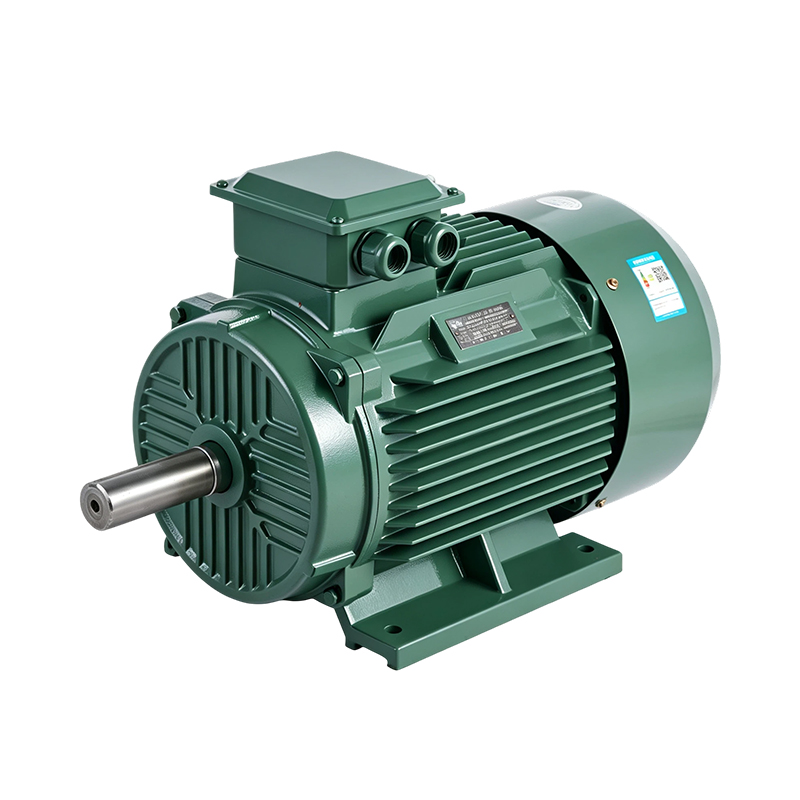
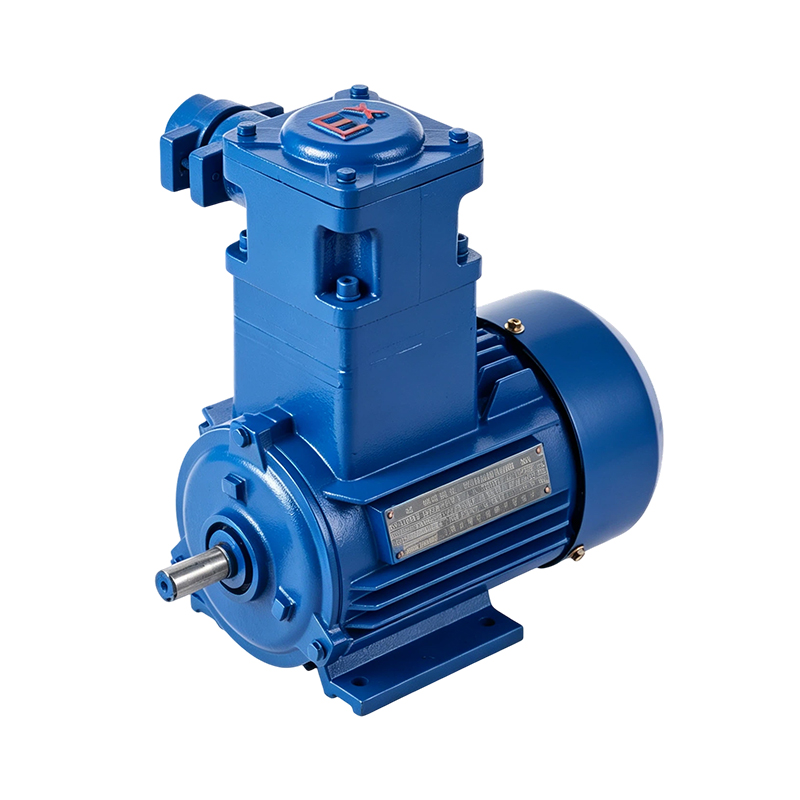
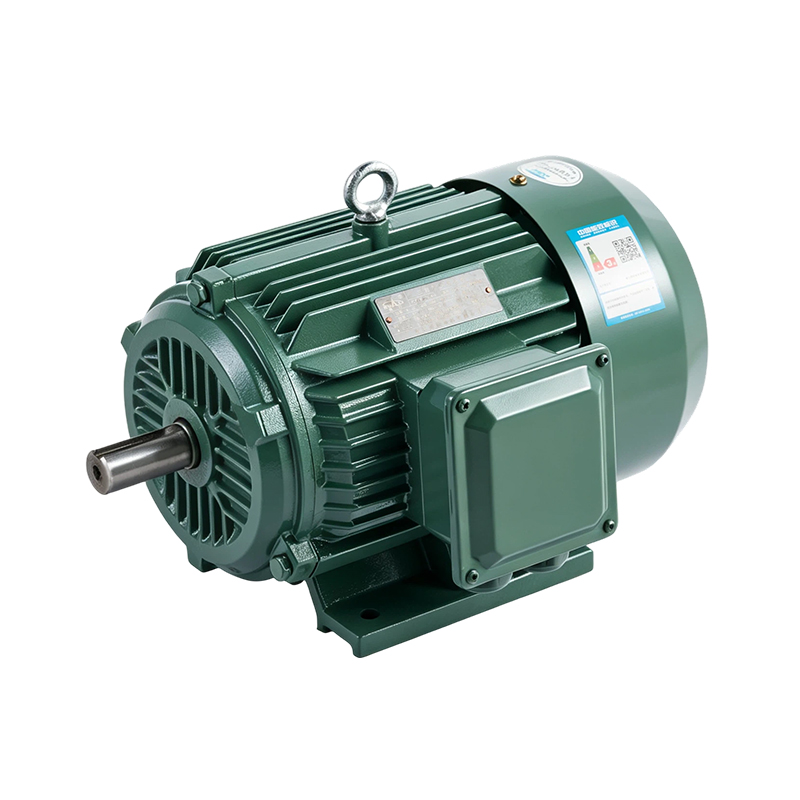
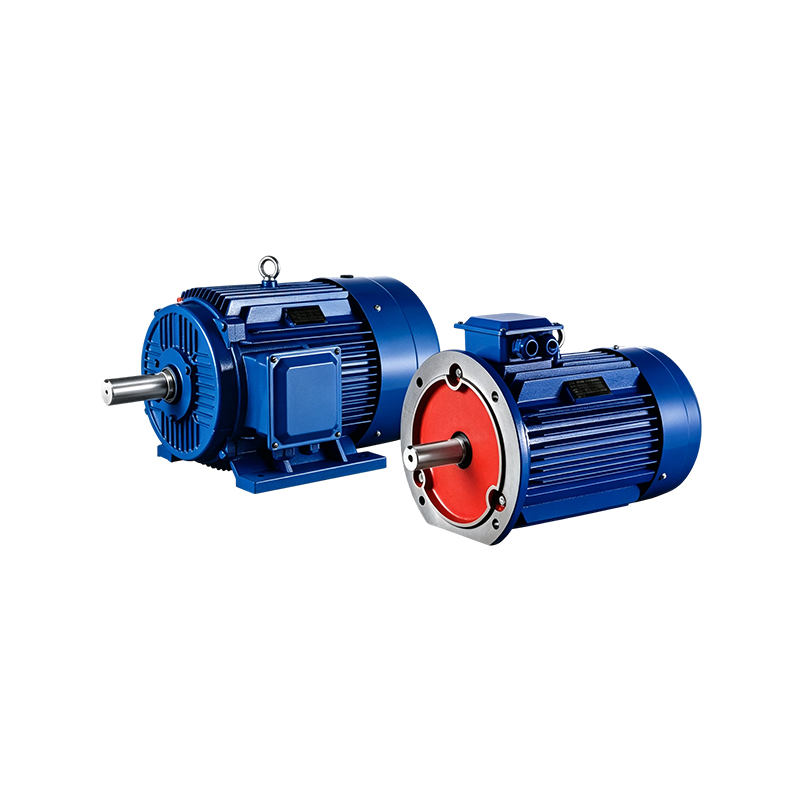
Quickly find the product you need.

A 7.5 kW pump motor on a 400 V supply dies at eighteen months instead of ten, and the brand on the nameplate is rarely the reason. The winding was built for a different voltage band, the duty cycle was never matched to the load, and the cable between the MCC and the terminal box drops more volts than anyone checked. Those three variables decide the outcome long before price does.
The short answer: a low tension motor is any machine rated at or below 1,000 V AC — in day-to-day terms, the 220-240 V single-phase and 380-460 V three-phase motors that drive pumps, fans, conveyors, compressors and machine tools. Fix voltage band, duty class and starting torque at the enquiry stage; efficiency class, frame size, mounting and enclosure follow from them in a predictable order.
Content
IEC 60034-1 draws the boundary between low and high voltage at 1,000 V AC. North American practice under NEMA stops lower, at 600 V. Either way, the motors found on a pump skid, a conveyor drive or a workshop compressor come from the same family: three-phase machines wound for 380 V to 460 V, plus single-phase machines at 220-240 V.
Because the term only describes a voltage ceiling, the useful question is which band the windings were designed for — and that band is not always the nominal grid figure in the plant.
| Supply band | Typical regions | Frequency | Practical notes |
|---|---|---|---|
| 220-240 V, single or three phase | Light industry worldwide | 50 / 60 Hz | Small pumps, fans, workshop machines; capacitor-start versions common |
| 380 V | China, parts of Southeast Asia | 50 Hz | Standard IEC frame motors up to a few hundred kW |
| 400 V | EU and most IEC markets | 50 Hz | Design centre for European IE3 and IE4 machines |
| 415 V | UK, India, Middle East, Australia | 50 Hz | Usually quoted with a ±10% tolerance on the nameplate |
| 440 / 460 V | North America, Latin America | 60 Hz | 60 Hz raises shaft speed about 20% versus a 50 Hz design |
| 575 V | Canada, some mining sites | 60 Hz | Often served by dual-rated windings rather than a separate series |
A 50 Hz design run at 60 Hz spins about 20% faster and loses part of its available torque, because the volts-per-hertz ratio shifts. Dual-rated windings exist for exactly this reason, but they have to be specified at the enquiry, not discovered on the nameplate after delivery.
Under IEC 60034-1, a motor must deliver rated torque within Zone A: a voltage deviation of ±5% at rated frequency, with frequency deviation limited to ±2%. Zone B permits ±10% voltage, but allows performance to drift. Most plants sit between those two lines, and the feeder cable is usually what pushes them there.
Take a 7.5 kW, 4-pole motor drawing roughly 15 A at 400 V with a power factor of 0.85. A 4 mm² copper feeder produces about 2.6% voltage drop per 100 m; stepping up to 10 mm² brings that down to about 1.0%. Combine a 150 m run with a 5% supply sag at the transformer and the motor sees around 360 V instead of 400 V — outside Zone B before it has started.
The knock-on effect is worst at start-up. Starting torque varies with the square of terminal voltage, so a 10% dip removes roughly 19% of locked-rotor torque. On a loaded conveyor or a positive-displacement pump, that margin is the difference between a clean start and an overload trip.
Duty is the second filter. IEC 60034-1 defines S1 continuous, S2 short-time and S3 intermittent duty. A motor bought for S1 and applied to a 60% duty cycle with frequent starts runs hotter than its rating assumes, and insulation life shortens with every 10 K of extra winding temperature. Pumps and fans are variable-torque loads, where power roughly follows the cube of speed; conveyors, crushers and hoists are constant-torque loads that need high breakaway torque. For the second group, locked-rotor torque multiple matters more than full-load efficiency.
Efficiency class comes from IEC 60034-30-1. For a 4-pole, 7.5 kW machine the minimum full-load efficiencies in the standard's tables are around 89.1% at IE2, 90.4% at IE3 and 92.1% at IE4. In the EU, Regulation 2019/1781 has required IE3 for most 0.75-1000 kW motors since July 2021, with IE4 for the 75-200 kW band since July 2023.
Minimum full-load efficiency for a 4-pole, 7.5 kW, 50 Hz motor at each IE class, based on the published IEC 60034-30-1 tables. The step from IE2 to IE4 is worth about three percentage points, which on a 24/7 duty cycle is a measurable energy figure.
The stator lamination stack carries the winding, and its insulation class decides how much thermal headroom you have: class F insulation with class B temperature rise is the common industrial compromise. The squirrel-cage rotor and shaft transfer torque, with bearings sized for the radial load of a belt drive or the axial load of a vertical pump. The terminal box is where the voltage band and connection method — star, delta or dual rated — are fixed for the life of the installation.
Enclosure and environment follow the same logic. IP55 covers most indoor and outdoor industrial duty, but washdown areas, salt air and humid climates justify closer attention to sealing, drain plugs and anti-condensation heaters. Standard ratings assume an ambient of 40 °C and an altitude of 1,000 m; above either, output has to be derated. In explosive atmospheres, the enclosure becomes a certified item under IEC 60079 rather than a preference.
Pump and fan duty rewards a motor with a wide speed range and stable running, especially when a variable frequency drive is used. Conveyors and screw feeders demand more breakaway torque and tolerate less speed variation. Hoists, cranes and positioning axes need an electromagnetic brake with a defined holding torque and release time. The radar below shows how the same low tension frame is specified differently for each family.
Where a drive is involved, the motor is no longer a fixed-speed device. Inverter duty brings faster voltage rise at the winding, extra harmonic heating and, at low speeds, a cooling fan that turns too slowly to protect the machine. Independent ventilation or a higher insulation class is often the honest answer rather than a bigger frame.
Most low tension motor complaints trace back to information that was available at the enquiry and never confirmed. Work through these items before the order is placed.
The commercial risk is not only a failed motor. A mismatch discovered on site means downtime, freight, re-testing and a warranty discussion that consumes more engineering time than the original selection would have taken.
It is an electric motor rated at or below 1,000 V AC, which covers single-phase 220-240 V machines and three-phase 380-460 V machines used for pumps, fans, conveyors, compressors and machine tools.
Under IEC 60034-1 the ceiling is 1,000 V AC. In practice the commercial bands are 220-240 V, 380 V, 400 V, 415 V, 440-460 V and 575 V, with 50 Hz or 60 Hz supply.
Usually yes, provided the deviation stays inside the IEC 60034-1 tolerance of ±5% in Zone A and the load is not already at the motor's torque limit. Below that, current rises and winding temperature follows.
IE3 meets current EU minimum requirements for most 0.75-1000 kW motors. IE4 pays back where running hours are long, because the efficiency gain of roughly two percentage points accumulates every hour of operation.
Many can, but inverter duty requires attention to insulation withstand, harmonic heating and cooling at low speed. Below about 30 Hz on a shaft-mounted fan, an independently ventilated motor is the safer choice.
IP55 suits most indoor and sheltered outdoor installations. Washdown, coastal and dusty environments usually justify IP56 or IP65, plus drain arrangements and anti-condensation heating for humid shutdown periods.



 English
 Español
 عربى