Quickly find the product you need.

If the nameplate on a motor reads 400 V, 415 V, 460 V or 690 V, it is a low tension motor. The conclusion comes first: for almost every industrial drive below roughly 1 MW, low tension is the right choice, because the whole chain around it, from contactors and cable to soft starters and spare bearings, is standard, inexpensive and available everywhere. The difficult part is not the voltage band. It is getting the pole count, enclosure, insulation and efficiency class right for the real duty.
Content
Low tension, usually shortened to LT, describes the band that IEC 60038 classifies as low voltage: up to 1,000 V AC between phases. Above that, motors become medium voltage or high tension, and the electrical architecture changes completely, with MV switchgear, MV cable terminations and a starter or drive rated for 3.3 kV, 6.6 kV, 10 kV or 11 kV. Low tension is the everyday term in the UK, India, the Middle East and much of Asia; low voltage is the equivalent wording in IEC and North American documentation.
Almost all low tension industrial motors are three-phase asynchronous (induction) machines between about 0.06 kW and 1,000 kW, with 690 V as the practical ceiling for a standard design. Single-phase low tension motors exist at 230 V, but they rarely make sense above 2.2 kW because starting current and frame size grow quickly.
| Voltage band | Typical motor voltages | Typical power range | Starting equipment |
|---|---|---|---|
| Low tension (LV) | 230, 400, 415, 460, 480, 525, 690 V | 0.06 to 1,000 kW | DOL, star-delta, soft starter, LV VFD |
| Medium voltage (MV) | 3.3, 6.6, 10, 11 kV | 200 kW to 20 MW | MV soft starter or MV VFD |
| High voltage | Above 33 kV | Not used for standard motors | Not applicable |
The commercial advantage of the low tension band is standardisation. Contactors, overload relays, cable glands, terminal boxes and bearings are off-the-shelf items with short lead times, and a replacement motor can often be sourced within days rather than months.
A standard low tension motor is a totally enclosed fan-cooled (TEFC) machine. The stator carries a three-phase winding in a laminated steel core, the rotor is a squirrel cage, the shaft runs in two rolling bearings, and a shaft-mounted fan under a cowl pushes air across the frame fins. Terminal box, nameplate, lifting points and mounting feet are cast or machined into the same frame, which is why a 4-pole motor from one supplier can usually drop into another supplier's footprint.
Two nameplate ratings deserve attention during procurement. Class F insulation with Class B temperature rise is the normal industrial specification: the winding system is rated to 155 °C, but the design holds the actual rise within Class B limits at rated load, which lengthens insulation life considerably. IP55 is the usual enclosure, dust protected and resistant to water jets from any direction, which suits pump rooms, workshops and sheltered outdoor installation.
Pole count sets speed, and speed sets torque. On a 50 Hz supply the synchronous speeds are 3,000, 1,500, 1,000 and 750 rpm for 2, 4, 6 and 8 poles, and full-load speed sits a few percent lower because of slip. The relationship is straightforward: torque in Nm equals 9,550 multiplied by power in kW, divided by speed in rpm. A 15 kW 4-pole motor therefore produces about 99 Nm at full load, while the same 15 kW wound for 8 poles produces about 199 Nm.
| Poles | Speed at 50 Hz | Speed at 60 Hz | Torque at 15 kW | Typical duty |
|---|---|---|---|---|
| 2 | About 2,900 rpm | About 3,500 rpm | About 49 Nm | Pumps, fans, high-speed machines |
| 4 | About 1,450 rpm | About 1,750 rpm | About 99 Nm | General purpose, pumps, conveyors |
| 6 | About 960 rpm | About 1,160 rpm | About 149 Nm | Mixers, crushers, heavy starting |
| 8 | About 720 rpm | About 870 rpm | About 199 Nm | Slow conveyors, mills, direct drive |
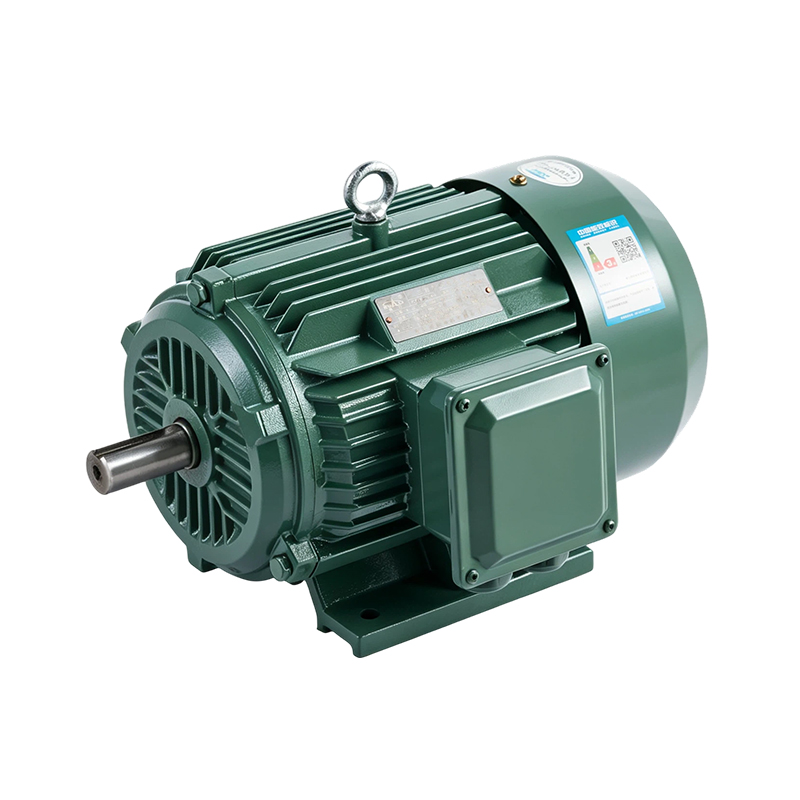
Pick the pole count from the torque and speed the driven machine needs, not from habit. A 2-pole motor is compact and inexpensive but offers a narrow band of useful torque, while an 8-pole direct-drive motor removes a gearbox at the cost of weight and price. For general pump, fan and conveyor duty, a 4-pole IE3 machine such as the YE3/IE3 general purpose high-efficiency induction motor 4 pole is the sensible default.
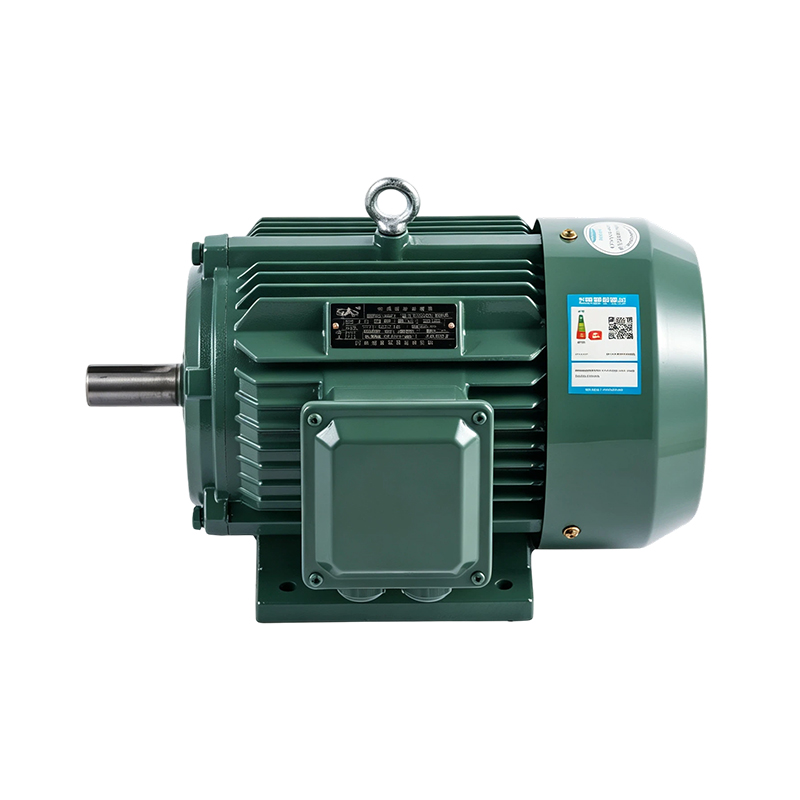 YE3/IE3 General-Purpose High-Efficiency Induction Motor (4-pole)The YE3/IE3 General-Purpose High-Efficiency Induction Motor (4-pole) is part of the YE3(IE3) high-efficiency series, with a synchronous speed of 1500 RPM and power out...View Product →
IEC 60034-30-1 defines the international efficiency classes IE1 to IE4. In the EU, Regulation 2019/1781 has required IE3 as the minimum for most three-phase motors from 0.75 kW to 1,000 kW since July 2021, with IE4 required for certain ratings from July 2023, and comparable minimum-efficiency rules apply in many other markets. As a benchmark, an IE3 motor has roughly 20% lower losses than an IE2 machine of the same output.
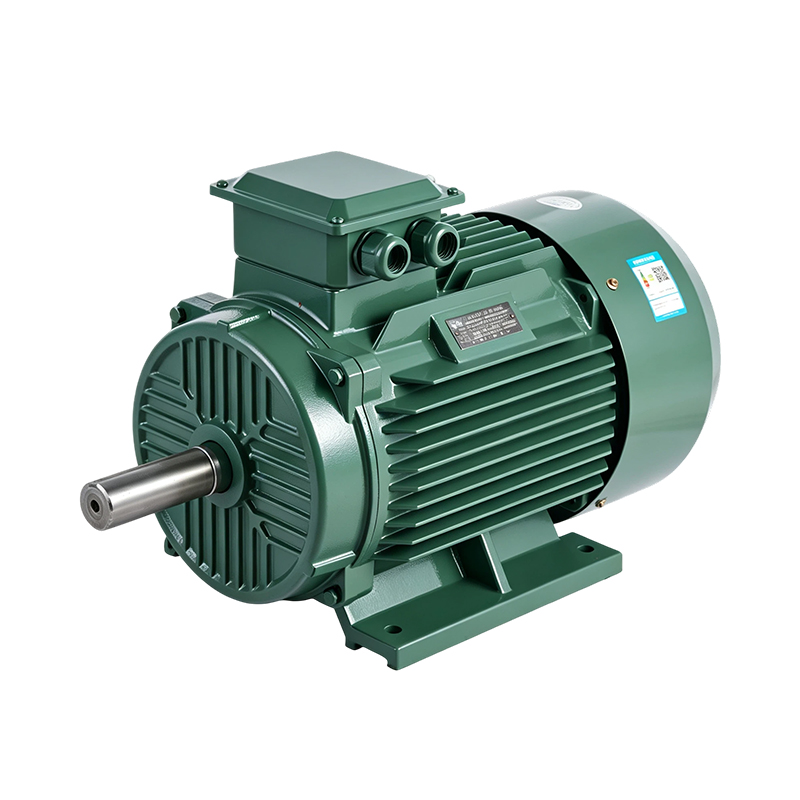
Purchase price is not the deciding cost. Life-cycle studies cited by energy agencies typically show electricity accounting for well over 90% of a motor's total cost over 10 to 15 years of continuous running, while the motor itself is only a small fraction. That is why an IE4 premium repays itself within months on a 24/7 pump and can take years on a motor running a few hundred hours annually. Where duty is continuous and load sits near full, an IE4 machine such as the YE4/IE4 general purpose energy-saving induction motor 4 pole is the cheaper choice over its service life.
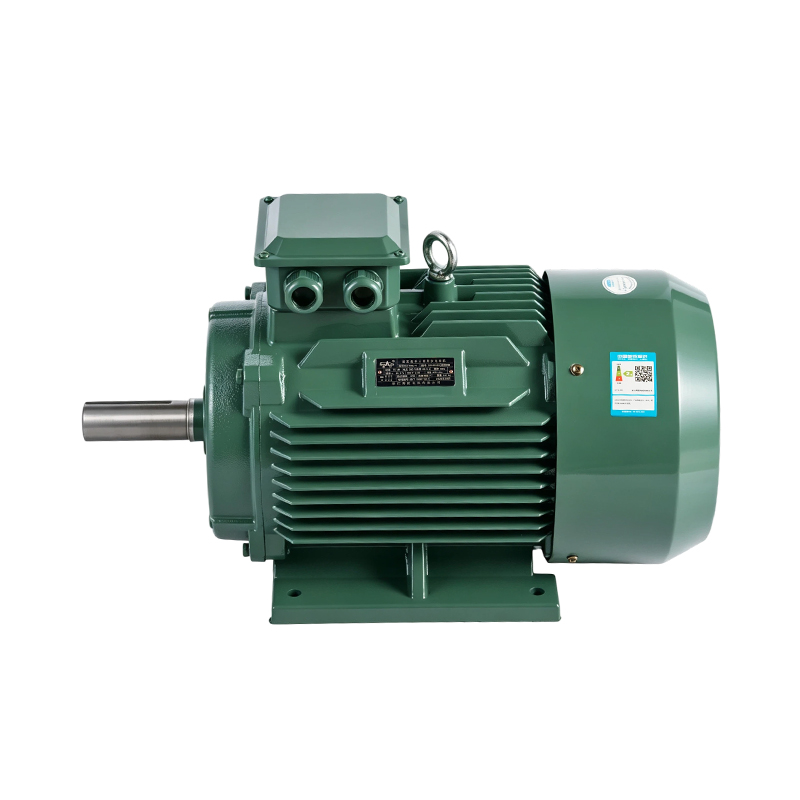 YE4/IE4 General-Purpose Energy-Saving Induction Motor (4-pole)If the 2-pole model is built for speed, the 4-pole YE4/IE4 General-Purpose Energy-Saving Induction Motor is built for compatibility. With a synchronous speed of 1500 R...View Product →
Four site conditions regularly push a project away from the catalogue default:
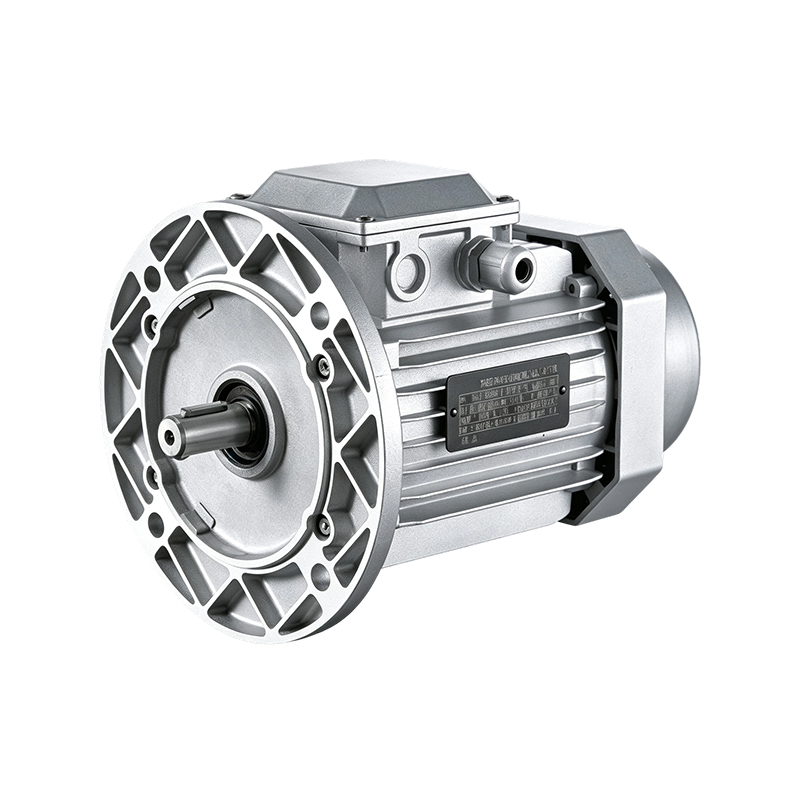
Where speed control is part of the process, a VFD-rated machine such as the YVF2 general purpose variable-frequency motor 4 pole avoids the cooling and insulation compromises of a standard motor on inverter supply. Duties such as pump and HVAC service combine long running hours with modest starting torque, which is exactly where the efficiency class has the greatest effect on operating cost.
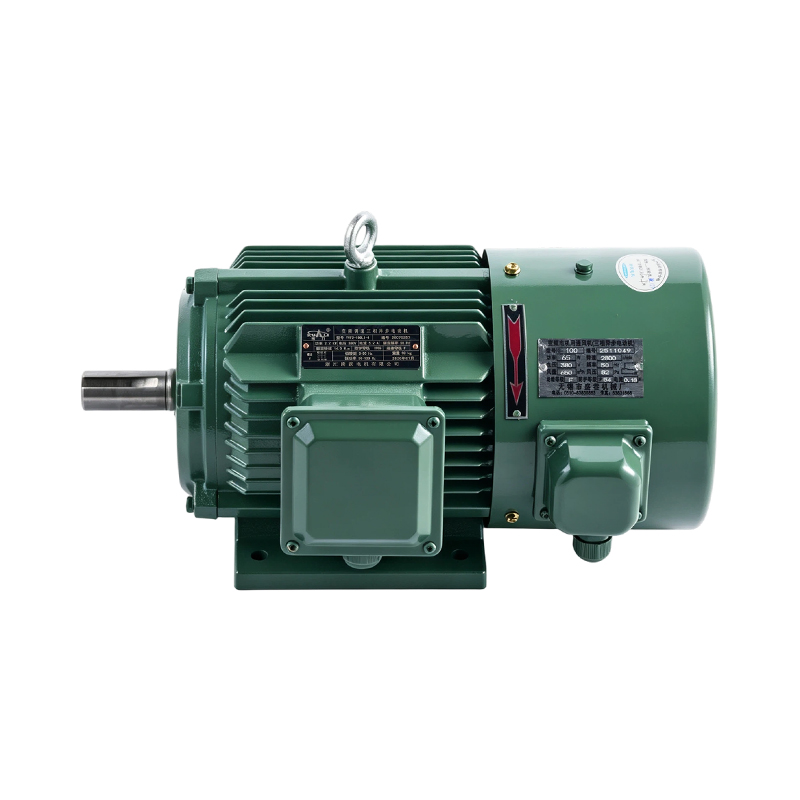 YVF2 General-Purpose Variable-Frequency Motor (4-pole)The YVF2 General-Purpose Variable-Frequency Motor (4-pole) delivers smooth speed regulation and strong versatility, suited for a wide range of general-purpose industri...View Product →
Because low tension motors are so widely used, their failure pattern is well documented. Motor reliability studies published by IEEE and EPRI have consistently found the same distribution in three-phase induction motors: bearings account for the largest share of failures, followed by stator winding insulation, with rotor and shaft problems far behind.
For maintenance planning this means alignment, belt tension, lubrication intervals and bearing quality matter more than any electrical upgrade. Inverter operation can accelerate bearing damage through shaft currents, which is why larger inverter-duty motors are often specified with insulated bearings or a shaft earthing ring.
Low tension stops being economic in three situations: power above roughly 1 MW, cable runs long enough that voltage drop and conductor size become impractical, and installations where the short-circuit level at the low voltage busbar makes switchgear expensive. A 500 kW motor on a 400 V supply draws roughly 870 A, which already calls for several parallel cable runs and a very large breaker; at 6.6 kV the same motor draws about 53 A. The crossover between low tension and medium voltage normally sits between 500 kW and 1,500 kW, and rises as the distance between starter and motor increases.
A short checklist prevents most ordering errors:
A low tension motor is designed to run on low voltage supplies of up to 1,000 V AC. In practice, almost all are three-phase induction motors rated between 230 V and 690 V.
Standard low tension motors are built for 230 V, 400 V, 415 V, 460 V, 480 V or 690 V at 50 Hz or 60 Hz. 690 V is the usual upper limit.
Low tension motors run on supplies up to 1,000 V with standard LV switchgear and cable. High tension motors run at 3.3 kV and above and normally start above 500 kW.
Match the speed and torque of the driven machine. On 50 Hz, 2-pole runs near 2,900 rpm, 4-pole near 1,450 rpm, 6-pole near 960 rpm and 8-pole near 720 rpm.
On continuous duty, yes. Electricity is usually more than 90% of lifetime cost, so IE3 or IE4 efficiency repays the price difference quickly. On intermittent duty the payback is slower.
A standard motor can run on a VFD within limits, but inverter-duty motors handle harmonics and cooling better. Long cables and high switching frequencies increase winding and bearing risk.
IP55 means the enclosure is dust protected and resistant to water jets from any direction, which covers most indoor industrial and sheltered outdoor installations.
Low tension motors are the workhorses of industrial plants, and most specification errors come from treating them as a commodity to be ordered by kilowatts alone. Voltage, pole count, efficiency class and enclosure each have a measurable effect on energy cost and downtime. If you need help matching a motor to a specific duty, send the load details, supply data and environment, and the frame, efficiency class and options can be confirmed before you commit to an order.



 English
 Español
 عربى