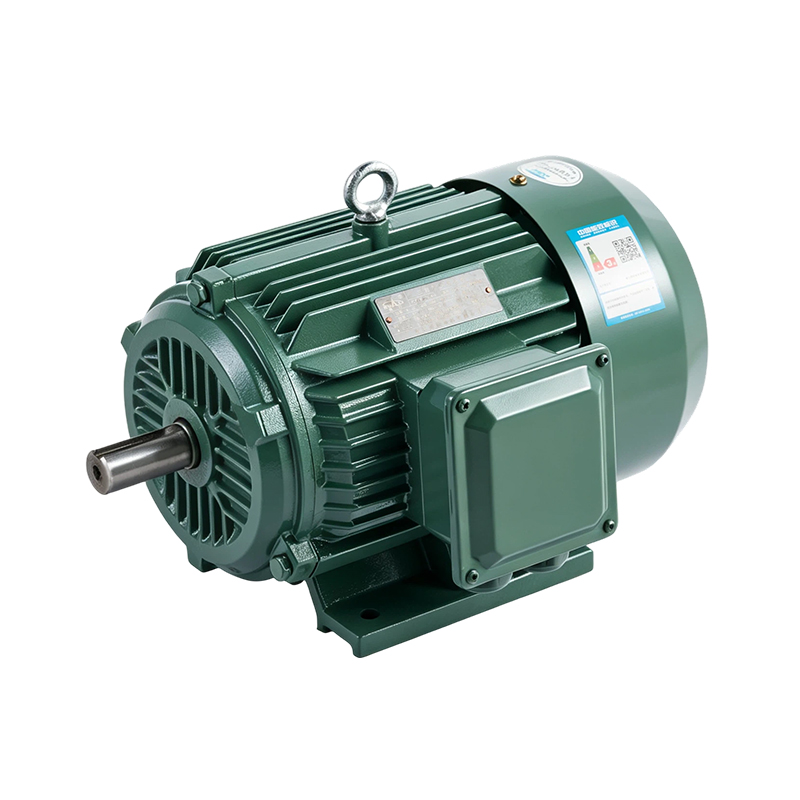
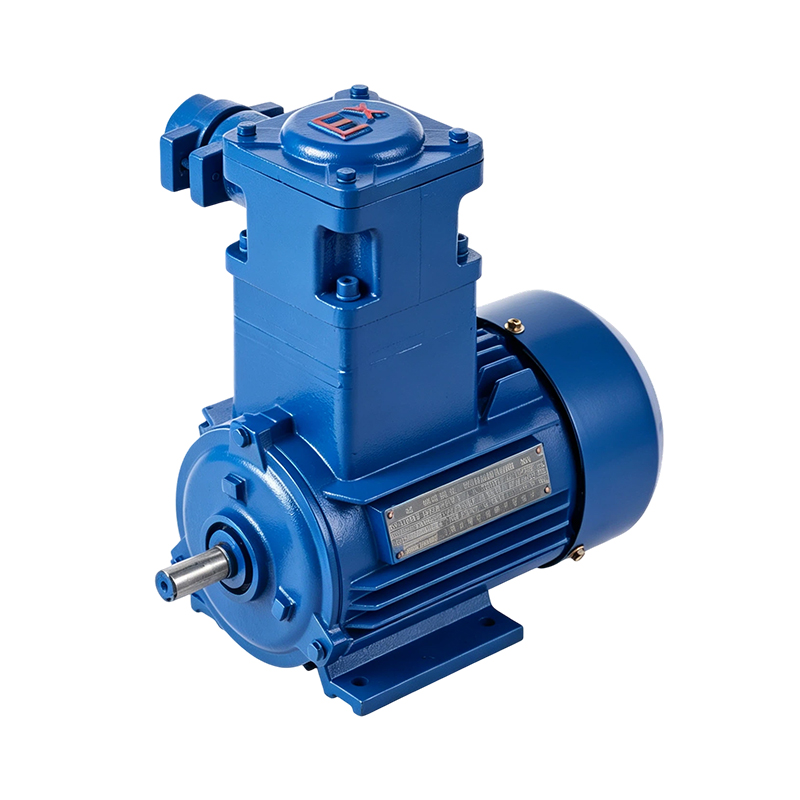
Quickly find the product you need.

Conclusion first: An IE4 motor is not automatically the right choice just because its nameplate says “super premium.” It is the right choice when the motor runs many hours, the load is stable enough, and the frame, starting torque, and drive match the machine. On an 11 kW, 4-pole unit at full load and 6,000 hours a year, the IE3-to-IE4 input difference is about 0.16 kW—small on paper, but roughly 936 kWh a year. That saving can justify the price premium in continuous duty, yet it can disappear in short-hour or badly oversized installations.
This guide explains what IE4 means under IEC 60034-30-1, where the losses go, and how to decide between IE4 and IE3 for pumps, fans, conveyors, and other industrial drives.
Content
IE4 is an efficiency class, not a motor technology. IEC 60034-30-1 defines IE1 standard efficiency, IE2 high efficiency, IE3 premium efficiency, IE4 super premium efficiency, and IE5 ultra-premium efficiency for line-fed squirrel-cage induction motors. The standard sets minimum full-load efficiency at specified power, pole count, and frequency. It does not promise a particular part-load curve, starting torque, or VFD performance.
For a typical 11 kW, 4-pole, 50 Hz motor, the step from IE3 to IE4 moves minimum efficiency from about 91.4% to 92.6%. That sounds small, but the input power difference at full load is about 0.16 kW. Over 6,000 running hours, that is roughly 936 kWh. For a fuller class-by-class comparison, see this IE3 vs IE4 comparison.
| Efficiency class | Minimum efficiency (%) | Input power at full load (kW) | Energy use at 6,000 h/year (kWh) |
|---|---|---|---|
| IE1 | 87.6 | 12.56 | 75,342 |
| IE2 | 89.8 | 12.25 | 73,494 |
| IE3 | 91.4 | 12.04 | 72,210 |
| IE4 | 92.6 | 11.88 | 71,274 |
Use the table as a screening check. Always compare the exact efficiency at rated power, frequency, pole count, and test method on the datasheet. A “high-efficiency” label without the IEC table reference is not enough for a tender or a replacement decision.
IE4 designs reduce losses mainly in the stator winding, stator and rotor laminations, air gap, and cooling system. That usually means more active material: longer cores, more copper, thinner or higher-grade electrical steel, tighter manufacturing tolerances, and sometimes a more efficient fan. The result is a motor that can be heavier or one frame size larger than the IE3 unit it replaces. That matters for foot-hole spacing, shaft height, terminal box clearance, and coupling alignment.
With the same output, the IE4 motor may draw less current at full load, but it can also have a different starting current, slip, and temperature rise. For retrofits, check the protection settings, cable size, and starter overload range rather than assuming a like-for-like swap.
The chart shows why IE4 is easiest to justify in continuous duty. The absolute loss reduction is modest, but it repeats every hour. In a plant with high electricity prices or a large motor population, those repeated hours become a budget line.
At 11 kW, full load, 6,000 hours a year, and 0.12 USD/kWh, the calculated IE3-to-IE4 saving is about 936 kWh × 0.12 = 112 USD a year. If the IE4 price premium is 300 USD, the simple payback is about 2.7 years before any utility rebate. That is a reasonable case for a pump or fan that runs most of the year.
At 70% load and 4,000 hours, the output is 7.7 kW. The input difference between IE3 and IE4 falls to about 0.10 kW, or roughly 400 kWh a year. At the same electricity price, the saving is about 48 USD a year, and the payback on a 300 USD premium stretches to about 6 years. The motor still saves energy, but the financial case is weaker.
A general-purpose 4-pole IE4 unit is the usual starting point for fans, pumps, and compressors that run long hours:
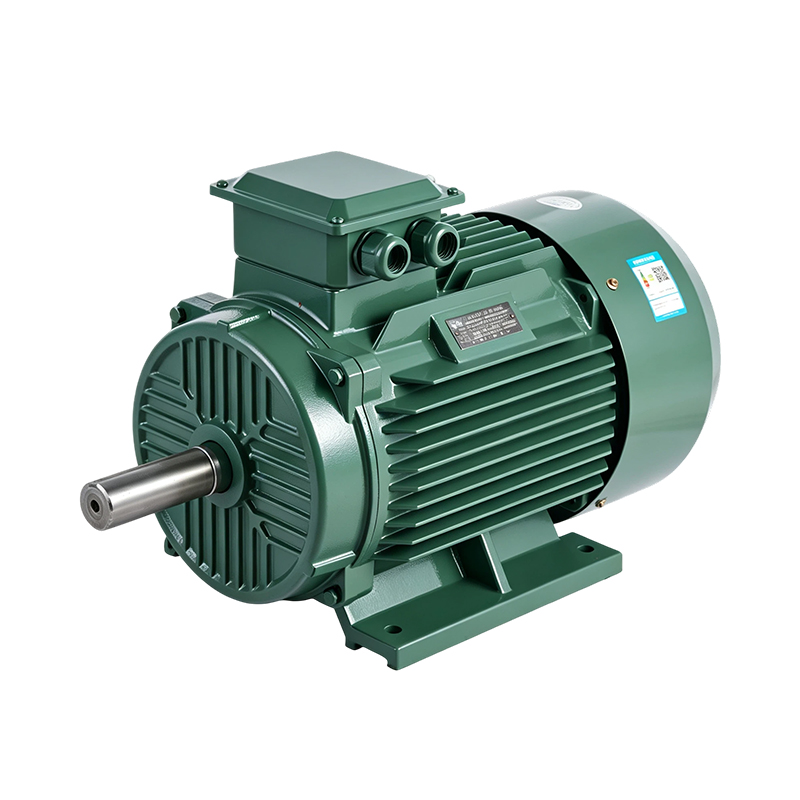 YE4/IE4 General-Purpose 4-Pole Induction MotorCompare its part-load efficiency and sizing margin against your annual load profile before approving this 1500 RPM IE4 motor.View Product →
Use your own load profile, tariff, and price premium. A motor that runs 2,000 hours a year at 40% load should not be bought on full-load efficiency alone. Check the part-load efficiency and the actual oversized margin before approving IE4.
IE4 is strongest in continuous, stable duty: centrifugal pumps, fans, compressors, HVAC circulation, and process lines that run more than about 4,000 hours a year. It is also easier to justify where electricity is expensive, where the motor is part of a tender that requires IE4, or where waste heat and panel loading matter. EU ecodesign rules have also pushed IE4 into specific power ranges, so check the current scope before assuming IE3 is acceptable.
| Selection factor | IE4 is usually easier to justify | IE3 may be the better buy |
|---|---|---|
| Annual running hours | Above about 4,000 h | Below about 2,000 h |
| Load profile | Stable, 60–100% load | Frequent light load or highly variable load |
| Starting duty | Soft start or VFD, low inertia | Direct-on-line, high inertia, frequent starts |
| Retrofit space | Frame and base allow a larger motor | Existing frame, shaft, and foot holes limit change |
| Energy price | High or volatile tariff | Low tariff and short operating hours |
High-torque 6-pole duties such as conveyors, crushers, and positive-displacement pumps need a closer look at starting torque and thermal margin. A higher efficiency class does not automatically mean more starting torque. For those duties, review the high-torque 6-pole IE4 option against the driven load:
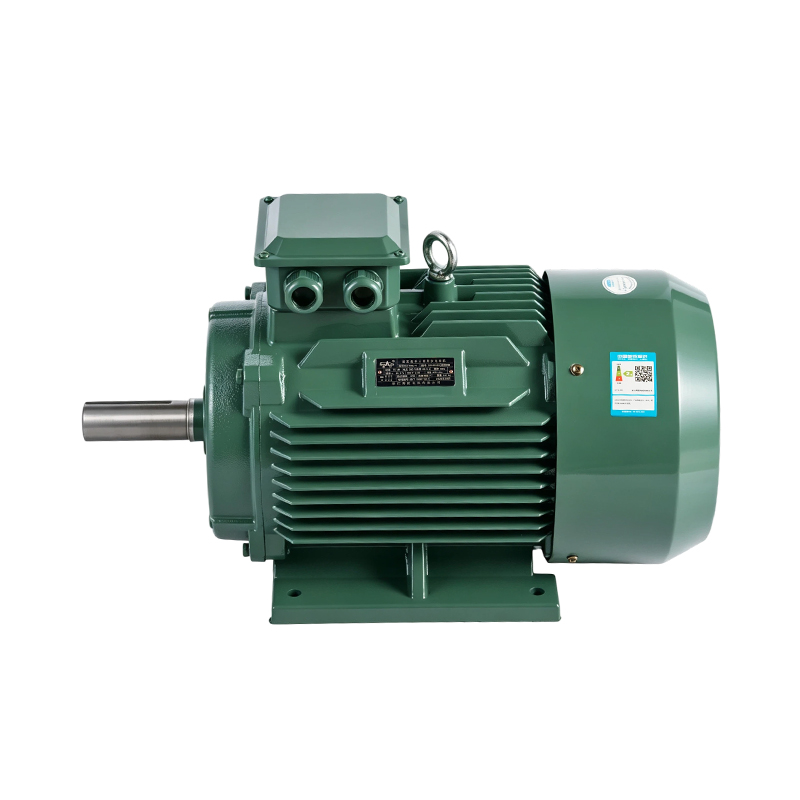 YE4/IE4 High-Torque 6-Pole Induction MotorReview starting torque and thermal margin for conveyors, crushers, or positive-displacement pumps; this 1,000 RPM IE4 option trades speed for torque.View Product →
Before issuing a purchase order, compare the motor to the machine and the site, not just to the IE3 nameplate. The following checks catch most retrofit surprises:
For low-speed direct-drive applications, the frame and bearing arrangement often matter more than the efficiency label alone. Review the low-speed heavy-duty 8-pole IE4 option when the duty is slow, continuous, and high-load:
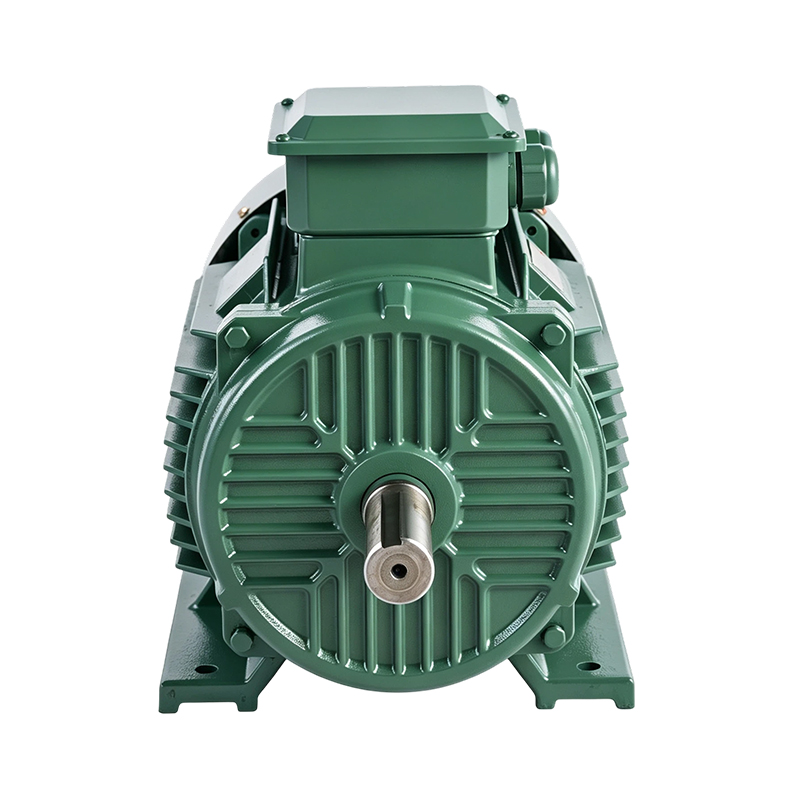 YE4/IE4 Low-Speed Heavy-Duty 8-Pole MotorFor slow continuous high-load direct drives, this 750 RPM IE4 motor offers high torque and the series' largest overload margin.View Product →
Kuayue Motor, based in Taizhou, Zhejiang, states that it has 34 years of small and medium industrial motor experience and builds motors under ISO 9001, with CCC and CE certification. Its production profile covers in-house stamping, winding, machining, assembly, and testing. For buyers comparing frames, the YE4/IE4 ultra-high-efficiency motor range includes 2-, 4-, 6-, and 8-pole variants for pumps, fans, mining, chemical, textile, lifting, and port machinery duties.
IE4 is the super premium efficiency class under IEC 60034-30-1 for line-fed squirrel-cage induction motors. It is a minimum efficiency rating, not a specific rotor or stator design.
IE4 has lower losses and usually lower running cost, but it also tends to cost more. The better choice depends on annual hours, load profile, price premium, and whether the frame fits the existing installation.
For an 11 kW, 4-pole motor at full load and 6,000 hours a year, the calculated IE3-to-IE4 saving is about 936 kWh. Actual savings fall at part load, short hours, or poor power quality.
Many IE4 motors can run on VFDs, but not all are automatically suitable. Check insulation, winding temperature rise, bearing current mitigation, speed range, and derating for constant torque below base speed.
IE4 motors are common in pumps, fans, compressors, HVAC, conveyors, mining, chemical processing, textiles, lifting, and port machinery. They are most attractive where running hours are high and load is stable.
Match shaft height, foot holes, flange, terminal box clearance, coupling, and starting torque. An IE4 motor may be larger than the IE3 unit at the same output, so compare drawings before ordering.


 English
 Español
 عربى