Quickly find the product you need.

Two 5.5 kW motors sit side by side on the same test bench. One nameplate reads 380 V, Y connection. The other reads 220 V, delta connection. In most cases they are the same machine: same stator laminations, same rotor, same shaft.
That is the short answer behind the search. A three-phase 220 V motor is normally a standard low-voltage induction motor reconnected in delta to a 220 V three-phase line. It is not a separate product family, and it is not exotic. What changes between the two nameplates is how the six winding ends are linked, how much line current the cable and the contactor must carry, and — in places where only single-phase 220–240 V is available — how the three-phase supply is created in the first place.
Content
220 V in a three-phase system is a line-to-line figure: the potential between any two of the three phase conductors. In a 220 V three-phase network, phase-to-neutral voltage is about 127 V, which is why domestic sockets in those networks are rated 110–127 V rather than 230 V.
Two low-voltage families dominate worldwide:
The winding itself does not care which network it is attached to — only the voltage across each phase coil matters. That is why manufacturers build a dual-rated winding and stamp the plate 220/380 V, 230/400 V or 240/415 V with two current figures. Delta covers the low voltage, star covers the high voltage.
If you want the construction explained from the stator outward, how a three-phase asynchronous motor is built and why it rotates covers winding layout, rotating field and slip in more detail.
| Parameter | Delta (low voltage) | Star (high voltage) |
|---|---|---|
| Terminal links | U1–W2, V1–U2, W1–V2 | W2, U2 and V2 joined; supply to U1, V1, W1 |
| Rated line voltage | 220 V | 380 V |
| Voltage across each phase coil | 220 V | 220 V |
| Line current | About 1.73 × phase current | Equal to phase current |
| Rated torque and speed | Identical | Identical |
| Cable, contactor, overload setting | Sized on the higher delta current | Sized on the lower star current |
Two current values on one plate are not a misprint. A 4 kW, 4-pole, 50 Hz motor with typical efficiency and power factor draws roughly 14.5 A per line in delta at 220 V and roughly 8.4 A in star at 380 V — a ratio of about 1.73, the square root of three.
Everything downstream of the motor has to be chosen on the higher number when the motor runs at 220 V:
The most common field error with a 220/380 V motor is reconnecting it from star to delta on a 380 V line in the hope of extra torque. That raises the voltage across each phase coil by a factor of 1.73. The iron saturates, current climbs steeply, and the winding overheats within minutes.
Star vs delta on the same 380 V line (per unit, star = 1.0)
This is the situation most buyers actually face: the workshop has 220–240 V single-phase, the motor is three-phase, and the two have to meet. Three approaches exist, and only one of them is routine.
A single-phase input drive rectifies the mains, stores energy in a DC bus and recreates a three-phase output with adjustable voltage and frequency. The motor stays connected in delta so each coil sees its rated 220 V. The drive must be rated for the motor's full-load current at 220 V three-phase, and because single-phase input carries roughly 1.7 to 2 times that current on the AC side, the input wiring, breaker and filtering have to be sized accordingly.
Two practical constraints matter. Keep the cable between drive and motor short — many manufacturers specify a limit, often in the 20–50 m range, before a dv/dt filter or output reactor is required. And confirm that the motor insulation and bearing arrangement suit inverter duty, especially where long cable runs or fast switching are involved.
Common in North America, where 240 V single-phase is standard. It generates a third leg that is never perfectly balanced, so the motor should be derated and the converter oversized relative to the motor rating.
A run capacitor between two of the three terminals will start a lightly loaded motor, but available torque stays well below nameplate, starting is unreliable and efficiency drops. Treat it as a temporary fix, not a production solution.
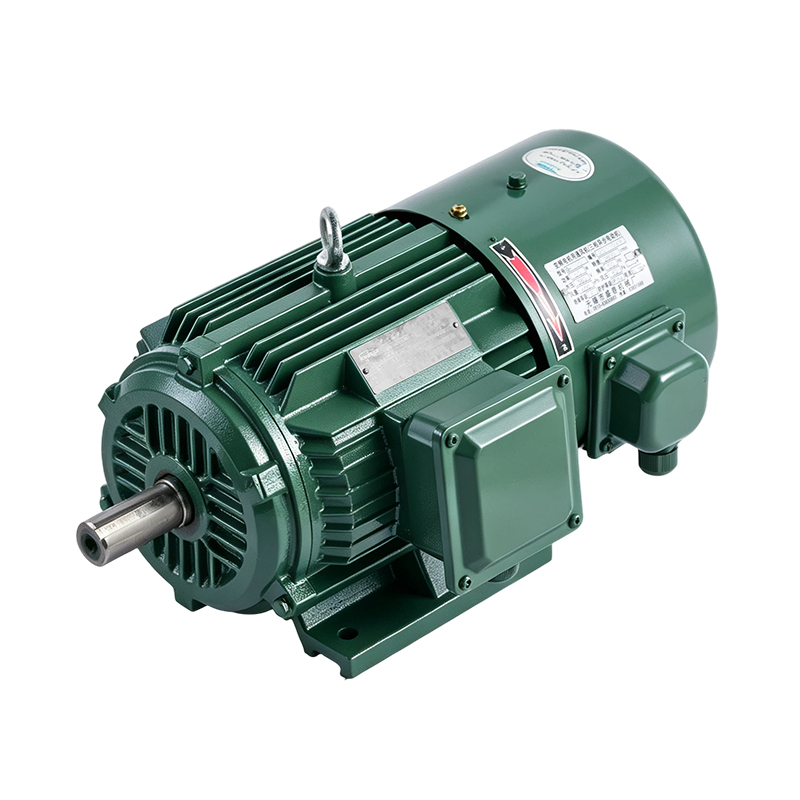 YVF2 Variable-Frequency Three-Phase Asynchronous Motor SeriesCategory covers YVF2 inverter-duty motors from 0.55 to 315 kW, with 4-pole and 6-pole variants for adjustable-speed industrial drives.View Product →
Available torque vs. output frequency, 220 V motor on a 220 V drive
Once the motor is understood as a delta-connected standard machine, three sizing decisions follow directly.
A 7.5 kW motor at 220 V draws roughly 26 A per line; the same output at 380 V draws roughly 15 A. Contactors, cable, glands and the overload relay are all bought against the 220 V figure. It is the line item that most often surprises first-time buyers of 220 V three-phase equipment.
A motor already running in delta at 220 V cannot use star-delta starting, because reconnecting it in star drops the phase coil voltage to 127 V and cuts starting torque to about one third. Direct-on-line starting at 220 V pulls six to eight times rated current, which on a weak supply shows up as a voltage dip affecting neighbouring equipment. A soft starter or a VFD is the practical answer.
IEC 60034-30-1 classifies line motors from IE1 to IE4. Moving up a class cuts the losses inside the motor, and because line current is 1.73 times higher at 220 V than at 380 V for the same output, cable losses scale with the square of that current. In the EU, regulation 2019/1781 has required IE3 as the minimum for most new 0.75–1000 kW motors since July 2021, and IE4 is increasingly specified for continuous duty.
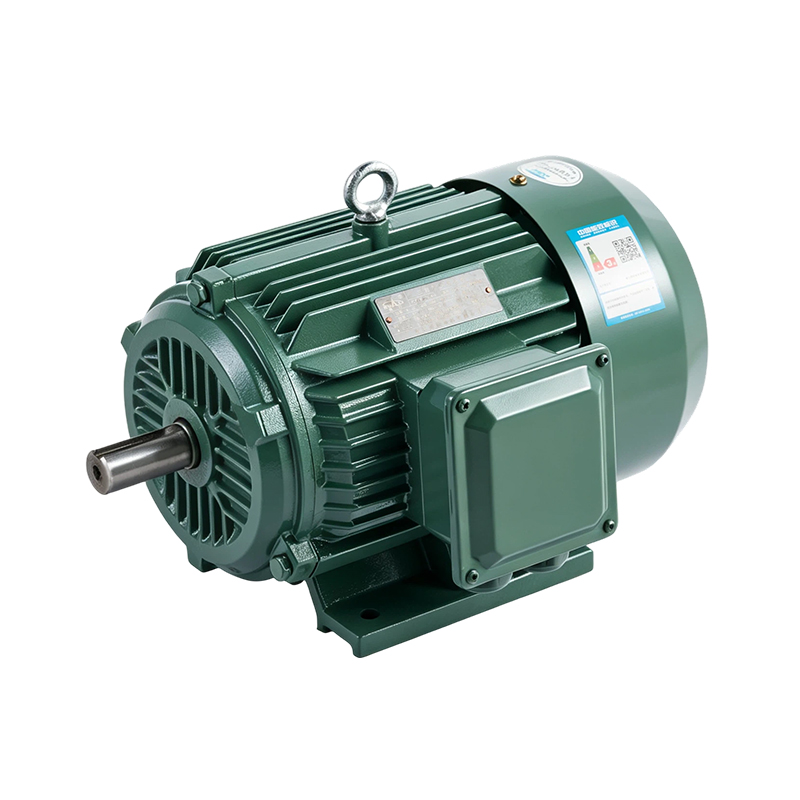 YE3 IE3 High-Efficiency Three-Phase Induction Motor SeriesGeneral-purpose IE3 induction motors from 0.75 to 315 kW, covering multiple pole speeds for pumps, fans, conveyors, and continuous industrial duty.View Product →
At 220 V three-phase, the typical duty is small but continuous: circulation pumps and fan coils, bench and machine-tool drives, small conveyors, textile and printing lines, workshop compressors, and portable dewatering pumps. These are exactly the roles covered by the pump and HVAC duty profile, where a 220 V three-phase motor usually drives a centrifugal pump or a fan with a modest starting torque demand.
Where the environment adds risk, the choice of motor family matters more than the voltage. Dust, solvent vapour, grain dust or fuel vapour moves the specification into the explosion-proof range, governed by IEC 60079 for hazardous-area equipment. Terminals, flame paths and nameplate markings all differ from a standard machine.
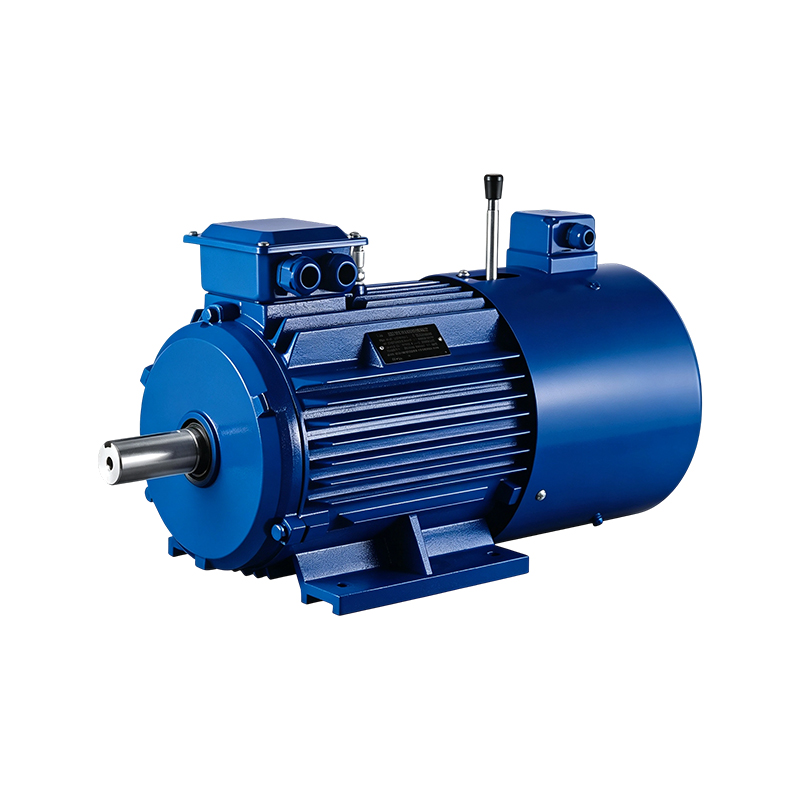
Braking and speed-changing duties follow the same logic. A brake motor for holding a load or stopping a conveyor, a two-speed motor for a two-step process, or a combined variable-frequency brake motor for fast positioning each solve a problem that a general-purpose motor cannot.
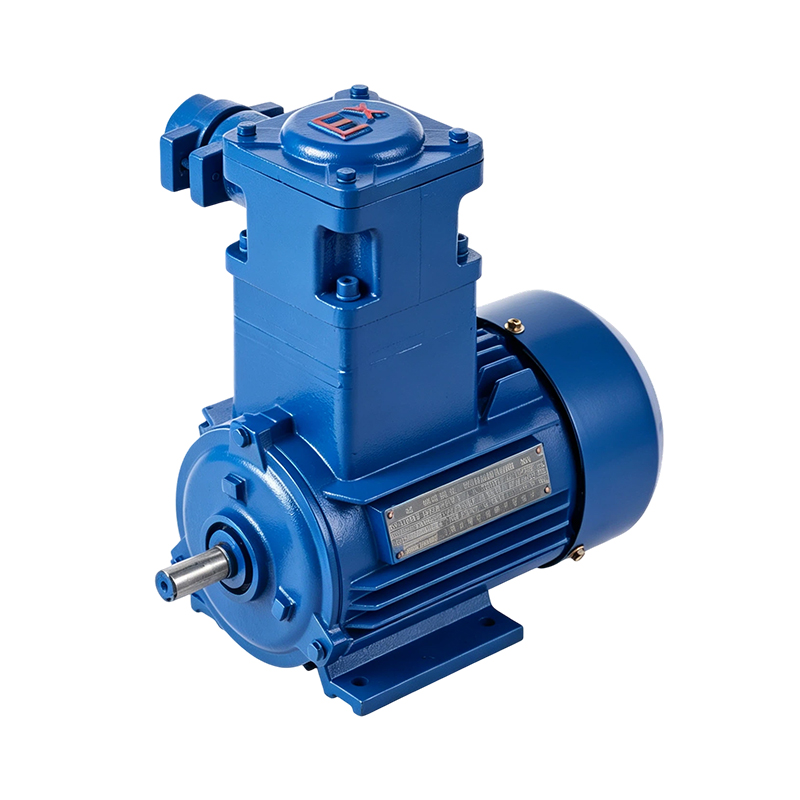 YBX3 Explosion-Proof Three-Phase Induction Motor SeriesHazardous-area motors with Exd II BT4 or CT4 protection, 0.12–315 kW, for pumps, fans, compressors, conveyors, and process equipment in explosive atmospheres.View Product →
Figure 1: Isometric view of a three-phase induction motor and its terminal box
Only if the nameplate shows a dual rating such as 220/380 V. Reconnect the winding in delta, and the motor develops full rated torque and power at 220 V, with line current rising by a factor of 1.73.
A single-phase 220 V motor runs directly from a two-wire supply and needs a capacitor or a shaded pole. A three-phase 220 V motor needs three lines at 220 V between phases and has no starting capacitor.
Link U1 to W2, V1 to U2 and W1 to V2, then feed the three phases to U1, V1 and W1. The terminal box is marked with the six winding ends and the two link patterns.
Match the drive's three-phase output to the motor's full-load current at 220 V, then confirm the drive accepts single-phase input at that rating. Single-phase input current is roughly 1.7 to 2 times the motor current.
About 1.73 times the current at 380 V for the same output. A 7.5 kW motor draws roughly 26 A at 220 V, against roughly 15 A at 380 V, so cables and contactors must be chosen for the larger value.
IE3 is the efficiency class under IEC 60034-30-1, IP55 is the enclosure protection against dust and water jets, and S1 means continuous duty. All three affect whether the motor suits the application.



 English
 Español
 عربى