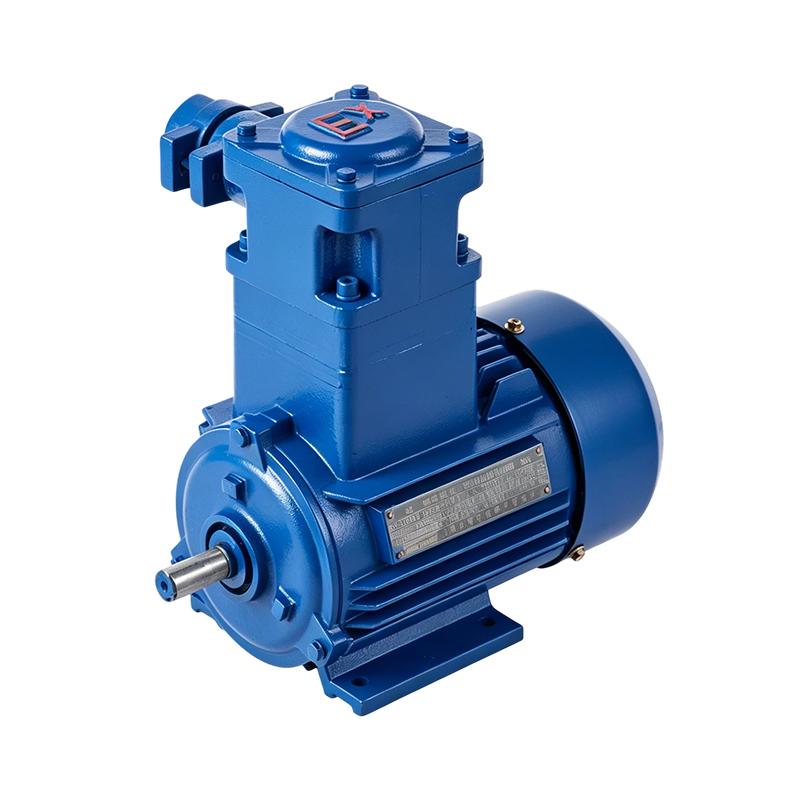
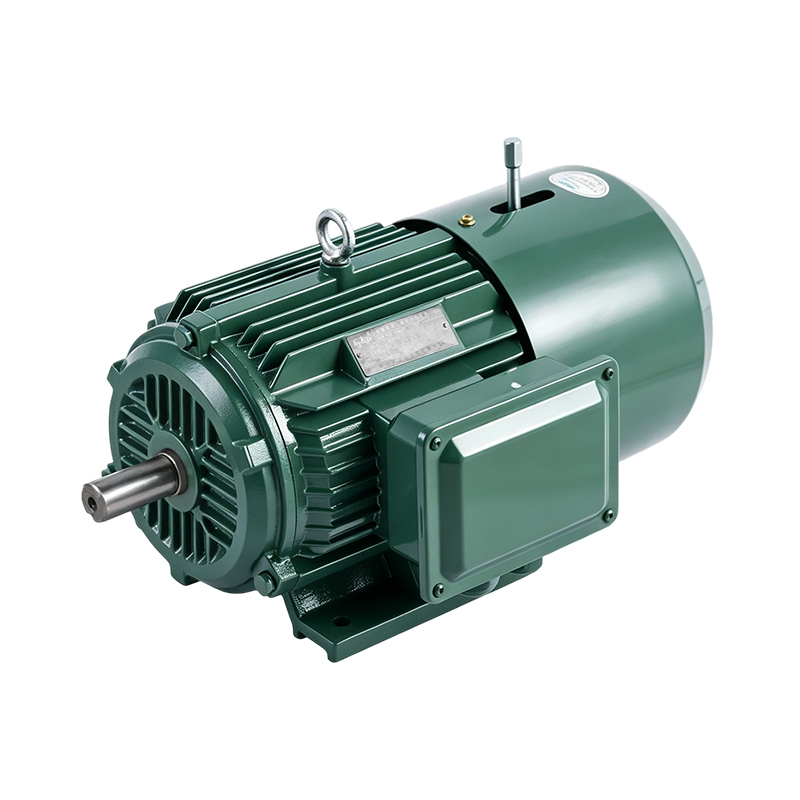
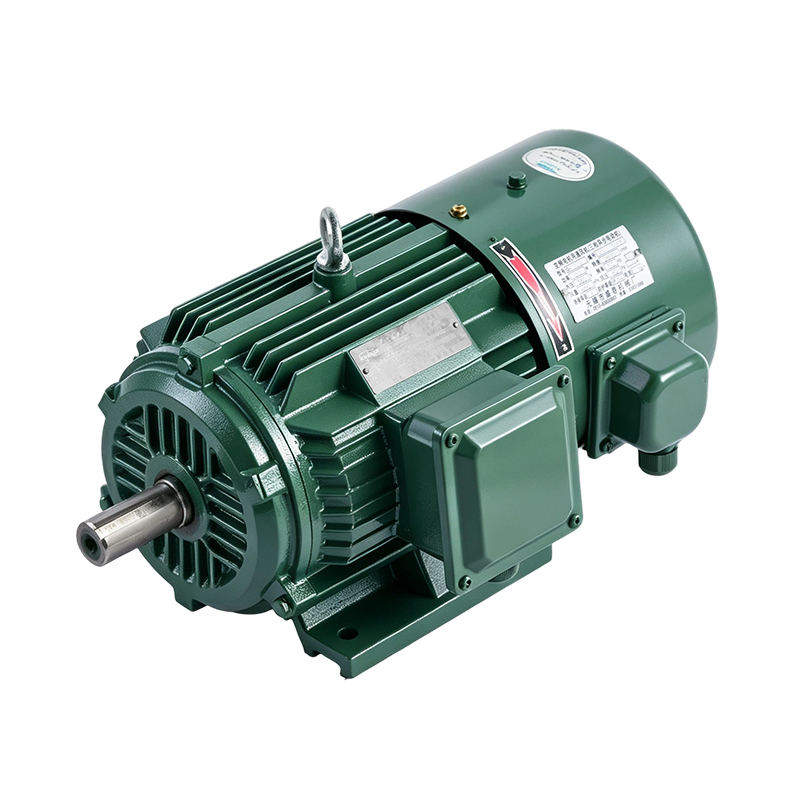
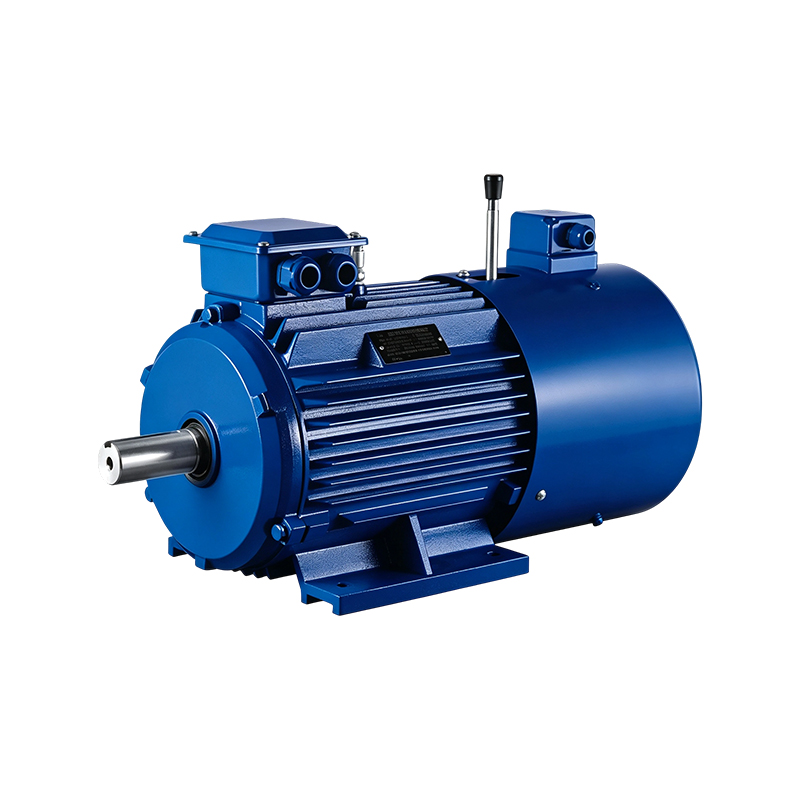
A Three-Phase Asynchronous Motor, also widely called a Three-Phase Induction Motor or Asynchronous Motor, is one of the most widely used electric motor technologies for industrial power transmission. Its combination of simple construction, reliable operation, strong starting capability, and relatively low maintenance makes it suitable for pumps, fans, compressors, conveyors, machine tools, lifting equipment, and production lines.
For B2B buyers, motor selection is no longer based only on rated power and purchase price. Energy efficiency, operating hours, voltage, frequency, number of poles, enclosure protection, insulation class, variable-frequency-drive compatibility, environmental conditions, and total cost of ownership are increasingly important. The latest IEC 60034-30-1:2025 efficiency classification expands the framework to include IE5 efficiency levels, covering single-speed AC motors from 0.12 kW to 1,000 kW and 2-, 4-, 6-, and 8-pole configurations.
(1) Rotating Magnetic Field
When three-phase AC power is supplied to the stator windings, it creates a rotating magnetic field. The synchronous speed depends on supply frequency and the number of poles. At 50 Hz, a 2-pole motor has a synchronous speed of 3,000 rpm, while a 4-pole motor has 1,500 rpm and a 6-pole motor has 1,000 rpm.
(2) Rotor Induction and Slip
The rotating magnetic field induces current in the rotor, producing electromagnetic torque. The rotor must rotate slightly slower than the synchronous field, which is why the motor is called asynchronous. This speed difference is known as slip. For example, a 4-pole motor operating near 1,450 rpm on a 50 Hz supply has a synchronous speed of 1,500 rpm and a slip of approximately 3.3%.
(3) Continuous Industrial Operation
The absence of brushes and commutators in a standard squirrel-cage design reduces mechanical wear and simplifies maintenance. This makes the energy efficient induction motor particularly attractive for factories where motors may operate for thousands of hours each year.
3. Motor Efficiency: IE3, IE4, IE5 and Total Cost of Ownership
For industrial users, motor efficiency directly affects electricity consumption. A motor converting 94% of electrical input into mechanical output wastes less energy as heat than a comparable motor operating at 90%. Although the difference may appear small, the financial impact becomes significant when a motor runs continuously.
Typical considerations when comparing industrial motor efficiency classes.
| Efficiency Level |
Typical B2B Positioning |
Main Benefit |
| IE2 |
Basic efficiency |
Suitable for selected applications and requirements |
| IE3 |
High efficiency |
Lower operating losses |
| IE4 |
Super premium efficiency |
Further reduction in energy losses |
| IE5 |
Emerging highest IEC class |
Maximum efficiency potential within the IEC classification |
It is important to distinguish commercial terms from international classifications. Terms such as high efficiency three phase motor, high efficiency induction motor, premium efficiency motor, and super premium efficiency motor are commonly used in industrial marketing. Buyers should verify the actual IE class, rated efficiency, test standard, voltage, frequency, and operating conditions rather than relying on marketing terminology alone.
4. Why Energy Efficient Three-Phase Motors Matter to B2B Buyers
(1) Electricity Cost
Consider a 75 kW motor operating 6,000 hours per year. If an efficiency improvement reduces electrical losses by only 1%, the annual energy saving can reach several thousand kilowatt-hours, depending on load profile and operating efficiency. Over a motor's service life, the accumulated saving can substantially exceed the initial purchase-price difference.
(2) Heat and Reliability
Lower electrical losses generally mean less heat generation inside the motor. Better thermal management can support stable operation, particularly in continuous-duty applications such as pumps, fans, compressors, and conveyors.
(3) Compliance and Export Markets
Regulatory requirements differ by market. In the European Union, applicable three-phase motors from 0.75 kW to 1,000 kW generally need at least IE3 efficiency, while certain 75–200 kW, 2-, 4-, and 6-pole motors have been subject to IE4 minimum requirements since July 2023. Therefore, exporters should confirm the target market's current ecodesign and certification requirements before finalizing a motor specification.
5. How to Select an Energy Efficient Induction Motor
- Confirm the required mechanical output power and avoid substantial oversizing, because operating far below the rated load can reduce the practical efficiency of the system.
- Select the correct number of poles according to the required operating speed and load characteristics.
- Check voltage, frequency, duty cycle, ambient temperature, altitude, installation method, and cooling conditions.
- For variable-speed applications, confirm compatibility with the inverter or variable frequency drive and verify bearing, insulation, and thermal requirements.
- Compare purchase price plus lifetime energy cost rather than evaluating the initial price alone.
- For hazardous environments, specify the correct explosion-protection type and certification for the intended zone and application.
6. Zhejiang Kuayue Motor: Industrial Three-Phase Motor Supply
Zhejiang Kuayue Motor Co., Ltd. is an export-oriented manufacturer integrating R&D, production, sales, and export operations in Luqiao District, Taizhou City, Zhejiang Province. With 34 years of experience in the motor industry, the company operates a 29-mu production base with more than 30 staff members.
Its three-phase asynchronous motor range covers 0.09 kW to 375 kW, with 2-, 4-, 6-, and 8-pole configurations. This broad range supports applications from high-speed, light-load transmission to low-speed, heavy-load industrial equipment.
The motors are available with high-strength cast iron housings or lightweight aluminum alloy shells, Class F insulation, and IP55 protection. They are designed for high energy efficiency, stable operation, low noise, low vibration, and reliable long-term service. Applications include fans, pumps, air compressors, conveyors, general-purpose machine tools, and industrial production equipment.
Specialized configurations can also support multi-step speed regulation, fast electromagnetic braking, wide-range variable-frequency speed control, and explosion-proof transmission requirements for hazardous environments such as coal mines and petrochemical facilities. The product range serves industries including manufacturing, energy, mining, construction, textiles, printing, and port machinery.
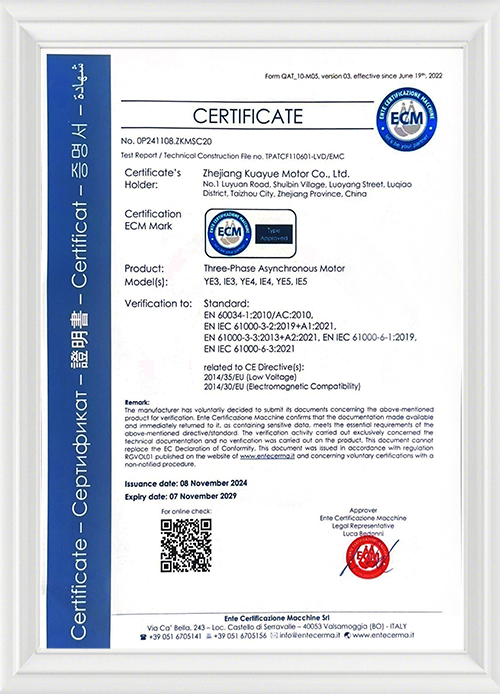
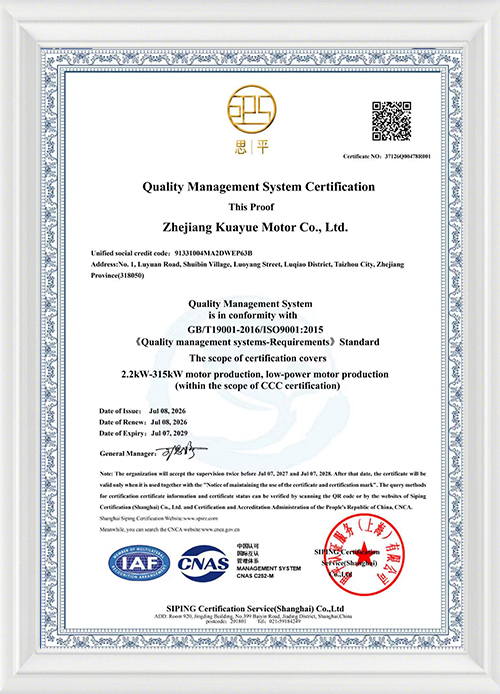
Manufacturing is conducted under an ISO9001 quality-management system, with China CCC compulsory certification and EU CE certification. Motors are sold across more than 20 Chinese provinces and exported to Europe, America, Southeast Asia, the Middle East, and other international markets.
7. Common Applications and Buyer Considerations
Common industrial applications and key motor selection priorities.
| Application |
Recommended Focus |
Typical Requirement |
| Pumps |
Efficiency and VFD compatibility |
Continuous operation |
| Fans and HVAC |
Part-load efficiency |
Variable-speed control |
| Conveyors |
Starting torque and reliability |
Heavy-duty operation |
| Compressors |
Efficiency and thermal performance |
Long running hours |
8. Frequently Asked Questions About Three-Phase Induction Motors
Q1. What is a three phase induction motor?
A three phase induction motor is an AC motor that uses a three-phase stator supply to create a rotating magnetic field. The field induces current in the rotor and produces torque. It is widely used in industrial equipment because its construction is robust, economical, and relatively easy to maintain.
Q2. How does a three phase induction motor work?
Three-phase current creates a rotating magnetic field in the stator. This field cuts the rotor conductors, inducing rotor current. The interaction between the magnetic fields generates torque, causing the rotor to rotate. The rotor normally runs below synchronous speed, creating the slip required for induction.
Q3. What is the difference between an asynchronous motor and an induction motor?
In common industrial terminology, the terms are usually interchangeable. A standard squirrel-cage three-phase induction motor is an asynchronous motor because its rotor speed differs from synchronous speed. The term “induction motor” emphasizes the electromagnetic induction principle, while “asynchronous motor” emphasizes the speed relationship.
Q4. Why is an induction motor called an asynchronous motor?
It is called asynchronous because the rotor cannot normally reach the synchronous speed of the rotating magnetic field. If rotor speed became exactly equal to synchronous speed, there would be no relative motion between the magnetic field and rotor conductors, so no induced rotor current and essentially no induction torque.
Q5. What are the main types of three phase induction motors?
The main industrial category is the squirrel-cage induction motor, which is valued for simple construction and reliability. Wound-rotor induction motors are another type and can provide greater control of starting characteristics. Motors can also be classified by enclosure, cooling method, number of poles, efficiency class, voltage, and application, including standard, brake, variable-frequency, and explosion-protected designs.
Q6. What is the efficiency of a three phase induction motor?
Efficiency depends on motor size, pole count, design, load, voltage, frequency, and efficiency class. Modern industrial motors can achieve very high efficiencies, particularly in IE3, IE4, and IE5 classes. Buyers should compare the manufacturer's declared rated efficiency at full, 75%, and 50% load where applicable instead of using a generic efficiency figure.
Q7. What causes an induction motor to lose efficiency?
Common causes include undersized or oversized motors, low load factor, voltage imbalance, excessive harmonics, poor ventilation, high ambient temperature, mechanical friction, bearing problems, incorrect alignment, and operation outside the designed frequency range. Regular maintenance and correct motor sizing can help maintain efficiency.
Q8. What is the starting current of a three phase induction motor?
A direct-on-line induction motor can draw several times its rated full-load current during startup. The exact value depends on motor design and manufacturer data. For high-power motors, a soft starter or variable frequency drive may be considered when reducing starting current, mechanical stress, or voltage disturbance is important.
Q9. What is the slip of an induction motor?
Slip is the difference between synchronous speed and rotor speed expressed as a percentage of synchronous speed. It can be calculated as: Slip (%) = (Synchronous Speed − Rotor Speed) ÷ Synchronous Speed × 100. For example, a 1,500 rpm synchronous-speed motor running at 1,450 rpm has approximately 3.33% slip.
Q10. How is induction motor speed calculated?
The synchronous speed is calculated using Ns = 120f/P, where Ns is synchronous speed in rpm, f is frequency in hertz, and P is the number of poles. At 50 Hz, a 4-pole motor has a synchronous speed of 1,500 rpm. The actual rotor speed is slightly lower because of slip.


 English
 Español
 عربى
عربى